Anthropic's Claude Just Became a Coworker. Here's What Claude Cowork Actually Changes.
Claude Cowork now runs on mobile and web, letting agents work while you're away from your desk. That's a quiet but significant shift in how AI fits into a workday.
Claude was already useful. Now it's trying to be persistent.
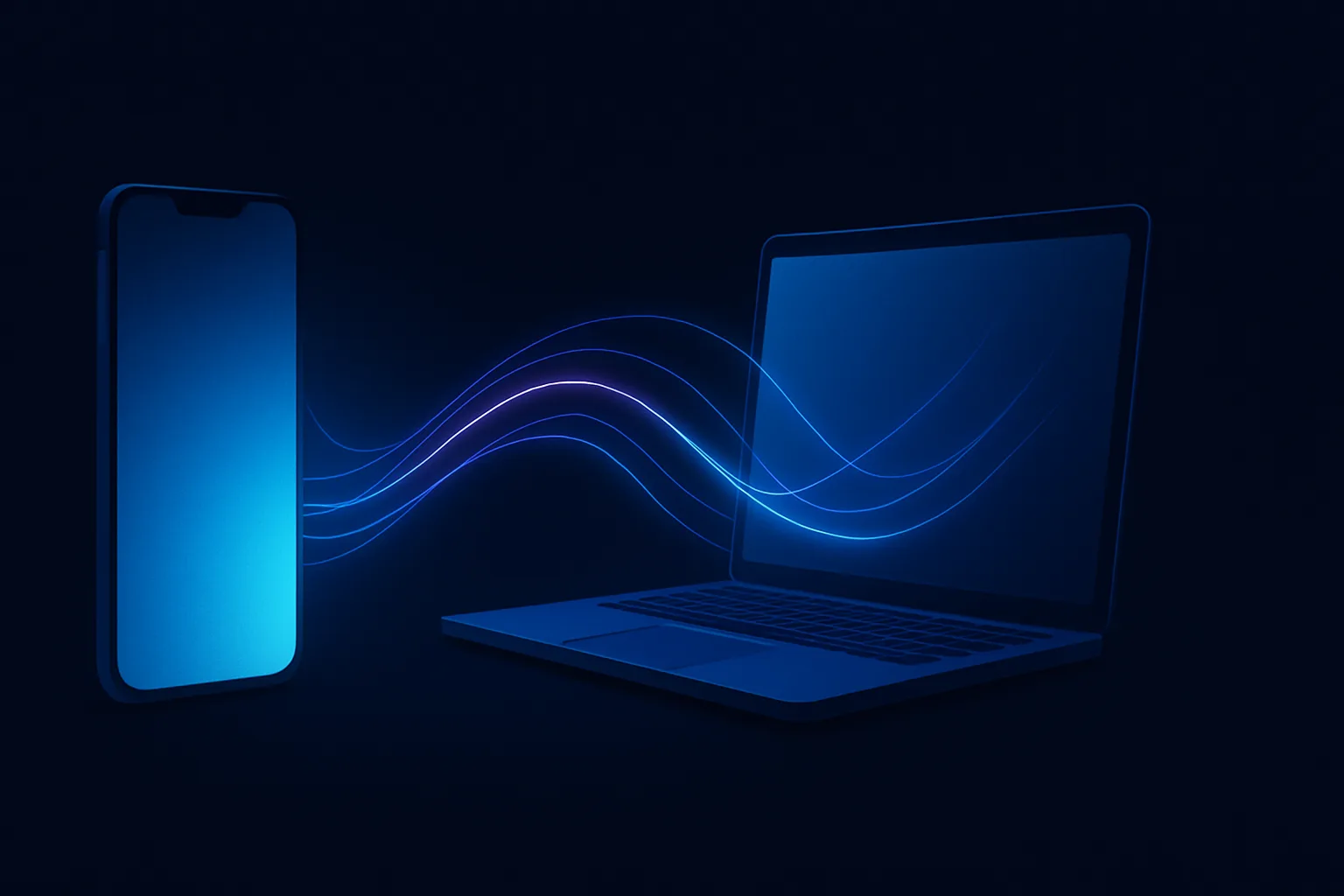
Anthropic just expanded Claude Cowork to mobile and web, a move that sounds like a routine product update but actually signals something more significant about where AI agent tools are heading. The premise is simple: start a task at your desk, check on its status from your phone, and pick up the finished output later, even if your laptop is closed and you've moved on to something else.
That's not a chatbot. That's a coworker.
What Claude Cowork Actually Does
The core shift here is asynchronous execution. Until now, most AI tools, including Claude itself, required you to stay in the loop. You prompt, it responds, you react. The interaction is synchronous by design. Cowork breaks that model.
With the mobile and web expansion, a user can kick off a longer-running task, say, drafting a competitive analysis, summarizing a batch of documents, or working through a multi-step research process, and then walk away. The agent runs in the background. Status updates come to your phone. When it's done, the output is waiting for you.
This matters more than it sounds. The bottleneck in most AI-assisted workflows today isn't model quality. It's the constant babysitting. Anyone who's spent time with current agent tools knows what this looks like: you trigger a task, watch it run, catch the errors, re-prompt, wait again. The human is still basically in the loop the whole time. That's a problem that Mark Zuckerberg flagged internally at Meta when he admitted agent deployments were behind schedule. The gap between "agent that can do a thing" and "agent that can do a thing without you watching it" is real, and it's the gap Cowork is trying to close.
Why Mobile Matters Here
The mobile expansion isn't cosmetic. It's the part that makes asynchronous work actually usable.
Think about how people actually move through a workday. You're in a meeting for an hour. You're traveling between offices. You're at lunch. If an agent can only surface its outputs when you're back at a specific machine, the asynchronous promise is only half-delivered. Pushing status updates and finished outputs to a phone closes that loop.
This also puts Anthropic in more direct competition with tools built around persistent task management, the kind of integrations that products like Microsoft Power Automate or workflow platforms like Bardeen have been building toward for years. The difference is that Claude brings a much more capable underlying model to that interface.
The Bigger Context: Agents Are Moving Off the Desktop
This update sits inside a broader industry pattern. AI is migrating from the desktop session to the continuous background process.
Anthropic's Claude Sonnet 5 launch earlier this year was explicitly aimed at reducing the cost of running agents at scale. Lower inference cost makes background agents economically viable. Claude Cowork is the product layer that sits on top of that infrastructure shift.
Microsoft has been moving in the same direction. Its $2.5 billion AI deployment company is essentially a bet that persistent, enterprise-grade AI agents are the next major deployment surface. Anthropic is building toward the same outcome, but through a direct consumer and professional product rather than a deployment services wrapper.
The pattern is consistent: the industry is done waiting for users to sit in front of a screen and prompt things manually. The new target is AI that operates on your schedule, not its own.
What This Means in Practice for Teams
For individual professionals, the immediate use case is clear. Longer research tasks, document-heavy workflows, anything that currently requires you to block out time and stare at a chat window becomes something you can delegate and come back to.
For teams, it's more complicated. The value compounds quickly when multiple people can assign tasks to a shared agent and receive outputs asynchronously, but that also means governance questions start to matter more. Who reviews the output before it gets used? How do you audit what the agent actually did? The AI governance problem that most organizations haven't solved yet becomes more acute when the agent is running while nobody's watching.
There's also a tool proliferation risk. Teams that haven't consolidated their AI stack are already dealing with fragmented context and redundant subscriptions. Adding an always-on agent layer on top of that makes the AI tool sprawl problem worse, not better, unless you're intentional about where Cowork fits relative to the other tools your team is already using.
What You Should Do With This Information
If you're already a Claude user, the mobile and web expansion is worth testing immediately, specifically for tasks you currently avoid because they take too long to babysit. Multi-document summarization, structured research briefs, and anything that requires several sequential steps are good candidates for Cowork's async model.
If you're evaluating agent tools for your team, this update changes the comparison landscape. Pure synchronous tools now have a structural disadvantage for workflows that extend beyond a single sitting.
And if you're managing an AI rollout at an organization, now is the right time to get ahead of the governance question. An agent running in the background without a clear review process is not a productivity upgrade. It's a liability with a nice interface. Get the accountability structure in place before the tool spreads.
The underlying capability Anthropic has built here is real. Asynchronous agents with mobile-accessible outputs genuinely change what AI can do in a professional context. The question, as always, is whether the people using it have thought carefully enough about what they're actually handing off.