China Blocks Meta's $2B Manus AI Deal: What It Means for the US-China AI Race
China's regulators killed Meta's reported $2 billion acquisition of AI startup Manus, citing security concerns. Here's what happened and what it signals.
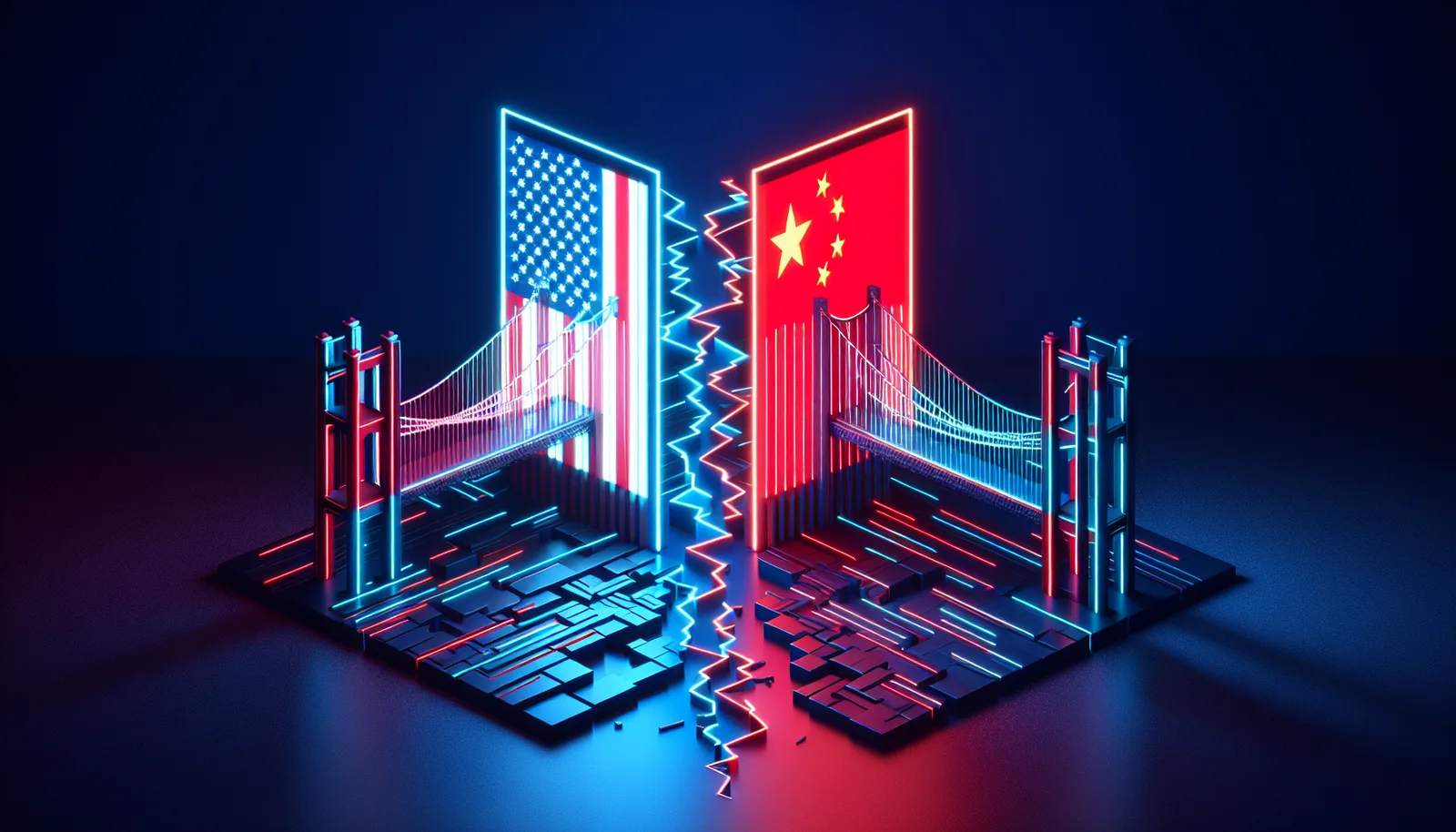
China just killed a deal that would have given Meta one of the most-talked-about AI agents of the past year., Chinese regulators blocked Meta's reported $2 billion acquisition of Manus, the Chinese AI startup that went viral in early 2025 for its autonomous task-completion capabilities, requiring all parties to withdraw from the deal entirely.
This isn't a negotiation breakdown or a pricing dispute. China's government stepped in and said no. That's a different category of outcome, and it deserves more attention than it's getting.
What Manus Is and Why Meta Wanted It
Manus launched in early 2025 as what its creators called a "general AI agent", something closer to an autonomous worker than a chatbot. Where most AI tools wait for your input and respond to one query at a time, Manus was designed to take a goal, break it into steps, and execute across multiple applications without constant hand-holding.
The demo videos were striking enough to generate serious hype. Researchers, developers, and product teams were putting it through paces in ways that made it stand out from the crop of chat-first tools that dominated 2024 and 2025. For Meta, which has been pushing hard into agentic AI across its platforms, acquiring Manus would have been a shortcut to capability, buying a team with a working product rather than building from scratch.
A $2 billion price tag for a startup with that kind of traction isn't unreasonable in the current market. DeepSeek, another Chinese AI lab, is reportedly eyeing a $45 billion valuation from its first funding round. Chinese AI companies have become genuinely competitive, and that's exactly what's making their governments nervous about foreign acquisition.
Why Beijing Said No
The stated reason is national security. That phrase covers a lot of ground in Chinese regulatory decisions, but in this case it maps onto something concrete: Manus is a Chinese-developed AI agent with significant technical capability, and selling it to an American tech giant means transferring both the IP and the team that built it.
China has been tightening its controls on outbound technology transfers since 2023. AI algorithms, particularly those related to autonomous systems and agents, fall under export restrictions that were quietly expanded last year. The Manus deal ran directly into those restrictions.
There's also a competitive logic here. China watched what happened when ByteDance's TikTok became a geopolitical flashpoint in the US. The reverse dynamic, American companies acquiring Chinese AI assets, is now being treated with equivalent suspicion in Beijing. Regulators aren't going to let Meta buy its way into leading agentic AI capabilities that were developed inside China, regardless of the commercial terms.
What This Means for the Broader AI Market
The deal's collapse signals a few things worth tracking.
First, the window for US-China AI M&A is effectively closed. Any acquisition involving a Chinese AI company of real capability will face regulatory scrutiny from Beijing that's likely to be fatal. Founders and investors in Chinese AI startups need to price that reality into their exit expectations.
Second, Meta has a problem. The company has made significant bets on its AI roadmap, including its acquisition of Limitless, the wearable memory assistant. Losing the Manus deal doesn't crater Meta's AI strategy, but it does mean the agentic capabilities it was hoping to acquire will need to be built internally or sourced from a non-Chinese company. That takes longer and costs more.
Third, this accelerates the bifurcation of the AI supply chain. US companies will increasingly build with US or European AI components; Chinese companies will build with Chinese ones. The idea that AI development would remain globally integrated is looking less and less realistic.
For teams currently building on AI agents, this fragmentation creates a practical dependency problem. Tools, APIs, and underlying models that seem stable today can become geopolitically complicated quickly. It's worth thinking carefully about the AI dependency trap before you build critical workflows on top of any single platform, especially one with complex international ownership.
The Automation Cost Context
The Manus news lands the same week that Match Group told investors it's slowing hiring for the rest of 2026 specifically to fund AI tool costs. That's an unusually blunt statement from a public company: AI is expensive enough that it's replacing headcount budget, not just supplementing it.
That trend matters for understanding why the Manus deal was worth $2 billion in the first place. Agentic AI tools that can autonomously complete multi-step tasks are now being priced as labor substitutes, not just software. Meta's willingness to spend that kind of money reflects where the industry believes these tools are heading.
For professionals evaluating AI agents and automation tools right now, the market is moving fast but unevenly. Many teams have found solid results with workflow automation platforms like n8n, which handles complex multi-step automation without the geopolitical baggage. Others are building on proprietary agents from US-based labs. The Manus situation is a reminder that where your tools are built, and who owns them, isn't just an academic question.
The Snap-Perplexity Parallel
It's worth noting that the same week brought news of another high-profile AI deal collapsing. Snap confirmed that its $400 million deal with Perplexity, announced last November, has "amicably ended." That deal would have integrated Perplexity's AI search directly into Snapchat.
Two major AI partnerships falling apart in the same week isn't a coincidence. It reflects a market that moved faster on deal announcements than on the actual integration work, and in both cases, the gap between the announced vision and the execution reality proved too wide.
The Snap situation is messier than the Manus block because there's no clean external party to blame. Both companies walked away from something that looked valuable on paper. For users, it means Snapchat won't be getting that AI search upgrade anytime soon. For the AI search space, it's a signal that distribution deals are harder to close than they appear.
What You Should Do
If you're building products or workflows that depend on AI agents, a few practical steps are worth taking now.
Start by auditing where your core AI dependencies sit and who owns them. Tools with clear US or European corporate structure are less likely to face sudden regulatory disruption than those with complex international ownership chains. That's not a permanent rule, but it's a reasonable filter for 2026.
Think about what AI verification practices look like for agentic tools specifically. Unlike a chatbot that responds to a single query, autonomous agents execute across multiple systems. Errors compound. The oversight requirements are higher.
Watch how Meta responds to the Manus block. If the company moves toward building its own agentic capabilities or acquires a Western alternative, that will signal a lot about where the next $2 billion in AI M&A is going to land. The race for agentic AI isn't slowing down. The routes to winning it just got narrower.
The AI hallucination and accountability problems that have been hitting the legal profession aren't going away either. Agentic AI compounds those risks. An agent that autonomously files documents, sends emails, or executes transactions based on bad data causes more damage than a chatbot that returns a wrong answer. Keep that in mind as vendors pitch autonomous capabilities as the next frontier.
The Manus deal is dead. The implications are just getting started.