Deepfake Threats in Hiring and Legal Work: What Your Team Needs to Know in 2026
Synthetic candidates, cloned voices, and fabricated video evidence are now routine threats. Here's how HR and legal teams can actually defend against them.
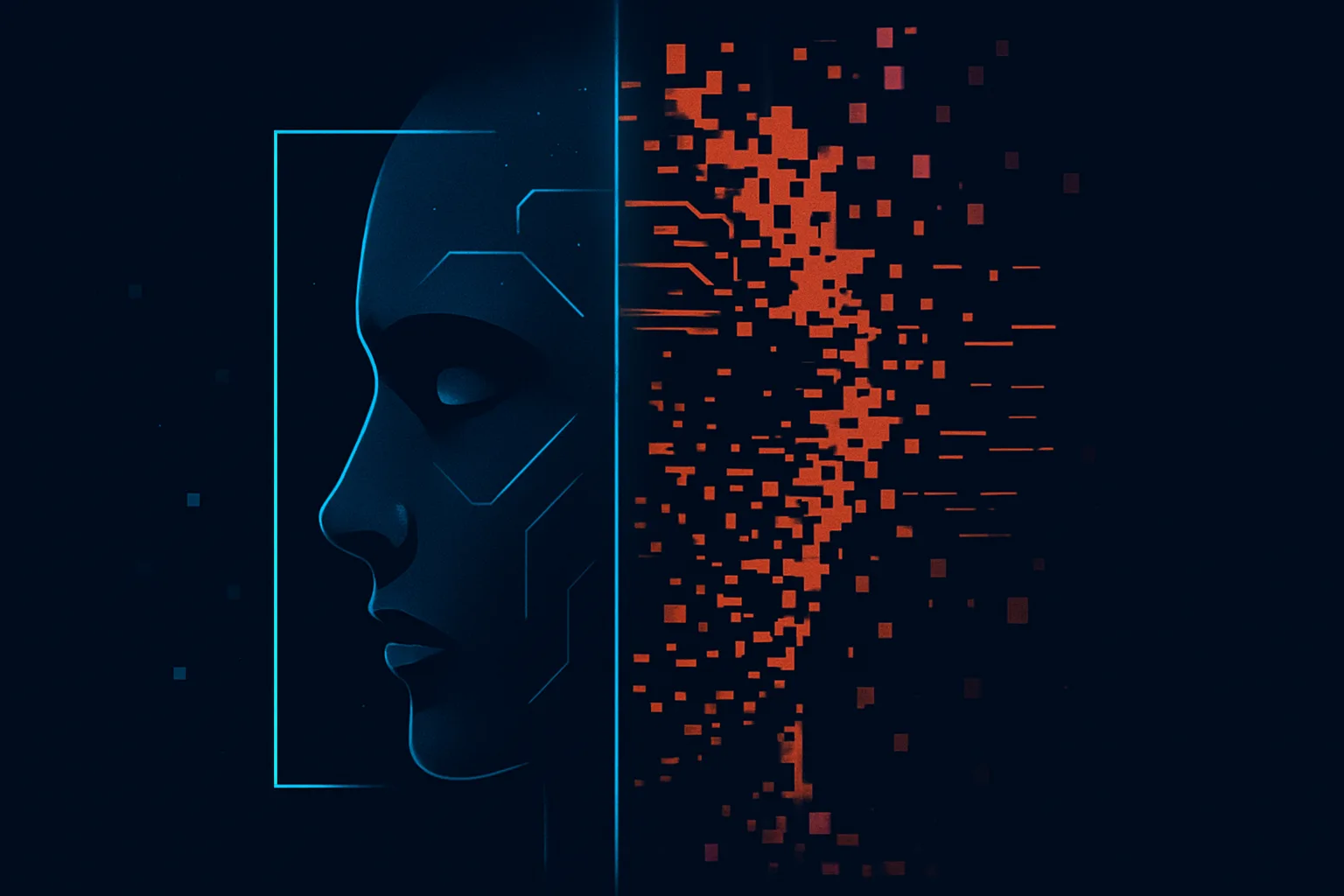
Somewhere in the last 18 months, deepfakes crossed a line. They stopped being a reputational problem for celebrities and became an operational problem for hiring managers, general counsel, and anyone who verifies identity over video.
The numbers are uncomfortable. When InCruiter launched its deepfake detection feature in early 2026, it flagged fraudulent activity in 25 to 30 percent of screened sessions. That's not a niche edge case. That's a significant fraction of your interview pipeline walking in with a synthetic face.
This piece covers what deepfake attacks actually look like when they target HR and legal teams, why the current detection gap is so wide, and what a practical defense looks like without building a dedicated security team from scratch.
Why HR and Legal Teams Are Specific Targets
Most deepfake coverage treats this as a generic fraud problem. It isn't. HR and legal teams face threats that are structurally different from what finance or IT encounters, because the attack surface is built on institutional trust rather than system access.
The HR attack surface is unusually exposed. A candidate interview is, by design, a low-scrutiny interaction with a stranger. You're supposed to give them the benefit of the doubt. An unexpected call from someone who looks and sounds like an HR manager lands differently than an unexpected wire transfer request. Employees don't scrutinize HR touchpoints the way they scrutinize financial approvals.
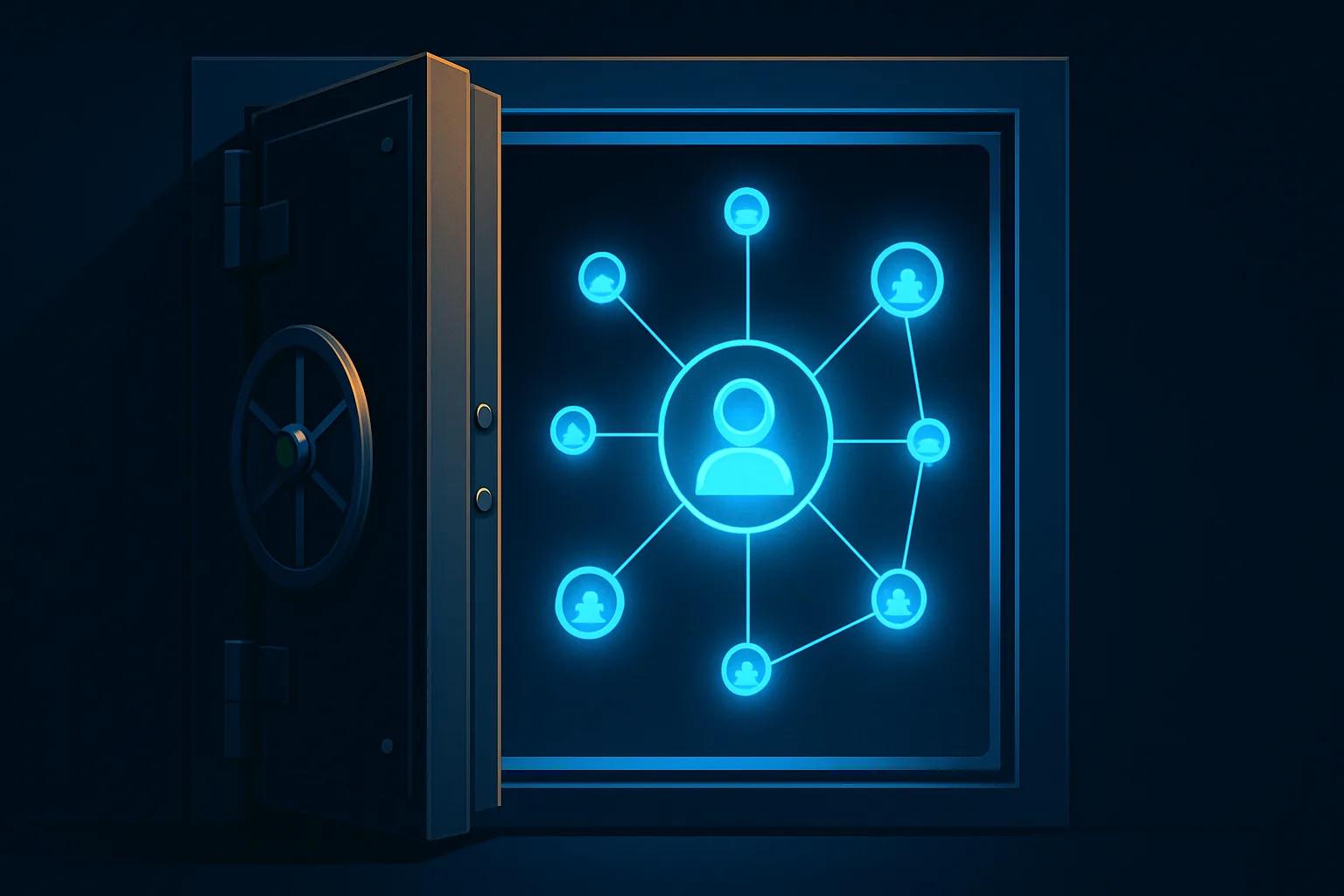
There's a second layer that's worse. Fraudulent interviewees aren't just trying to get hired. During a hiring process, they gather extended audio and video footage of HR personnel. That footage becomes training data for deepfakes of those HR staff, which then get deployed against other employees. The attack is recursive: a fake candidate creates the raw material for a fake colleague.
The legal attack surface runs through evidence and communications. Fabricated video and audio submitted as evidence isn't a theoretical risk in 2026. Courts across multiple jurisdictions are now actively asking for provenance metadata and forensic authentication on video files. Legal teams that can't verify the authenticity of multimedia exhibits are starting to face admissibility challenges. And on the external communications side, cloned voices of partners or clients have been used to authorize actions over phone and video channels.
Adaptive Security's research on this is direct: legal teams should specifically train for client and colleague impersonation aimed at extracting sensitive data. That's a different threat model than phishing emails, and most legal teams aren't set up to catch it.
What the Attacks Actually Look Like in 2026
It helps to be specific about attack types rather than talking about "deepfakes" as an abstract category. There are four main vectors that HR and legal teams encounter.
Synthetic Candidates
A real person, or a fabricated identity entirely, appears on a video interview with a face and voice that aren't theirs. The face swap may be running in real-time through a virtual camera app. The audio may be separately voice-cloned. The resume, references, and work samples all exist and may even be high quality, because the attacker's goal is employment access, not a one-time transaction.
Detection signals include unnatural eye blinking patterns, lighting inconsistencies at the hairline and ears, slight audio-video sync delays, and unusual responses to sudden requests like turning sideways or holding up an object to the camera.
Executive Impersonation
A deepfake video or voice call impersonating a senior executive is used to authorize actions: transfers, contract amendments, NDAs, data access. Legal teams are frequently the authorization checkpoint for these requests. A convincing deepfake of the managing partner telling an associate to share a file or approve a term sheet is a documented attack type in 2026, not a hypothetical.
Evidence Fabrication
Video and audio submitted as evidence in disputes, HR investigations, or regulatory proceedings. The sophistication of fabricated evidence has increased to the point where visual inspection alone is unreliable. Forensic analysis tools now examine file-level metadata, compression artifacts, and frame-level consistency to identify manipulation.
Identity Chain Attacks
This is the recursive attack described above: fraudulent job applicants gather biometric data on HR staff during interviews, then use that data to generate deepfakes of those HR staff for internal social engineering campaigns. It's a two-stage attack where the hiring process itself is the first stage.
The Detection Gap Is Real and Documented
Sixty-two percent of hiring professionals acknowledge that job seekers are now better at faking identities with AI than HR teams are at detecting them. That figure is striking. It suggests the gap isn't narrowing through awareness alone.
The underlying technical reason is model asymmetry. Deepfake generation tools have become dramatically more accessible and capable, while detection tools still require deliberate deployment, training, and integration. You don't accidentally get deepfake detection. You have to build for it.
There's also a modality problem. Many organizations, if they've deployed any detection at all, are running single-modality tools that check video but not audio, or vice versa. Reality Defender's buyer framework makes this point clearly: an attacker who knows you only scan video will simply turn the camera off and use synthetic voice. A synthetic candidate interview typically combines AI-generated video and cloned audio. Tools that only cover one leg of that combination leave the other leg wide open.
This connects to a broader issue with how teams approach AI tools generally. As we've noted when covering how construction project managers are actually using AI in 2026, point solutions that don't talk to each other create gaps exactly where attackers look. Deepfake defense is no different.
What Good Detection Actually Requires
There are four properties that matter when evaluating detection tools for an HR or legal context. Most vendor conversations skip at least two of these.
Multimodal Coverage
The tool needs to analyze audio, video, and images simultaneously and combine the results into a single confidence score. Single-modality coverage is table stakes in 2026, not a feature. Reality Defender's framework specifies that the strongest tools ensemble audio and video analysis together, because attacks combine techniques and defenses need to match.
Real-Time vs. Forensic Detection
These are different use cases with different tool requirements. Hiring interviews need real-time detection: the tool needs to flag a synthetic face during the call, not two hours later. Legal evidence review needs forensic depth: the tool needs to produce court-ready reports with heatmaps, confidence scores, and provenance metadata that can survive admissibility challenges.
DuckDuckGoose AI specifically produces court-ready forensic reports designed for judicial admissibility, used by government agencies and judicial authorities across multiple jurisdictions. That's the right standard for legal evidence work. It's overkill for an initial screening call, where you need a fast yes/no rather than a 40-page forensic analysis.
Know which use case you're solving before you evaluate tools. The requirements are genuinely different.
Audit Trails and Compliance Records
Compliance teams need records. Legal teams need audit trails. Any detection tool deployed in a hiring or legal context should capture what was analyzed, what it found, who reviewed the result, and when. That documentation is the difference between a defensible process and a liability when something goes wrong.
GetReal Security's budget guide for CISOs specifically lists governance and compliance as a distinct investment category, separate from the technical detection layer. The documentation isn't a nice-to-have; it's what demonstrates due diligence if a fraudulent hire or a fabricated evidence claim ends up in litigation.
Integration With Existing Workflows
A deepfake detection tool that requires hiring managers to manually export video files and upload them to a separate portal will not get used consistently. The detection needs to integrate into your ATS, your video conferencing platform, or your document management system. GetReal Security's deployment guidance is practical here: start with a targeted implementation, test integration points, then scale. Don't try to deploy enterprise-wide on day one.
Building a Layered Defense Without a Security Team
Most HR departments and in-house legal teams don't have dedicated security staff. That's fine. Layered defense doesn't require a SOC. It requires process design.
Layer 1: Process Controls
Before any technology, tighten the process. Multi-point authentication across the hiring process means more than one channel and more than one moment. Identity verification at application, again at interview scheduling, and again at offer acceptance creates three separate opportunities to catch inconsistencies. A candidate who passes one stage but can't complete a second under different conditions is a signal.
For legal work, implement a callback protocol for any authorization request that arrives over video or voice. Call back on a known number, not the one the caller provides. This stops the majority of executive impersonation attempts without any technology at all.
The legal AI tools space has grown significantly, but none of those productivity gains matter if a fraudulent document authorization bypasses the workflow entirely.
Layer 2: Training That's Specific to Role
Generic security awareness training is nearly useless for deepfake threats. The scenarios need to match what each team actually encounters. Adaptive Security's guidance breaks this down by role: HR personnel train on candidate impersonation and employee data theft scenarios; legal teams train on client and colleague impersonation for sensitive data extraction; managers train on scenarios that reflect their data access and purchasing authority.
The training also needs to cover how to verify, not just what to look for. A list of deepfake tells is less useful than a practiced protocol: what to say, what to request, what to do if you're suspicious.
Layer 3: Detection Technology
With process and training in place, detection technology closes the gap on attacks that slip through. The technology stack for a mid-size organization doesn't need to be complicated. The practical starting point is:
- A multimodal detection integration for video interview platforms, running in real-time
- A forensic analysis tool for reviewing multimedia evidence or submitted documents
- An identity verification layer at application intake, with liveness detection
GetReal Security offers a 25-user starter kit specifically designed for organizations that want to run a contained pilot before committing to enterprise-wide deployment. That's the right approach for teams without security staff. Prove the workflow works before scaling the cost.
The Evidence Problem in Legal Work
Legal teams face a specific version of this that HR doesn't: the evidentiary standard.
Courts are increasingly aware that video and audio can be fabricated. In several jurisdictions, courts now require parties to authenticate multimedia evidence before admission. That means legal teams on both sides need to understand what authentication looks like and what tools produce forensically credible output.
DuckDuckGoose AI's claim of 98 percent accuracy on public datasets matters in this context, but so does the report format. A confidence score alone isn't enough for a court. The report needs heatmaps showing where the manipulation was detected, provenance metadata showing the file's chain of custody, and structured audit trails formatted for judicial review. These aren't features you notice on a pricing page; they're questions to ask explicitly during vendor evaluation.
The parallel to what's happening in BigLaw's adoption of AI for junior associate work is worth noting. As AI handles more document review and research, the authenticity of the underlying documents becomes a more critical bottleneck. You can run excellent AI analysis on fabricated source material and produce confident, wrong conclusions.
What to Prioritize in the Next 90 Days
If you're starting from zero, this is the order that makes sense:
Week 1-2: Audit your current interview process for identity verification gaps. Map every touchpoint where a synthetic identity could pass without challenge. This costs nothing and reveals the process controls you need.
Week 3-4: Roll out role-specific deepfake awareness training for HR staff involved in hiring and legal staff involved in evidence review or external communications. Focus on scenarios, not definitions.
Month 2: Evaluate and pilot a real-time detection integration for your video interview platform. Run it alongside your existing process, review the flags, and see what the false positive rate looks like before you commit.
Month 3: Add forensic analysis capability for legal evidence review if your work involves multimedia evidence. Evaluate tools based on report format for your specific jurisdiction, not just detection accuracy.
This is a 90-day build, not a one-week deployment. The teams that get into trouble are the ones who buy a tool and assume the problem is solved, without building the process layer underneath it.
The threat isn't going to simplify. Synthetic media generation tools are becoming more capable on roughly the same schedule as detection tools, and attackers iterate faster than enterprise procurement cycles. The organizations that stay ahead are the ones treating this as a continuous operational question, the same way they treat AI governance as an ongoing practice rather than a one-time policy document.
A Note on What Not to Do
Two mistakes show up repeatedly in how organizations respond to deepfake threats.
The first is treating detection technology as a complete solution. No tool catches everything. DuckDuckGoose AI's 98 percent accuracy claim is on public datasets, which are not the same as live adversarial attacks by motivated fraudsters. Detection is one layer. Process and training are the others.
The second is deploying detection only at the entry point. Organizations that scan job applicants but don't scan internal communications, don't authenticate submitted evidence, and don't verify video-based authorizations have addressed the most visible vector and ignored the more damaging ones. The recursive attack, where a fake candidate becomes the source material for a fake HR manager, starts at the entry point and damages from the inside.
Build the defense to cover the whole workflow, not just the front door.
Frequently Asked Questions
Tools & Services Mentioned

infobro.ai Editorial Team
We research every tool from its documentation, pricing pages, product screenshots and public developer discussion, and say plainly what the evidence does and does not show. Drafts are AI-assisted and reviewed by our editors before publication. We revisit each article every 6 months to reflect platform changes. Learn more about our process.