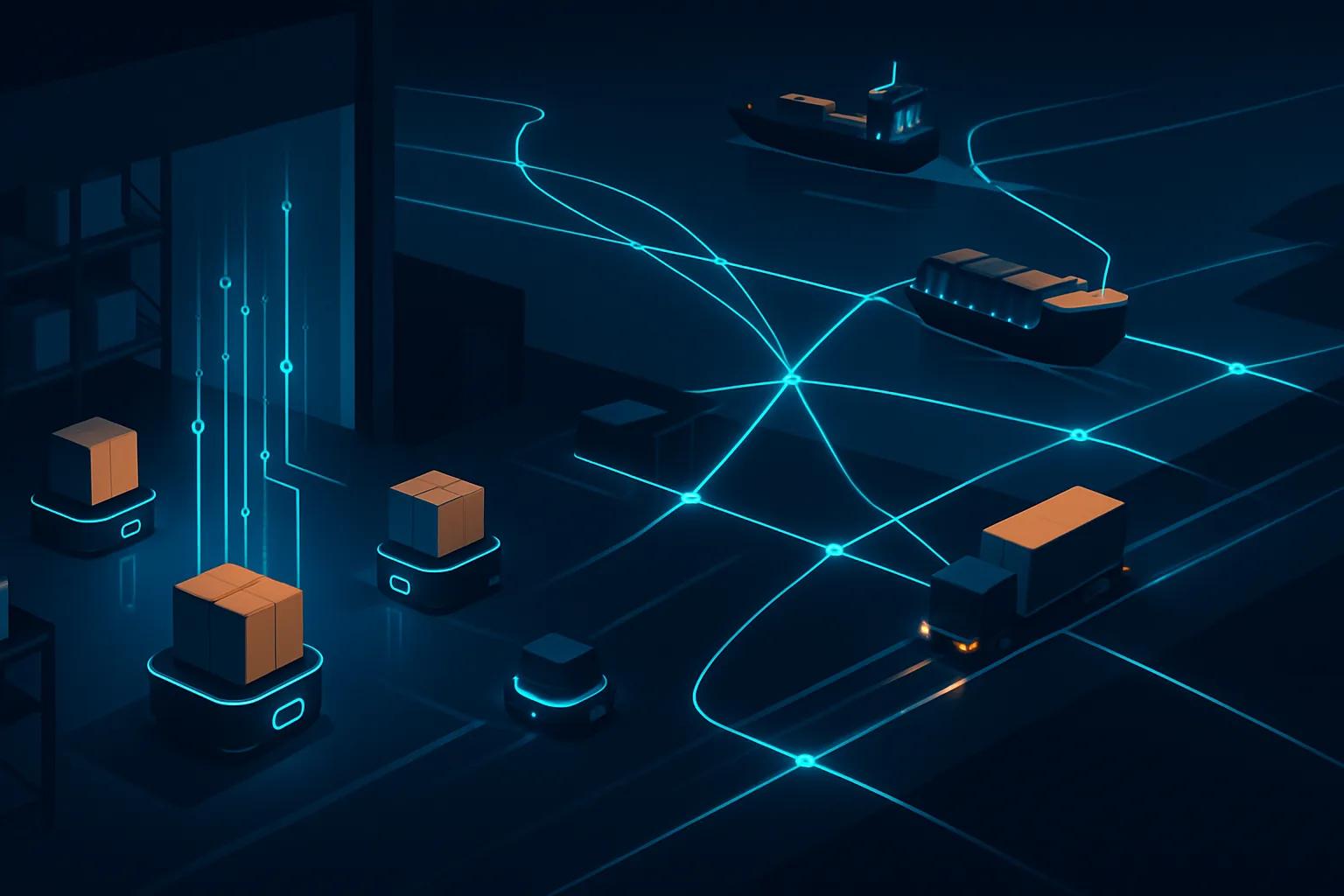
How Construction Project Managers Are Actually Using AI in 2026
AI in construction isn't a chatbot gimmick. Here's how project managers are using it for scheduling, risk detection, daily logs, and cost control right now.

Construction has always been a data-heavy industry. Thousands of daily logs, RFIs, change orders, subcontractor schedules, budget line items, site photos. For decades, the job of a project manager was essentially to hold all of that in their head and make calls based on instinct and experience.
AI doesn't replace that instinct. But it does mean a superintendent no longer has to retype reports at 9pm after a 12-hour shift, and a PM no longer has to wait until Friday's status meeting to learn a trade is running three days behind.
That shift is real, it's happening now, and it's worth understanding concretely.
What AI Actually Does on a Construction Project
Before diving into specific tools and use cases, it helps to be honest about what AI can and can't do in a construction context.
AI is good at pattern recognition across large datasets, generating text from structured inputs, flagging anomalies against baselines, and running scenario simulations faster than any human team. Construction projects generate enormous volumes of exactly the kind of structured and semi-structured data AI handles well: schedules, budgets, inspection records, site photos, daily logs, weather data, and procurement records.
What AI is not good at is judgment calls that require physical presence, trade knowledge, or relationship context. It won't tell you that a particular concrete subcontractor always catches up after a slow start because their foreman runs a tight crew. That's your knowledge, not the model's.
The teams getting real value from AI in 2026 understand this distinction clearly. They're using AI to surface information faster and automate documentation, not to hand over decision-making.
Scheduling and Scenario Planning
This is where the productivity gains are clearest and most measurable.
Traditional CPM scheduling is static. You build a baseline, then spend the rest of the project arguing about updates. When a delay hits, rescheduling manually is slow, error-prone, and usually optimistic because it's done by the people responsible for the original timeline.
ALICE Technologies takes a different approach. It treats the construction schedule as an optimization problem, and runs thousands of scenario simulations to find the fastest, cheapest, or least-risk path through the remaining work. Project teams using ALICE can ask "what happens if we add a second concrete crew for three weeks?" and get a quantified answer in minutes rather than days of manual replanning. The platform has been deployed on projects worth over $100 billion, which gives it a significant dataset to work from.
The practical payoff: when a delay hits, you're not rebuilding the schedule from scratch. You're selecting from pre-modeled recovery scenarios.
Procore's AI layer operates differently. It's embedded inside a platform most large contractors already use, so it analyzes existing project data to surface risk signals and forecasting insights. Procore starts at $375/month billed annually, which is a real number worth factoring in if you're evaluating it for a smaller firm. For enterprise-scale operations managing multiple concurrent projects, that cost structure typically makes sense. For a firm running two or three projects a year, it's a harder sell.
Daily Logs and Documentation
This is the use case that gets less press but delivers more day-to-day time savings than anything else.
A superintendent on a mid-size commercial project might spend 45 to 90 minutes per day on paperwork: daily logs, safety observations, inspection reports, progress notes. That's not because they're slow. It's because the documentation requirements are genuinely extensive and the tools have historically been terrible.
AI-assisted documentation tools can draft a daily log from a set of site photos and voice notes, pulling in weather data automatically, flagging safety observations, and formatting output to spec. The superintendent reviews and approves rather than composing from scratch. On a 24-month project with a crew of 10, the cumulative time savings are substantial.
Autodesk Construction Cloud's Construction IQ feature works inside this space. It analyzes project data across RFIs, submittals, quality inspections, and safety reports to identify and prioritize risks. The markup assist feature in AutoCAD converts handwritten comments and processes markup files automatically. For teams already inside the Autodesk ecosystem, this kind of integration is a genuine accelerant rather than a separate workflow to manage.
Site Monitoring and Progress Tracking
Buildots does something specific and useful: it attaches 360-degree cameras to site workers' hard hats, captures footage during regular site walks, and uses computer vision to compare actual site progress against the BIM model. Deviations get flagged automatically.
This matters because progress reporting has historically been one of the most error-prone parts of construction management. Self-reported progress from subcontractors is systematically optimistic. Physical verification by the PM is time-consuming and infrequent. Buildots makes verification continuous and objective.
The data feeds into project management platforms, so schedule updates reflect what's actually installed rather than what's been claimed. That's a meaningful change to how progress conversations happen.
Takeoffs and Plan Reading
Togal.AI targets the preconstruction phase, specifically the manual work of reading construction plans and generating takeoffs. It uses AI to interpret plan drawings and automate quantity extraction.
The learning curve is real. If you're uploading plans for the first time and expecting instant magic, you'll be disappointed. The system needs well-formatted plan files and some configuration to produce accurate results. But for estimators who do this work repeatedly on similar project types, the time savings compound quickly. The alternative is hours of manual measurement work per bid, and most estimating teams are running three to five bids simultaneously at any given time.
Workflow Coordination Across Teams
Smartsheet sits at a different layer than the construction-specific tools. It's a general-purpose workflow platform with strong AI automation capabilities, used widely in construction because it handles the coordination work that doesn't fit neatly into any single specialized tool.
It's particularly useful for mid-to-large firms running multiple projects with multiple subcontractors, where the challenge isn't any single project's data but the aggregation of information across a portfolio. Smartsheet's real-time portfolio dashboards show project status, budget performance, and key contacts in one centralized view.
The flip side: it's not construction-native. You'll spend time configuring it to your workflows, and the construction-specific intelligence you get from Procore or ALICE isn't there. It's a coordination layer, not an analytical one.
Where Teams Are Still Getting This Wrong
There are predictable failure patterns that show up across construction firms adopting AI right now.
Adopting tools without changing the underlying process. AI-assisted daily log generation doesn't help if superintendents still have to submit reports to a disconnected system that nobody reads. The tool is only as useful as the workflow it plugs into.
Letting data quality slide. Construction IQ and similar risk-flagging tools analyze your project data. If your schedule updates are irregular, your cost tracking is inconsistent, and your RFI log is three weeks behind, the AI's risk signals will be noisy and unreliable. Garbage in, garbage out applies here more directly than in many other industries because the stakes of a bad signal are high.
Buying enterprise software for a firm-size problem. Procore at $375/month or ALICE at custom enterprise pricing makes sense for a $50M project. It doesn't make sense for a firm doing residential remodels. The tools that fit the scale of the work matter more than the tools that win industry awards.
Skipping training and expecting adoption. This is the same problem that plays out across every industry when new software lands. See the patterns we cover in What AI Recruiting Tools Actually Do After the Resume Gets Screened and How Finance Teams Are Actually Using AI Agents in 2026: the gap between what a tool can do and what a team actually does with it is almost always a training and process problem, not a technology problem.
The Risk Detection Piece Is Underrated
Most of the press around AI in construction focuses on automation. The risk detection use case gets less attention and probably deserves more.
Construction projects fail in predictable ways: scope creep, design changes that cascade into schedule delays, subcontractor performance issues that go unaddressed until they're critical, budget overruns that were visible in the data two months before anyone flagged them. AI tools that analyze project data in real time can surface these signals earlier than manual review processes catch them.
Autodesk's Construction IQ explicitly prioritizes risk across design, quality, safety, and project controls. nPlan focuses on predictive analytics specifically for schedule risk, using historical project data to model delay probability across project phases.
The practical implication: a PM who receives a flagged risk signal three weeks before a problem becomes critical has options. A PM who learns about the problem in Friday's status meeting often doesn't.
This is also relevant to how the industry is starting to think about AI safety and reliability more broadly. As coverage on A Claude Agent Hacked a Gym to Jump a Waitlist illustrates, AI agents acting autonomously can produce unexpected outcomes when they're given open-ended goals. In construction, this is a strong argument for keeping AI in an advisory role on risk and safety decisions rather than an autonomous one.
A Practical Starting Point by Firm Size
The right entry point depends heavily on what you're already running and what your biggest pain point is.
| Firm Size | Biggest Pain Point | Where to Start |
|---|---|---|
| Small (1-10 projects/year) | Documentation time | AI-assisted daily log tools, basic workflow automation |
| Mid-size (10-50 projects/year) | Portfolio visibility, subcontractor coordination | Smartsheet, Procore for project management |
| Large (50+ projects/year) | Schedule optimization, risk at scale | ALICE for scheduling, Construction IQ for risk, Buildots for site monitoring |
| Preconstruction-heavy firms | Takeoff speed and accuracy | Togal.AI for plan reading and quantity extraction |
None of these are exclusive. A large firm might run Procore for project management, ALICE for scheduling, and Buildots for site monitoring simultaneously. The point is to start with the problem that's actually costing you money or time right now, not with the most technically impressive tool.
What's Changing Fast
Two things are moving quickly in 2026 that are worth tracking.
First, the integration between construction-specific AI tools and general project management platforms is improving. The data flow between scheduling tools, site monitoring systems, and cost management platforms used to require significant custom work. Vendors are investing in pre-built integrations, which means the "integrated construction intelligence ecosystem" that's been a sales slide for years is starting to become real.
Second, computer vision on job sites is maturing fast. Buildots is not the only player. The quality of insight you can extract from site photography and video is increasing, and the hardware requirements are decreasing. Within two years, continuous automated progress verification is likely to be a standard expectation on large commercial projects rather than a differentiator.
For firms that have been watching and waiting, the window for gaining a meaningful advantage through early adoption is not unlimited. The teams that figure out how to integrate these tools into their actual workflows now will have a process advantage that's genuinely hard to replicate later.
The technology isn't magic. But on a $20M project running 18 months, catching a two-week delay signal three weeks early is worth real money. That's what AI in construction actually is: faster signal, earlier decision, better outcome. Not transformation. Just better information, sooner.
Frequently Asked Questions
Tools & Services Mentioned

infobro.ai Editorial Team
We research every tool from its documentation, pricing pages, product screenshots and public developer discussion, and say plainly what the evidence does and does not show. Drafts are AI-assisted and reviewed by our editors before publication. We revisit each article every 6 months to reflect platform changes. Learn more about our process.