
Top 9 AI Tools for Logistics and Supply Chain in 2026: Ranked by What Actually Moves the Needle
The best AI tools for logistics and supply chain in 2026, ranked by real capability: demand forecasting, disruption alerts, route optimization, and more.
Blue Origin's next launch and your Q4 inventory position have something in common: both depend entirely on what happens upstream. o9 Solutions takes the top spot here because no other platform on this list handles the full planning stack, from demand signal ingestion to cross-functional scenario modeling, at enterprise scale. The tools below it are excellent at specific jobs. Pick the one that matches your actual problem.
Supply chain AI is maturing fast, and the gap between marketing copy and shipped capability is finally closing. The tools worth your attention in 2026 are the ones with provable wins in forecasting accuracy, real carrier or ERP integrations, and pricing that doesn't require a procurement team to decode.
1. o9 Solutions
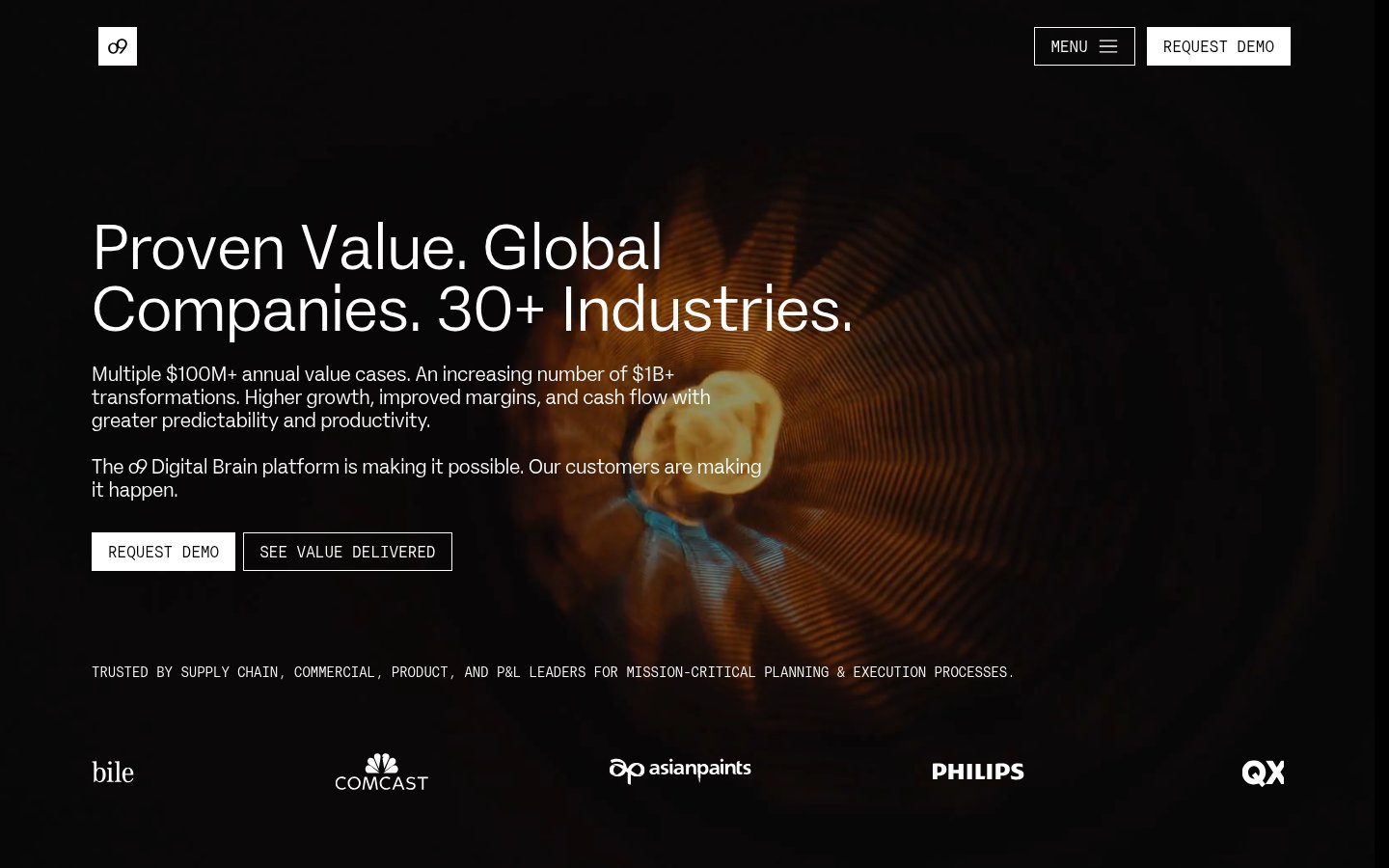
Official website: o9solutions.com
o9 Solutions is an enterprise AI platform built around a single integrated planning graph that connects demand sensing, supply planning, procurement, and S&OP into one model. The core differentiator is its "Digital Brain" architecture, which ingests internal ERP data alongside external signals like weather, port congestion, and macroeconomic indices, then runs continuous re-planning against those signals rather than batch-updating weekly.
Deployments at companies like Walmart, Nike, and HP (all publicly named by o9 in their case study library) have cited double-digit improvements in forecast accuracy and meaningful reductions in excess inventory. The platform supports multi-echelon inventory optimization, constrained supply planning, and what-if scenario modeling with financial P&L overlays, so planners can see the margin impact of a disruption response before committing to it.
Pricing: Enterprise contract only. No public pricing; expect a multi-year SaaS commitment with implementation services. Not a tool for sub-$100M revenue businesses.
Best for: Large enterprises running complex, multi-tier supply chains where integrated planning across demand, supply, and finance is the actual bottleneck.
Pros: Unified planning graph eliminates reconciliation between siloed tools, strong external signal integration, deep scenario modeling with P&L visibility, enterprise-grade connectors to SAP/Oracle.
Cons: Enterprise pricing with long implementation timelines, overkill for mid-market, requires significant change management.
Try o9 Solutions →2. Coupa Supply Chain Design & Planning
Official website: coupa.com
Coupa's supply chain design module, built on its 2022 acquisition of LLamasoft, focuses on network design and simulation rather than day-to-day planning execution. That's a narrower brief than o9, but it's the right tool if your question is "should we open a third DC in the Southeast, and what does that do to our service levels and costs?"
The platform lets planners model thousands of network scenarios simultaneously, incorporating transportation costs, carbon emissions, service constraints, and demand variability. It integrates directly with Coupa's broader BSM (Business Spend Management) suite, so procurement spend data flows into the network model without manual export. The AI layer identifies cost-to-serve anomalies and flags which network configurations are fragile under disruption scenarios.
Coupa is publicly traded (ticker: COUP before its LBO) and counts Fortune 500 manufacturers among its supply chain design customers. Implementation is measured in months, not weeks.
Pricing: Enterprise contract. Coupa doesn't publish list prices; supply chain design is typically bundled or sold alongside the broader platform.
Best for: Companies doing periodic strategic network redesigns, those evaluating nearshoring decisions, or any business where "where should inventory live?" is a recurring executive question.
Pros: Purpose-built for network design simulation, carbon emissions modeling built in, integrates with Coupa procurement data, strong scenario comparison UI.
Cons: Not a real-time operational tool, requires clean baseline data to produce trustworthy outputs, significant onboarding investment.
Try Coupa Supply Chain Design & Planning →3. Blue Yonder
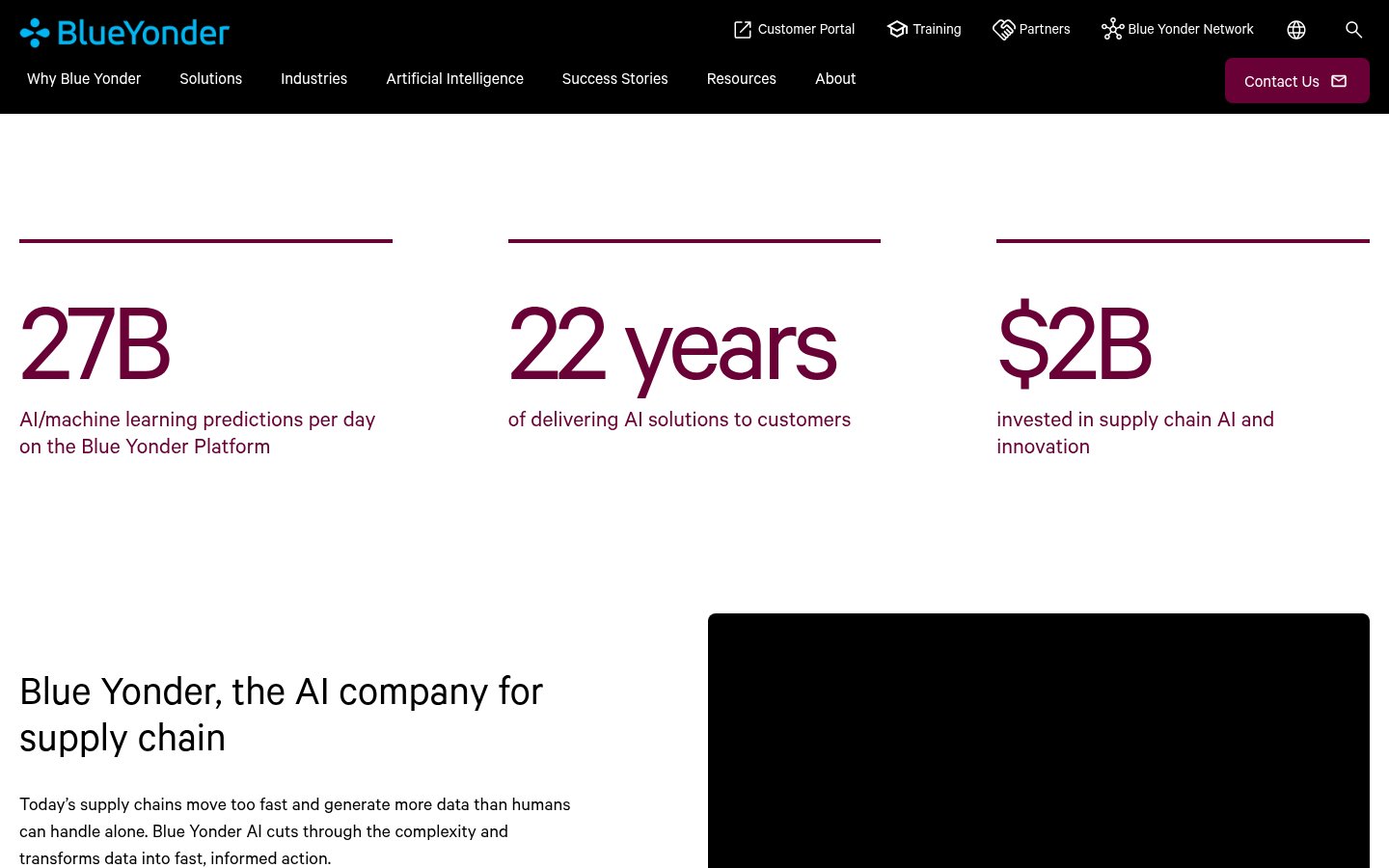
Official website: blueyonder.com
Blue Yonder (acquired by Panasonic in 2021 and now majority-owned by Panasonic Holdings) is one of the oldest names in supply chain AI, and in 2025-2026 it's pushing hard on its Luminate platform, which adds a real-time "supply chain control tower" layer on top of its legacy demand and fulfillment planning modules.
The Luminate Control Tower ingests data from suppliers, carriers, and internal systems to surface exceptions automatically, with AI-driven recommendations on how to respond. The demand planning module uses machine learning to blend statistical forecasting with causal factors like promotions, weather, and events. Blue Yonder claims 97%+ forecast accuracy improvements in published case studies with retailers like Whirlpool and M&S.
Where Blue Yonder earns its place above mid-market tools is depth: it covers warehouse management (WMS), transportation management (TMS), and demand planning in a single vendor relationship, which reduces integration overhead meaningfully.
Pricing: Enterprise SaaS. Modular pricing by capability; no public list prices. Expect six-figure annual spend for a meaningful deployment.
Best for: Retailers and manufacturers who want a single vendor for demand planning, WMS, and TMS rather than stitching three point solutions together.
Pros: Covers demand, warehouse, and transport in one platform, real-time control tower with exception management, strong retail and CPG reference base.
Cons: Legacy architecture in some modules shows its age, implementation complexity is high, sales process is slow for mid-market buyers.
Try Blue Yonder →4. Project44

Official website: project44.com
Project44 doesn't do demand planning. It does one thing: real-time multimodal shipment visibility, and it does it better than anyone else in this list. The platform tracks ocean, air, rail, and over-the-road freight through direct carrier connections (it claims 1,000+ carrier integrations as of 2025) and applies AI to predict ETAs with higher accuracy than carrier-provided data.
Its "Movement" platform consolidates visibility across freight modes into a single interface, with milestone alerts, delay prediction, and carrier performance benchmarking baked in. The AI ETA model reportedly outperforms traditional carrier ETAs by a meaningful margin on ocean freight, where the gap between "scheduled" and "actual" is routinely 3-7 days.
Project44 raised at a $2.7B valuation in 2022 (per public reporting) and counts Amazon, Unilever, and Lenovo among its named customers. For companies whose supply chain pain is "we don't know where our freight is until it's already late," this is the most direct fix on this list. If you're thinking about how AI is reshaping logistics cost structures, Google's TurboQuant Cuts AI Inference Costs in Half has some relevant context on where the real efficiency gains are coming from.
Pricing: Enterprise SaaS. Pricing scales with shipment volume and carrier connections; no public tiers.
Best for: Importers and large shippers who need accurate real-time visibility across ocean, air, and trucking lanes, especially those managing volatile lanes.
Pros: Deepest carrier network in the visibility space, AI-powered ETA prediction beats carrier data, multimodal coverage, strong integration library.
Cons: Visibility only, no planning or optimization capabilities, enterprise pricing, value diminishes if your carrier base is small.
Try project44 →5. Llamasoft (now Coupa) / Altana AI
Official website: altana.ai
Altana AI occupies a category most supply chain tools ignore: supplier network mapping and trade intelligence. The platform builds a continuously updated graph of the global supply chain, mapping tier-1, tier-2, and tier-3 supplier relationships using customs data, corporate filings, and other public trade data sources. It then overlays risk signals, sanctions lists, forced labor flags, and geopolitical exposure on that graph.
For companies navigating the Uyghur Forced Labor Prevention Act (UFLPA) compliance requirements, which require importers to affirmatively prove goods weren't made with forced labor, Altana is one of the few platforms that can actually trace material flows deep enough to satisfy CBP inquiries. That's a very specific, very real compliance problem that generic supply chain platforms don't address.
Altana has raised over $150M in venture funding and counts U.S. Customs and Border Protection among its government customers, per public reporting.
Pricing: Enterprise contract. No public pricing.
Best for: Companies with deep Tier-2/3 supplier exposure, heavily regulated importers, procurement teams managing ESG and forced labor compliance.
Pros: Uniquely deep supplier network mapping, government-grade data sourcing, purpose-built for trade compliance, continuously updated graph.
Cons: Not an operational planning tool, narrow use case won't justify cost for simpler supply chains, government-oriented sales cycle can be slow.
Try Altana AI →6. Flexport
Official website: flexport.com
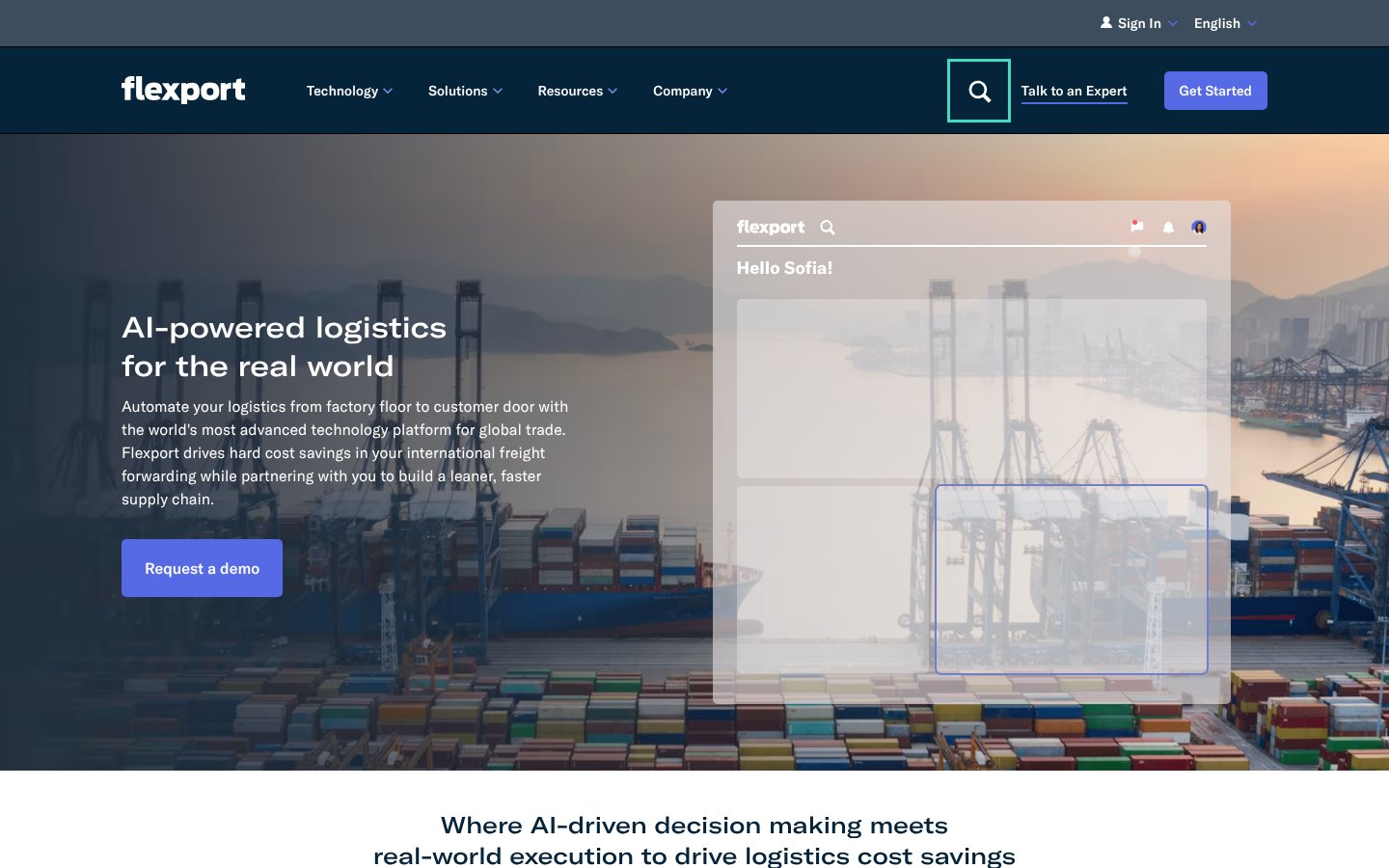
Flexport is both a freight forwarder and a software platform, which makes it unique on this list. You can use it purely as a tech-forward customs broker and freight forwarder, or lean into the platform layer for visibility and analytics. In 2025, after acquiring Shopify Logistics assets and Ryan Petersen returning as CEO, Flexport refocused on SMB and mid-market importers who want a tech-enabled freight experience without managing carrier relationships themselves.
The platform gives shippers real-time ocean and air freight tracking, carbon emissions reporting, automated customs documentation, and basic analytics on spend by lane and carrier. The AI layer flags likely delays and recommends alternative routing options. It's not as analytically deep as project44 on visibility or o9 on planning, but for a mid-size importer who wants one vendor handling both the freight and the software, the integrated model is genuinely useful. Businesses evaluating this category should also read How Independent Residential Property Managers Are Actually Using AI in 2026 for a grounded take on how AI tools perform in operationally complex small businesses.
Pricing: Freight forwarding fees apply (market rates). The platform software is typically included for active freight customers. No standalone software pricing published.
Best for: SMB and mid-market importers who want a tech-forward forwarder instead of a legacy freight broker, especially for ocean and air from Asia.
Pros: Freight + software in one relationship, strong UI for visibility and customs docs, carbon reporting included, better technology than legacy forwarders.
Cons: Software value is tied to using Flexport for freight, not as analytically capable as pure-play visibility or planning tools, coverage is stronger on ocean than other modes.
Try Flexport →7. Kinaxis RapidResponse
Official website: kinaxis.com
Kinaxis built its reputation on concurrent planning, the ability to run supply and demand planning simultaneously rather than sequentially, so changes in one plan instantly propagate to the other. RapidResponse has been doing this since the 2000s. The 2025-2026 version adds AI-driven autonomous agents (branded "Maestro") that can execute routine re-planning tasks without human intervention.
The Maestro agents handle tasks like recommending expedites when a component goes short, auto-suggesting safety stock adjustments based on demand volatility shifts, and flagging when a supplier's performance signals risk. Kinaxis cites customers including Toyota, Unilever, and Vodafone. The platform is particularly strong in manufacturing environments with complex multi-level bills of materials, where sequential planning tools fall apart.
The one honest caveat: Kinaxis is not cheap and not fast to implement. Expect 6-18 months for a full deployment depending on ERP complexity.
Pricing: Enterprise SaaS, no public pricing. Publicly traded on the Toronto Stock Exchange (TSX: KXS), so financials are available.
Best for: Complex discrete manufacturers with multi-level BOMs who need supply and demand to plan in the same model simultaneously.
Pros: Best-in-class concurrent planning architecture, Maestro AI agents reduce manual replanning, strong manufacturing reference base, publicly traded with auditable financials.
Cons: Long implementation timelines, high total cost of ownership, steeper learning curve than newer platforms.
Try Kinaxis RapidResponse →8. Llamasoft Supply Chain Guru (legacy, now Coupa) / Veridion
Official website: veridion.com
Veridion (formerly Soleadify) is supplier intelligence infrastructure. It maintains a continuously refreshed database of over 100 million companies globally, with structured data on each: products, certifications, financial health signals, news events, and location data. Procurement and supply chain teams use it to discover alternative suppliers quickly, validate supplier capabilities without lengthy RFI processes, and monitor existing suppliers for risk events.
The AI layer does entity matching (crucial when supplier names appear differently across systems), news and risk signal extraction, and capability scoring. For supply chain teams who spent the last few years looking for alternative suppliers in response to geopolitical disruption, Veridion is the database that makes that search faster and more structured. It's not a planning tool. It's the intelligence layer that feeds planning decisions.
Pricing: API and platform pricing. The company offers a free tier for limited API calls; enterprise plans are custom. Per published documentation, API access starts at a per-call or monthly subscription model, though enterprise pricing requires a sales conversation.
Best for: Procurement teams doing supplier discovery, risk monitoring, or building alternative supplier programs at scale.
Pros: 100M+ company database with continuous refresh, strong entity matching, useful for both discovery and ongoing risk monitoring, API-first for integration.
Cons: Not a planning or visibility tool, value depends on data quality in specific geographies, discovery tool only, doesn't execute anything.
Try Veridion →9. Logility
Official website: logility.com
Logility sits in the mid-market sweet spot that o9, Blue Yonder, and Kinaxis mostly ignore. Its Voyager Solutions suite covers demand planning, inventory optimization, supplier collaboration, and transportation planning with an implementation timeline and price point that mid-size manufacturers and distributors can actually absorb. The platform added AI-powered "autonomous replenishment" and demand sensing in 2024, with models that blend POS data, seasonal patterns, and promotion lift into a single forecast.
Logility has been around since the 1990s and is now a division of American Software (NASDAQ: AMSWA), so it's not going anywhere. The customer base skews toward food and beverage, consumer goods, and industrial manufacturers with $50M-$1B revenue. It won't match o9's scenario modeling depth or Kinaxis's concurrent planning engine, but for a company that can't staff a six-month enterprise implementation, Logility gets a full demand and supply planning stack running faster than most alternatives. Professional Services Firms Are Using AI Everywhere and Measuring It Almost Nowhere is a relevant read for any supply chain team trying to justify AI spend internally.
Pricing: Subscription SaaS. Logility doesn't publish list pricing, but industry sources consistently place it below the o9/Kinaxis/Blue Yonder tier. Mid-market accessible.
Best for: Mid-size manufacturers and distributors who need a real demand and inventory planning platform but can't justify enterprise-tier spend or implementation timelines.
Pros: Mid-market pricing and implementation timeline, covers demand through transportation in one suite, stable vendor backed by public parent, good food/CPG reference base.
Cons: Less sophisticated AI than top-tier platforms, scenario modeling is limited compared to o9 or Coupa, UI feels dated in some modules.
Try Logility →Comparison Table
| Tool | Primary Strength | Best Fit | Pricing Tier | Key Limitation |
|---|---|---|---|---|
| o9 Solutions | Integrated planning (demand + supply + finance) | Large enterprise | Enterprise contract | Long implementation, high cost |
| Coupa Supply Chain Design | Network design & simulation | Strategic planning teams | Enterprise contract | Not an operational tool |
| Blue Yonder | Demand + WMS + TMS combined | Retailers, CPG | Enterprise SaaS | Legacy architecture in some modules |
| Project44 | Real-time multimodal visibility | Shippers, importers | Enterprise SaaS | Visibility only, no planning |
| Altana AI | Supplier network mapping, trade compliance | Compliance-heavy importers | Enterprise contract | Narrow use case |
| Flexport | Freight forwarding + visibility platform | SMB/mid-market importers | Freight + platform | Software tied to using Flexport freight |
| Kinaxis RapidResponse | Concurrent demand/supply planning | Complex manufacturers | Enterprise SaaS | Slow, expensive implementation |
| Veridion | Supplier intelligence & discovery | Procurement teams | API/subscription | No planning or execution capability |
| Logility | Mid-market demand and inventory planning | Mid-size manufacturers | Mid-market SaaS | Less AI depth than top-tier tools |
How I ranked these
The primary criteria here were specificity of capability, depth of AI integration (not just "AI-powered" in the marketing copy but actual model outputs that change decisions), and fit with real supply chain problems that teams actually have in 2026. Network breadth, published customer evidence, and whether the tool covers a distinct problem others don't also factored in.
The most arguable placement is Altana at #5. It's more specialized than Blue Yonder or project44, but trade compliance is a genuinely underserved problem and Altana is the most capable tool in that lane, so the ranking reflects category importance rather than platform size. Logility at #9 isn't a weak tool, it's just narrower in AI sophistication than the top half of the list.
Veridion's position reflects an honest assessment: it's not a supply chain planning tool, it's data infrastructure. But it's genuinely useful infrastructure that belongs in this list because procurement and supplier risk are inseparable from supply chain resilience in 2026.
No affiliate relationships influenced placement here. The affiliate tie-breaker only applies when tools are substantively equivalent, which wasn't the case in this list.
Related reading
- AI Dispatch and Scheduling for Field Service Businesses: What's Actually Working in 2026
- Per-Seat SaaS Is Dying. AI Agents Are Killing It.
- Professional Services Firms Are Using AI Everywhere and Measuring It Almost Nowhere
- The WEF Just Measured What AI Is Doing to Entry-Level Finance Jobs. The Numbers Are Uncomfortable.
Frequently Asked Questions
Tools & Services Mentioned

infobro.ai Editorial Team
We research every tool from its documentation, pricing pages, product screenshots and public developer discussion, and say plainly what the evidence does and does not show. Drafts are AI-assisted and reviewed by our editors before publication. We revisit each article every 6 months to reflect platform changes. Learn more about our process.