Anthropic's Claude Tag Is Embedding Itself Into Your Company's Slack. That's Worth Paying Attention To.
Anthropic just launched Claude Tag for Slack, an always-on AI that learns your organization's context in real time. Here's what it actually means for enterprise AI strategy.
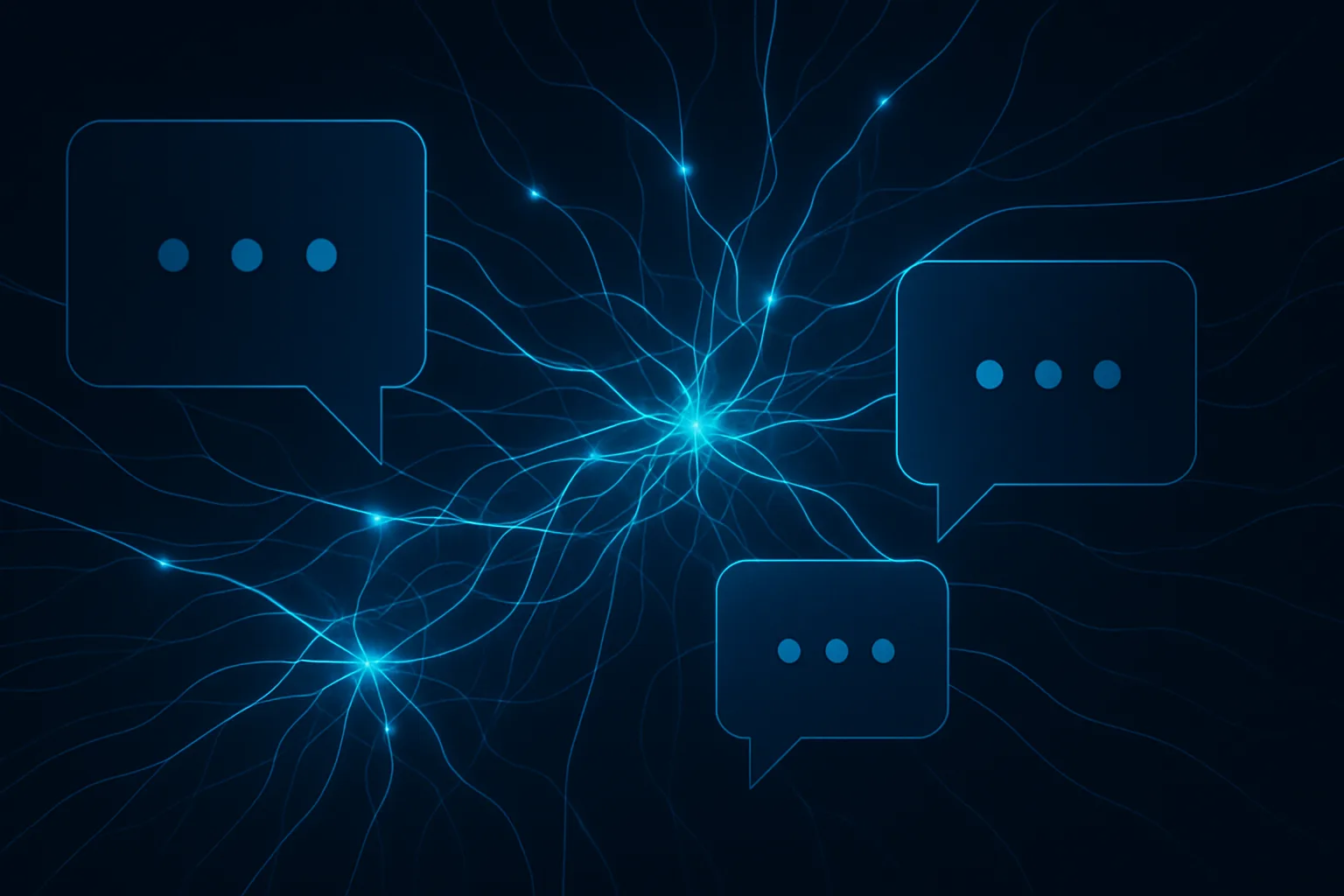
Anthropic just shipped something that sounds like a productivity feature but is actually a data strategy. Claude Tag brings Anthropic's Claude into Slack as a persistent, always-on AI teammate, one that doesn't wait to be prompted through a separate interface but sits inside the conversations where your company's real work happens.
The timing is deliberate. Enterprise AI adoption has been hitting a familiar wall: tools get deployed, employees use them inconsistently, and the results rarely match the pitch. The core problem is context. Most AI assistants know a lot about the world and almost nothing about your company. Claude Tag is Anthropic's answer to that gap.
What Claude Tag Actually Does
The feature works through a simple tagging mechanic. Employees mention @Claude in any Slack channel or thread, and Claude responds in context, with awareness of the surrounding conversation. That part is table stakes at this point.
The more significant piece is what happens over time. Claude Tag is designed to build a persistent model of organizational context, the kind of institutional knowledge that lives in Slack threads, project channels, and internal discussions. Who works on what. How decisions get made. What terminology your team uses. What was decided in that channel six months ago.
This isn't Claude reading your Slack history once and forgetting it. The architecture is built for continuous learning within the enterprise environment. Every interaction is an opportunity to deepen the model's understanding of how your specific organization thinks and operates.
Why This Is a Strategic Move, Not Just a Feature
Anthropic has been competing with OpenAI primarily on safety positioning and model capability. Claude Tag opens a different front: organizational stickiness.
Once an AI system has learned your company's internal language, your project structures, your team dynamics, and your decision history, switching costs go up dramatically. This is exactly what enterprise software incumbents have always understood about platforms like Salesforce or Workday. The product isn't just the functionality. It's the accumulated context.
Slack is the right beachhead for this. It's where unstructured organizational knowledge lives. Email is formal and filtered. Documents are polished outputs. Slack is the raw feed of how a company actually thinks, debates, and decides. Plugging an AI into that feed is qualitatively different from plugging it into a document editor.
John Jumper's recent move from DeepMind to Anthropic signaled that Anthropic is serious about attracting the kind of scientific and systems-level talent needed to execute on long-horizon bets. Claude Tag looks like one of those bets made product.
The Privacy Question Nobody Should Skip
Persistent organizational learning inside a messaging platform raises real questions that deserve straight answers.
What data does Claude retain? Where is it stored? Who at Anthropic can access it? How is it segmented across enterprise customers? What happens to an organization's accumulated context if they cancel their Anthropic contract?
These aren't hypothetical concerns. The KPMG situation earlier this year, where a published AI-assisted report had to be retracted over hallucinated content, showed that enterprise AI deployments carry real institutional risk when the underlying systems aren't fully understood by the people using them. A system that's actively learning from internal communications raises the stakes further.
Anthropic has strong enterprise data handling commitments on paper. IT and security teams should read those commitments carefully before rolling this out broadly, not after.
The Supervision Problem Gets Harder
There's a compounding dynamic worth flagging here. Workers are already spending nearly as much time supervising AI outputs as doing the underlying work, a pattern that's been consistent across industries in 2026. Claude Tag's always-on presence in Slack could either help or hurt that ratio depending on how it's deployed.
If Claude is surfacing relevant context, summarizing decisions, and reducing the time spent re-explaining background to new team members, the supervision burden might drop. If it's generating responses in active channels that employees feel obligated to read, correct, or respond to, you've added noise to the most noise-prone communication channel in your stack.
The difference comes down to how carefully the rollout is scoped. Turning Claude Tag on in every channel immediately is almost certainly the wrong call.
What the Competitive Landscape Looks Like Now
Microsoft has been pursuing the same organizational context play through Copilot, and the Wave 3 update in March 2026 brought autonomous multi-step task execution directly into Microsoft 365. The E7 Frontier Suite at $99 per user per month bundles Copilot with governance controls and security tooling.
Anthropic's approach through Slack is different. Microsoft owns the productivity suite, so its context comes from documents, emails, and calendar data. Anthropic is going after the conversational layer, the less structured, more candid stream of organizational thinking that lives in Slack rather than Word or Outlook.
Both approaches are valid. They're also not mutually exclusive for large enterprises, which means the real question isn't Claude Tag versus Copilot. It's how these systems interact when both are present in the same organization and whether their context models stay coherent or start contradicting each other.
What to Do Right Now
For teams already using Slack heavily, Claude Tag is worth a controlled pilot. The key word is controlled. Pick one or two channels where the use case is clear, where the potential value is high and the risk of generating noise is low. Internal knowledge bases, onboarding channels, and project retrospective threads are reasonable starting points.
Before you enable it anywhere, get clear answers from Anthropic on data retention, cross-tenant isolation, and what happens to your organizational context model if you exit the contract. The prompting decisions you make at the start of any AI deployment shape the outputs you get for months afterward, and that's doubly true for a system that's designed to learn continuously.
Anthropic is making a serious enterprise play here. Claude Tag isn't just a Slack bot. It's an attempt to become the institutional memory layer for how companies think. That's worth taking seriously, in both directions.