Current AI Is Trying to Build the Open Internet of AI. Here's Why That's Harder Than It Sounds.
A nonprofit called Current AI is building free, culturally inclusive AI infrastructure for everyone. The mission is real. The execution challenges are even more real.
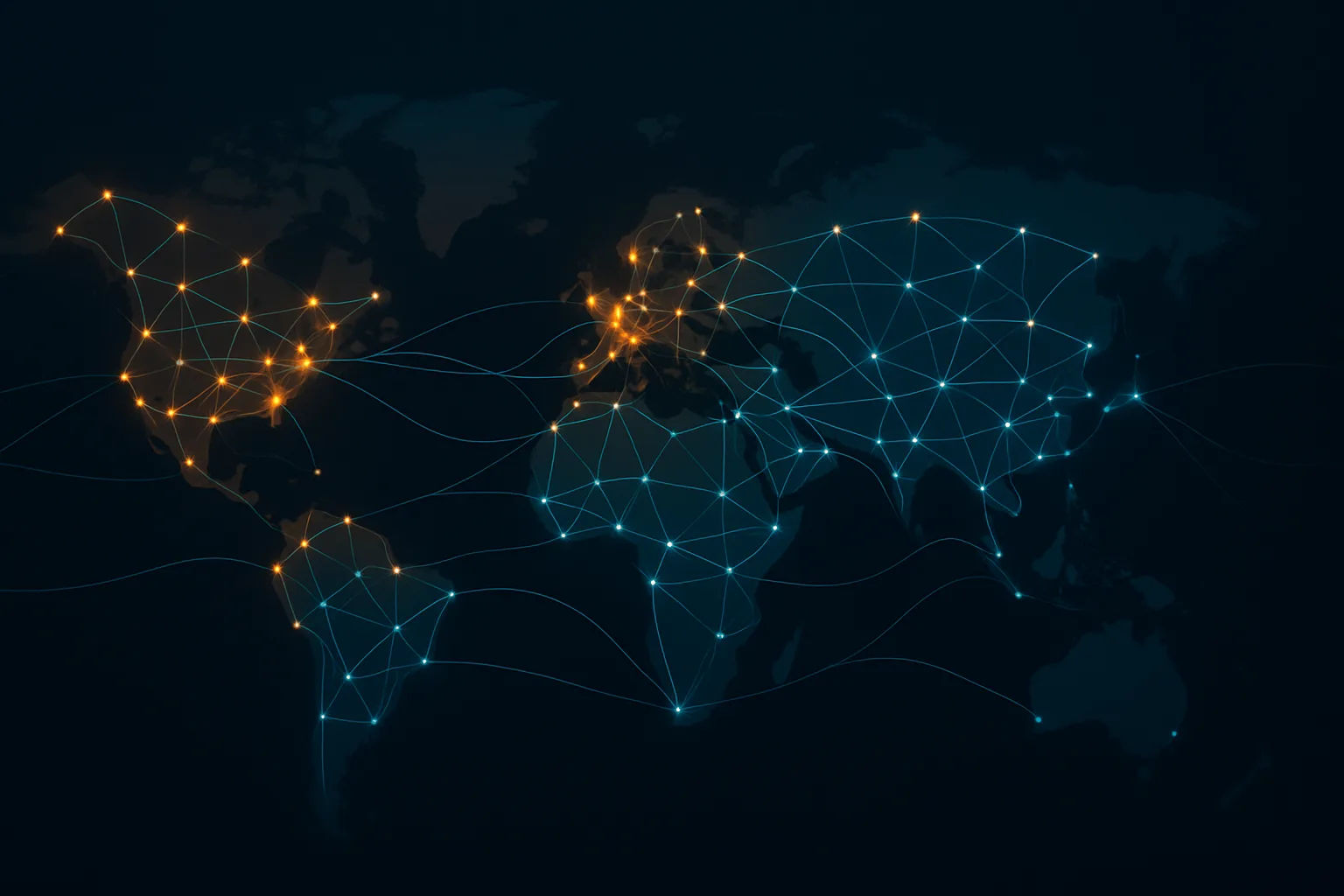
A nonprofit called Current AI is making a serious push to build what its team describes as the open infrastructure layer for artificial intelligence, something like the early internet, but for AI models, access, and capability. The ambition is genuine. So are the obstacles.
The project targets a problem that's been sitting in plain sight for a while: the AI tools most people use were built by and for a fairly narrow slice of the world. English-first, Western-context, subscription-gated. Current AI wants to break that pattern by building AI that's free, multidevice, and designed to serve cultures that existing models largely ignore.
That's not a small thing to attempt. And the fact that a nonprofit is attempting it, rather than a well-funded lab, makes the story worth paying close attention to.
What Current AI Is Actually Building
The project isn't just another chatbot with a mission statement. Current AI is working across three distinct layers: device-level AI that runs locally, a chat interface, and what the team frames as a broader AI commons, shared infrastructure that developers and communities can build on without paying API fees or accepting the data terms of commercial providers.
The "World Wide Web of AI" framing is a deliberate callback to the early web's promise of open, universal access. Whether Current AI can actually deliver on that is a different question, but the structural intent is clear: build the pipes that others can use, not just a product that competes with ChatGPT for market share.
The local device component is particularly notable. Running capable AI on-device rather than through cloud APIs is genuinely hard, and it matters a great deal for users in regions with unreliable internet connectivity or legitimate concerns about data sovereignty. Most commercial AI providers have moved in the opposite direction, requiring cloud access and centralized processing. The energy and compute demands of that model are already causing real friction, just look at what's happening with data center construction in states like New York, where new facility development has been frozen over infrastructure concerns.
Why the Cultural Inclusivity Piece Is More Technical Than It Sounds
Current AI's emphasis on leaving "no culture behind" isn't just a values statement. It reflects a real limitation in how most frontier models were trained. The dominant language models absorbed enormous amounts of English-language text and, to varying degrees, other widely represented languages. For languages spoken by hundreds of millions of people, but underrepresented in digitized text corpora, those models perform noticeably worse. Context gets lost. Idioms get mangled. Entire frameworks of meaning that don't map neatly to Western conceptual structures get flattened.
Building models that actually serve those users requires different training data, different evaluation criteria, and often different architectural choices. That's expensive and slow even for well-capitalized labs. For a nonprofit, it requires a funding and partnership model that hasn't been proven at scale yet.
This is part of why the AI context problem is so persistent: the tools most people use weren't built with their specific contexts in mind. Current AI is trying to fix that at the infrastructure level rather than patching it at the product level.
The Nonprofit Model: Genuine Strength, Genuine Risk
Running this kind of project as a nonprofit has real advantages. No pressure to monetize user data. No investor timeline forcing premature scaling. No incentive to lock users into a proprietary ecosystem. These aren't small things when the stated goal is building open infrastructure.
The risk is equally straightforward: nonprofits building technically demanding AI infrastructure need sustained funding, and sustained funding for AI nonprofits is genuinely hard to secure. The grant landscape for AI safety and access work is competitive and often tied to specific research outcomes rather than infrastructure buildout. Recruiting and retaining engineers capable of working on frontier-adjacent problems, without paying frontier salaries, is a constant pressure.
The commercial AI labs don't face these constraints. And they're not standing still. The pricing localization moves being made by labs like Anthropic in markets like India show that the big players are aware of the access gap and moving to close it on their own terms. That's not the same as open infrastructure, but it does narrow the window in which an open alternative can establish itself before users form habits around commercial products.
The Competitive Clock Is Running
Timing matters here. The early web succeeded partly because it got to ubiquity before commercial platforms could lock users into walled gardens. AI is playing out differently. The commercial lock-in is happening fast, through API dependencies, proprietary fine-tuning, and the simple fact that products like Duolingo Max and Khan Academy Khanmigo are already building user habits on top of commercial model providers.
Once those habits form at scale, and once the institutional integrations get deep enough, switching to an open alternative becomes a real coordination problem. It's not impossible, but it requires the open option to be meaningfully better, or meaningfully cheaper, for users who've already adopted the incumbent tools.
Current AI's best window is probably the next 18 to 24 months. If it can demonstrate that locally-running, culturally-aware AI actually outperforms cloud-dependent commercial tools for users in underserved markets, that's a real value proposition. If it's still in "promising progress" mode two years from now, the commercial platforms will have moved far enough down the access and localization curve to make the nonprofit case harder to make.
What to Watch
The specific markers worth tracking: Does Current AI publish performance benchmarks in non-English languages that can be independently verified? Does it secure institutional partnerships, with governments, universities, or international NGOs, that give it distribution without requiring it to compete for consumer attention? And does the local device capability actually work at the quality level users expect after two years of using GPT-class cloud models?
The AI personalization problem that plagues most commercial tools is real, and solving it through open, locally-run infrastructure is a legitimate approach. But legitimate approaches fail all the time when the execution can't keep pace with the ambition.
What You Should Do Right Now
If you work in AI policy, international development, or education technology, Current AI is worth monitoring closely. Not because it's guaranteed to succeed, but because if it does, it changes the default assumption that frontier AI access requires a subscription to a US-based commercial provider.
If you're building AI-powered tools for users outside North America and Western Europe, it's worth understanding what Current AI is actually offering developers. Open infrastructure that avoids API fees and data sovereignty concerns is a real build-vs-buy consideration.
And if you're just trying to understand where AI access is heading, the tension between open and commercial AI infrastructure is one of the more consequential dynamics of the next few years, arguably more consequential than which model tops the benchmark leaderboard this month. The AI feedback loop problem that affects individual users is one thing. The infrastructure feedback loop that determines who has access to capable AI at all is a much bigger question.
Current AI is one of a small number of serious bets on a different answer.

Founder and editor of infobro.ai
We research every tool from its documentation, pricing pages, product screenshots and public developer discussion, and say plainly what the evidence does and does not show. Drafts are written with AI assistance under our editorial rules, and we revisit articles to reflect platform changes. Learn more about our process.