Anthropic Is Localizing Claude Pricing for India. Here's What That Actually Signals About the Next AI Market.
Anthropic is introducing rupee-denominated Claude plans for Indian users. It's a small pricing change with large strategic implications for who wins the next billion AI users.
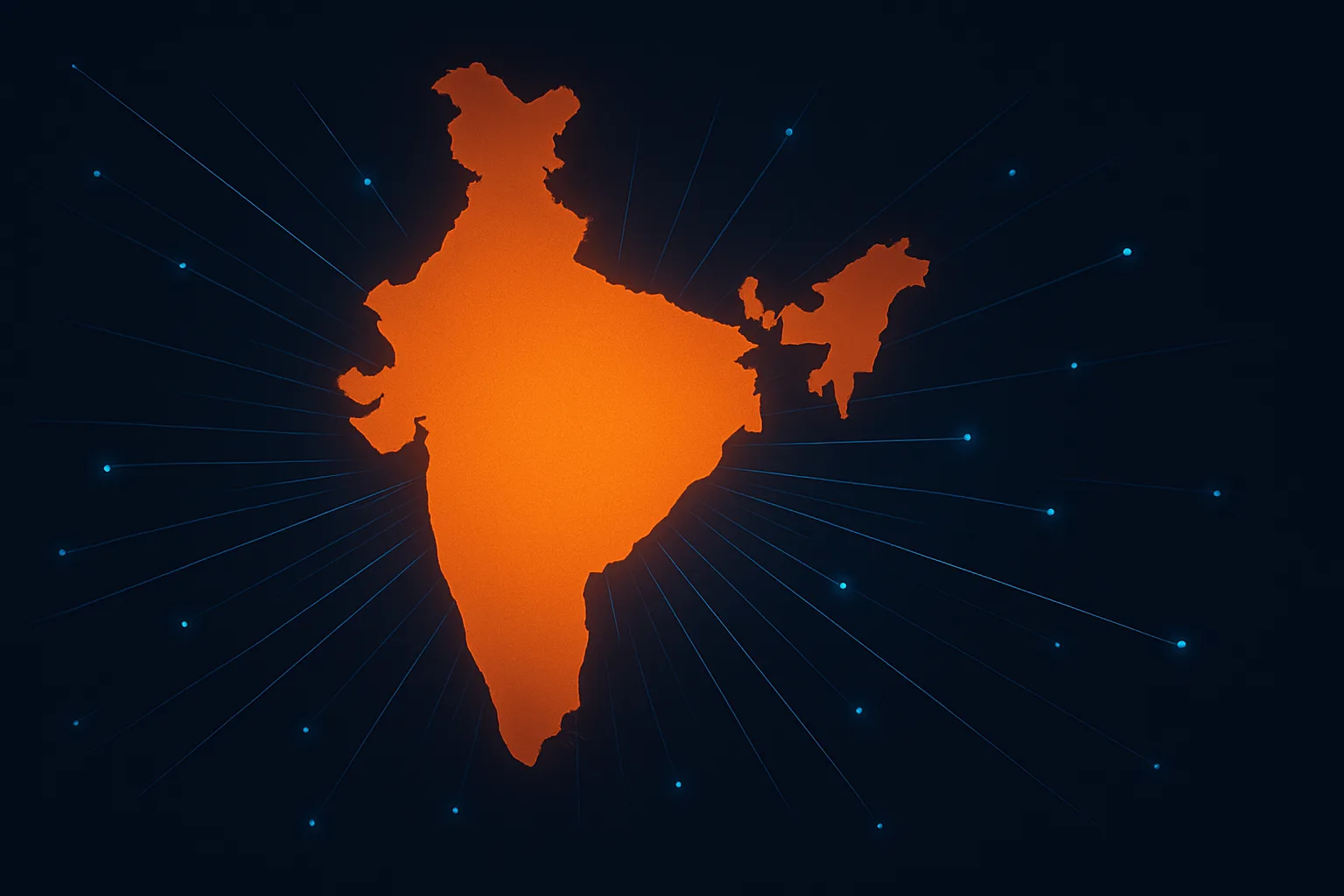
Anthropic just quietly did something that most Western AI companies have been slow to do: it started charging Indian users in Indian rupees.
Claude's subscription plans in India are now denominated in INR rather than USD. That sounds like a billing detail. It isn't. It's a strategic signal about where the next phase of AI adoption actually happens, and which companies are serious about competing for it.
What Anthropic Actually Changed
The shift is straightforward on the surface. Indian users opening Claude subscription pages are now seeing rupee-denominated pricing rather than dollar amounts they'd have to mentally convert, then pay currency conversion fees on top of. The plans themselves mirror the existing tier structure, just localized for the Indian market.
But localized pricing isn't just a UX convenience. It typically involves local payment infrastructure, regional pricing adjustments that reflect purchasing power parity, and a commitment to building a market rather than just passively serving it. Companies don't do this for markets they consider secondary.
Anthropic has confirmed that India is its largest market outside the United States. That's a significant data point. It means Indian users were already adopting Claude in large numbers while paying in dollars, navigating conversion friction, and often dealing with payment methods that don't always work smoothly across international billing systems. Removing that friction for a market that size isn't a pilot program. It's an acknowledgment that India is a core bet.
Why India, Why Now
The timing makes sense when you look at what's happening in Indian AI adoption. India has a large, technically sophisticated developer and professional class, a growing startup ecosystem that builds heavily on AI APIs, and an English-language fluency that makes large language models immediately useful without the localization overhead required in many other high-growth markets.
It also has a price sensitivity that dollar-denominated SaaS subscriptions don't accommodate well. A $20/month Claude Pro plan is meaningful money in a market where equivalent professional tools are expected to cost a fraction of that. Rupee pricing opens the door to pricing tiers that actually match Indian market expectations, rather than forcing a binary choice between the global price and no subscription at all.
The competitive pressure here is real. Google has been aggressively pushing Gemini across its existing Indian user base through products like Gmail, Google Docs, and now Waze. OpenAI has global brand recognition and a free tier that's widely used. For Anthropic to compete in India, it needs more than a good model. It needs to be a product that Indian users can actually buy without friction.
This move addresses that directly.
The Broader Pattern This Fits Into
Anthropic isn't the only AI company rethinking geographic strategy right now. The early phase of the AI boom was largely a US-centric story: US companies, US pricing, US regulation, US users driving the majority of revenue. That phase is ending.
The companies that will dominate AI in 2028 and beyond are the ones building real infrastructure in secondary markets today. That means local pricing, local payment rails, local partnerships, and often local model tuning. India is the obvious first move because the addressable market is enormous and the English-language barrier that slows adoption elsewhere doesn't apply.
What's interesting is that this also signals something about Anthropic's confidence in Claude as a product. You don't invest in regional market infrastructure for a product you're planning to overhaul. The localization push suggests Anthropic believes its current Claude tier structure, including the recently launched Claude Sonnet 5, is stable enough to build a regional business around.
It also tells you something about the competitive pressure Anthropic feels. If Claude were comfortably dominant, there'd be less urgency to optimize conversion in specific geographies. Localized pricing is an offensive move dressed as a product update.
What This Means for Teams and Developers in India
If you're a developer or professional in India who's been using Claude on a free tier or tolerating the dollar billing overhead, the practical impact is straightforward: expect the subscription conversion math to look different. Rupee pricing typically comes in below the direct dollar conversion equivalent, because companies set local prices based on purchasing power benchmarks rather than pure currency translation.
That means Claude Pro and any higher tiers become more accessible to Indian users who found the previous pricing hard to justify. For teams evaluating whether to build on Claude's API versus alternatives, this pricing signal also suggests Anthropic is willing to compete on cost in the Indian market, which may translate to API pricing adjustments over time.
For HR and recruiting teams at Indian companies using AI tools, the practical effect is that enterprise Claude access gets more viable. That's worth tracking if you're evaluating AI procurement, especially given how many Indian enterprises are currently assessing tools for knowledge work automation. Our roundup of AI tools for HR and recruiting gives context on what those evaluation decisions actually look like in practice.
What to Watch Next
Localized pricing is step one. The more interesting question is whether Anthropic follows it with localized model behavior, local partnerships, or a regional go-to-market team.
The companies that have successfully cracked large non-US markets, in any SaaS category, have consistently found that pricing is a necessary but not sufficient condition. You also need support, onboarding, and a product that reflects local use patterns. Indian Claude users may use the tool quite differently from US users, and Anthropic will need to understand those patterns to compete for the long term.
There's also the question of what this signals about other markets. If India is getting rupee pricing now, the next candidates are probably Brazil, Indonesia, and parts of Southeast Asia. Markets with large English-proficient professional populations, strong developer communities, and dollar-pricing friction are the obvious targets.
The broader AI governance question matters here too. Different markets have different expectations around data residency, privacy, and model transparency. As Anthropic expands its geographic footprint, those questions will become harder to defer. We've written about how AI governance inside organizations is already complicated enough at the team level. At the country level, the complexity multiplies.
The rupee pricing announcement is easy to read as a minor billing update. It's actually a declaration that Anthropic is done treating markets outside the US as an afterthought. Whether it can execute on that declaration is the more important question. But the signal itself is clear.
For context on how the AI competitive landscape is shifting more broadly, the Apple vs. OpenAI trade secret lawsuit and OpenAI's recent family product pivot both point to the same underlying dynamic: every major AI company is looking for the next growth vector, because the US professional market is getting saturated fast. India is one of the most credible answers to that problem. Anthropic just said so with its pricing page.