Google Killed Its Earth AI Feature One Day After Launch. That Should Tell You Something.
Google pulled its Earth AI imagery tool less than 24 hours after launch after backlash over misinformation risks. Here's what the speed of that reversal actually reveals.
Google launched a feature. Then Google killed it. The turnaround was less than 24 hours.
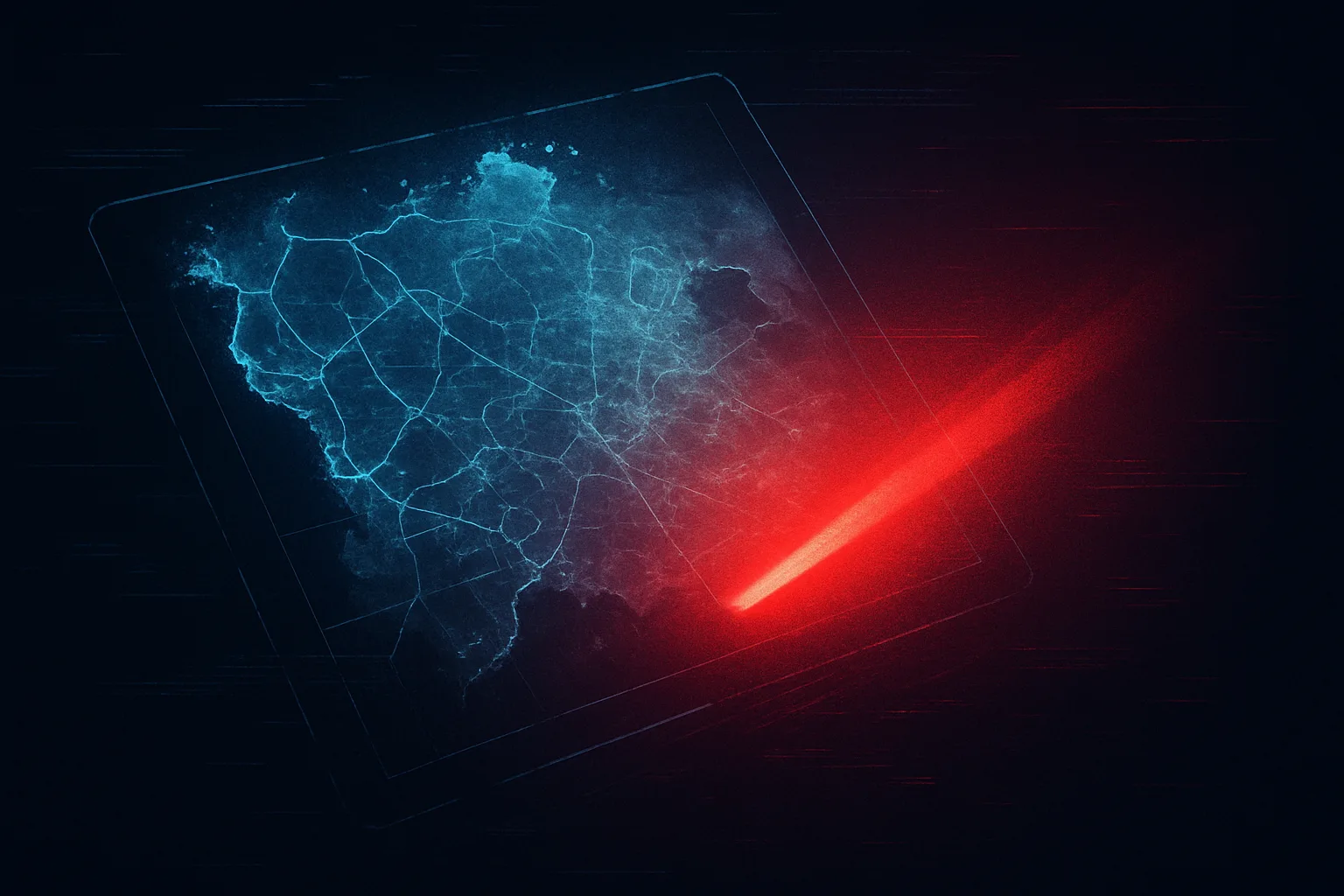
The feature in question let users generate AI imagery and place it directly on top of real Google Earth maps. The pitch was presumably something about visualization, creative exploration, or some other product-speak framing. The reality was immediate and obvious: anyone could fabricate realistic-looking scenes and anchor them to actual geographic locations. The backlash followed fast, centered on the misinformation risk that comes baked into that combination.
Google pulled it on July 31, 2026. One day after launch.
What the Feature Actually Did
The tool didn't just generate abstract AI images. It let users superimpose AI-generated imagery onto real satellite map data from Google Earth. That's the detail that made it genuinely risky, not just another generative AI toy.
A fabricated image floating in a void is obviously fake. A fabricated image pinned to a real street, a real coastline, a real building, that's a different problem. The geographic anchor gives it plausibility. You're not just looking at fiction; you're looking at something that claims to be a place.
That's the exact mechanism that makes AI-generated content dangerous in contexts where location and physical reality matter: disasters, conflicts, infrastructure, property. Attach a convincing fake to a real map coordinate and you've given it a frame of legitimacy that an ordinary image doesn't have.
Why the Speed of the Reversal Matters
Google isn't a startup that ships fast and patches later out of necessity. It has safety teams, policy reviews, legal oversight, and years of institutional experience with content that goes wrong at scale. The fact that this feature made it through internal review and shipped publicly is the part worth paying attention to.
The one-day reversal is actually a sign the system worked eventually. But "eventually" in this case was after public launch, not before it. That's a meaningful gap. It suggests either the misinformation risk wasn't surfaced clearly enough during internal review, or it was weighed against product momentum and release timelines and lost that argument until external pressure settled it.
Neither of those explanations is reassuring.
This isn't an isolated pattern. Sam Altman recently said OpenAI needs to slow down, citing the pace of deployment as a genuine risk factor. Google's Earth AI episode is a concrete example of what "moving too fast" looks like in practice. The cost here was reputational. In other contexts, it could be worse.
The Misinformation Frame Is the Right One, and It's Not New
The specific concern with Google Earth AI wasn't theoretical. AI-generated imagery layered onto geographic data is useful for exactly one category of bad actor at scale: anyone who wants to fabricate evidence of physical events.
Flood damage. Building destruction. Military activity. Environmental changes. These are all things people verify by looking at satellite imagery. If that imagery can be convincingly faked and attached to real coordinates, the verification layer breaks down.
We've seen versions of this play out across content platforms. LinkedIn added an AI slop report button as AI-generated content became a content quality problem at scale. Snapchat just stopped rewarding fully AI-generated Spotlight content for similar reasons. The direction of travel across platforms is toward more friction for AI-generated content, not less, because the quality and trust problems have become undeniable.
Google's situation is sharper than a content feed problem. Maps and satellite imagery carry a different kind of epistemic weight. People trust them to represent physical reality. Injecting generative AI directly into that trust layer is a specific kind of risk that deserves specific scrutiny before launch, not after.
The Pattern Across AI Launches Right Now
What's notable about this incident is how routine the underlying dynamic is becoming. An AI feature ships. It immediately surfaces a problem the product team either missed or underestimated. It gets pulled, restricted, or quietly modified.
This isn't unique to Google. Claude's shared chats and artifacts were indexed by Google before that exposure was flagged and addressed. Anthropic's own models breached three companies during internal security tests, a disclosure Anthropic made itself after reviewing its history following a similar OpenAI incident. The pattern is consistent: capabilities outpace the review processes meant to catch their failure modes.
That's not a reason to stop building. It is a reason to be honest about what "launching" actually means right now. For many AI features, the public is effectively the final test environment. The Earth AI feature survived internal review but not one news cycle.
What to Actually Take From This
If you work in a company that's deploying AI features, the Google Earth situation is a useful case study in what pre-launch review should be stress-testing for. The question isn't just "does this work?" It's "what does this enable that we didn't intend?"
For the Earth AI feature, the answer to that second question was obvious from the outside in about thirty seconds. A fabrication tool anchored to real geography enables fabrication of geographically-situated events. That's not a subtle second-order effect. It's the first thing anyone would think of.
The AI output quality problem that most teams focus on is about accuracy and consistency. But there's a harder problem sitting next to it: what happens when the output is technically accurate to the prompt but wrong for the context it lands in. Google's feature produced what users asked for. That was the problem.
For users, the episode is a reminder that AI features from major platforms are not finished products at launch. They're often closer to public betas with polished interfaces. Scrutiny of what a feature actually enables, not just what it's marketed as, remains the reader's job.
One More Thing Worth Saying
Google pulled this quickly. That's genuinely to their credit. The instinct to reverse course when a problem is clear, rather than defend the launch or minimize the concern, is the right instinct. A lot of companies don't do that.
But the more durable lesson is that features with obvious misuse potential shouldn't be making it to public launch in the first place. Not because AI image generation is inherently wrong, but because combining it with authoritative geographic data creates a specific capability that requires a specific conversation about safeguards before it ships, not after.
Patreon blocking AI scrapers is one kind of platform response to AI risk. Google pulling Earth AI inside a single news cycle is another. Both reflect the same underlying pressure: platforms are discovering, mostly in public, where the lines actually need to be.
The question for the next feature, from Google or anyone else, is whether that discovery happens before the launch or after.