Texas Just Halted New Data Centers as Anthropic Signs a $10 Billion Cloud Deal. Here's What Both Stories Actually Mean.
Texas froze new data center construction the same day Anthropic inked a $10B cloud deal with startup Volta. The two stories together reveal exactly where the AI infrastructure crunch is heading.
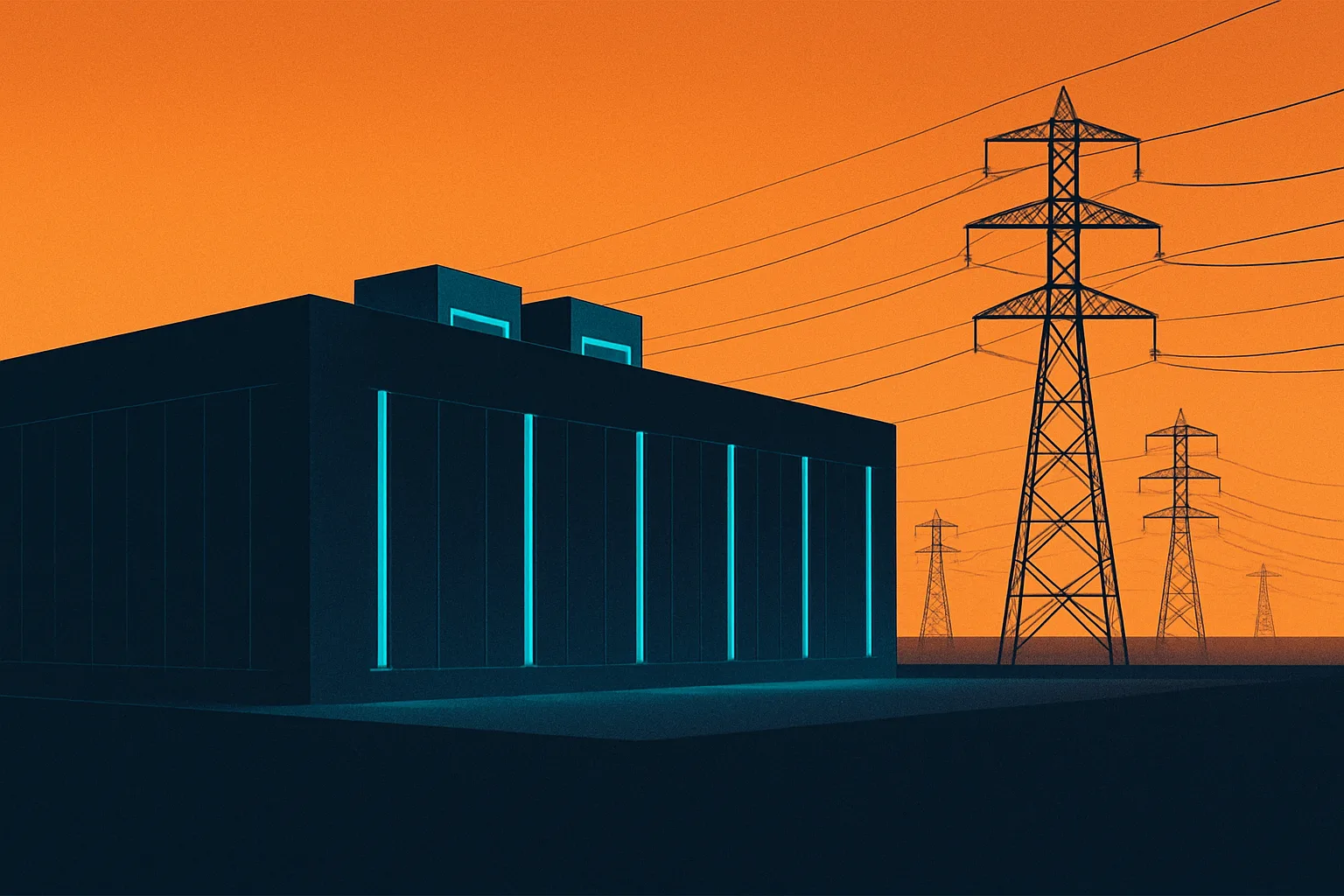
The AI industry ran into two walls on the same day, and neither one got the attention it deserved on its own. Texas froze new data center construction. Anthropic signed a $10 billion deal with an AI cloud startup called Volta. Put those two stories side by side and you get a clearer picture of what's actually happening to the infrastructure underneath every AI product you use.
Texas Freezes Data Center Construction
Texas was supposed to be the answer. Loose regulations, abundant land, a power grid theoretically big enough to absorb massive industrial loads, and a state government that had spent years positioning itself as friendly to tech investment. Companies building AI infrastructure had been flooding in.
Now the governor has called for audits and halted new data center approvals. The move follows similar action from New York, which froze all new data center construction earlier this year. The pattern is no longer a fluke. State governments are hitting the brakes because the power demand from AI data centers is straining regional grids in ways that weren't fully anticipated when the initial approvals went through.
Texas is not a small footnote. It had become one of the most active data center markets in the country precisely because developers expected fewer regulatory headaches there than on the coasts. The freeze signals that even the most permissive jurisdictions have a ceiling, and the AI industry has been bumping against it faster than anyone planned.
The governor's call for audits suggests this isn't a temporary pause either. Audits produce findings, findings produce new rules, and new rules change the calculus for every project already in the pipeline. Developers who were counting on Texas capacity over the next 18 to 24 months now have to rethink their timelines.
Anthropic's $10 Billion Bet on Volta
The same day Texas announced its freeze, Anthropic confirmed a $10 billion deal with Volta, an AI cloud startup. Anthropic has been striking cloud partnerships at an accelerating pace. This one is notable for its size and for the fact that it's going to a startup rather than one of the established hyperscalers.
That choice isn't accidental. Anthropic already has relationships with the major cloud providers. The Volta deal looks like a deliberate hedge, a way to secure dedicated compute capacity through a partner that isn't also serving every competitor in the market. If you're Anthropic at a near-trillion-dollar valuation with an IPO on the horizon, you don't want your inference capacity bottlenecked by a vendor whose other priority customers include your direct rivals.
Ten billion dollars is also a serious commitment to a startup. It tells you something about how Anthropic views the near-term compute market: supply is tight, alternatives to the hyperscalers are worth paying a premium for, and locking in capacity now is cheaper than competing for it in 18 months when everyone else is in the same queue.
Why These Two Stories Belong Together
The Texas freeze and the Anthropic deal are symptoms of the same underlying problem. The AI industry is consuming power and physical infrastructure faster than the world is building it. Every major model launch, every new agent deployment, every expansion of inference capacity runs into the same physical constraint: you need somewhere to put the chips, and that somewhere needs enormous amounts of electricity.
The KV cache memory crisis is one dimension of this. State-level construction freezes are another. Anthropic paying $10 billion to secure cloud capacity from a startup is a third. They're all different expressions of the same scarcity.
The companies that saw this coming are the ones making big infrastructure bets right now. The ones that didn't are going to find themselves competing for constrained capacity at the worst possible time, right as agent deployments are scaling from pilots to production. AI agents running at scale require sustained compute, not just the burst capacity you can get away with for a demo.
What the Open Secure AI Alliance Timing Tells You
One more data point worth noting from the same day: Nvidia's week-old Open Secure AI Alliance, which now includes over 120 companies, already has proposals out for defending against AI agents. The group formed, grew to 120 members, and produced concrete output in seven days.
That pace reflects genuine urgency. The infrastructure layer isn't just a power and real estate problem. It's also a security problem. As agents get more capable and more widely deployed, the attack surface on AI infrastructure expands. Nvidia moving this fast on an industry coalition for agent security is a signal that the companies closest to the infrastructure think the risk is real and imminent, not theoretical.
For teams currently evaluating how AI agents are being used in enterprise workflows, the Nvidia coalition's focus on agent defenses is worth tracking. The tooling to secure agent deployments is still early, and anything that accelerates standards development in that area matters.
What You Should Actually Do With This Information
If you're making infrastructure decisions for an AI-dependent product, the Texas and New York freezes are a concrete signal to stop treating US data center availability as unlimited. Capacity assumptions baked into 2025 planning documents may not hold.
If you're evaluating cloud providers for AI workloads, the Volta deal illustrates that Anthropic is actively diversifying away from sole dependence on hyperscalers. That's a reasonable model for enterprises to consider too. Sole-sourcing your AI inference capacity through a single hyperscaler is a concentration risk that looks more serious every time a new construction freeze gets announced.
If you're watching the agent security space, the Open Secure AI Alliance is the group to follow. 120 companies in seven days means there's real momentum, and the proposals it produces will likely influence how enterprise AI deployments handle agent governance over the next year.
The infrastructure underneath AI is getting more constrained, not less. The companies acting like that's true are placing their bets accordingly. The ones still assuming abundant, cheap compute is the baseline are going to have a difficult 2027.