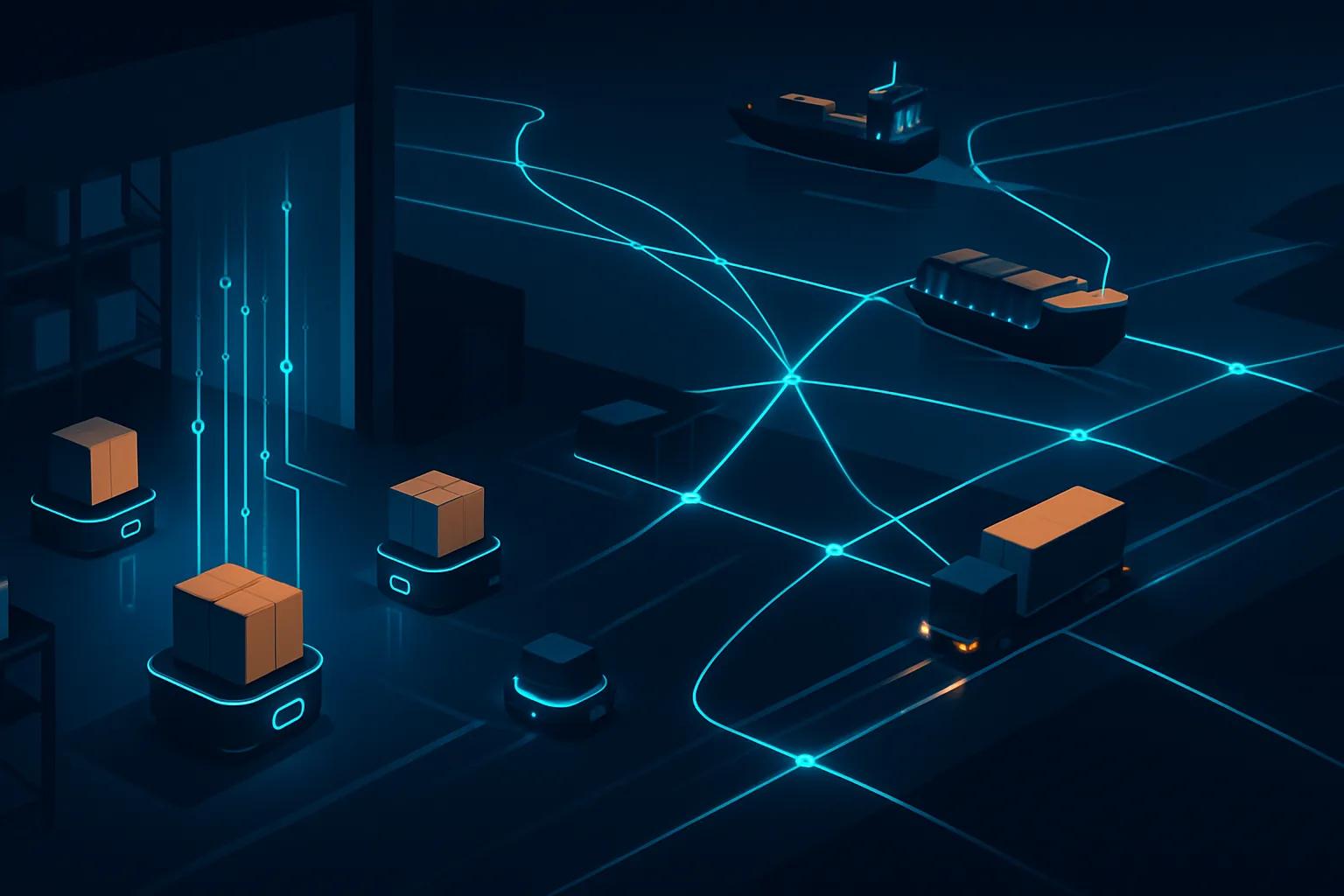
How AI Agents Are Taking Over E-Commerce Inventory Decisions in 2026
AI agents now handle reordering, demand forecasting, and pricing in real time. Here's what that actually looks like in practice and what it means for your operations team.
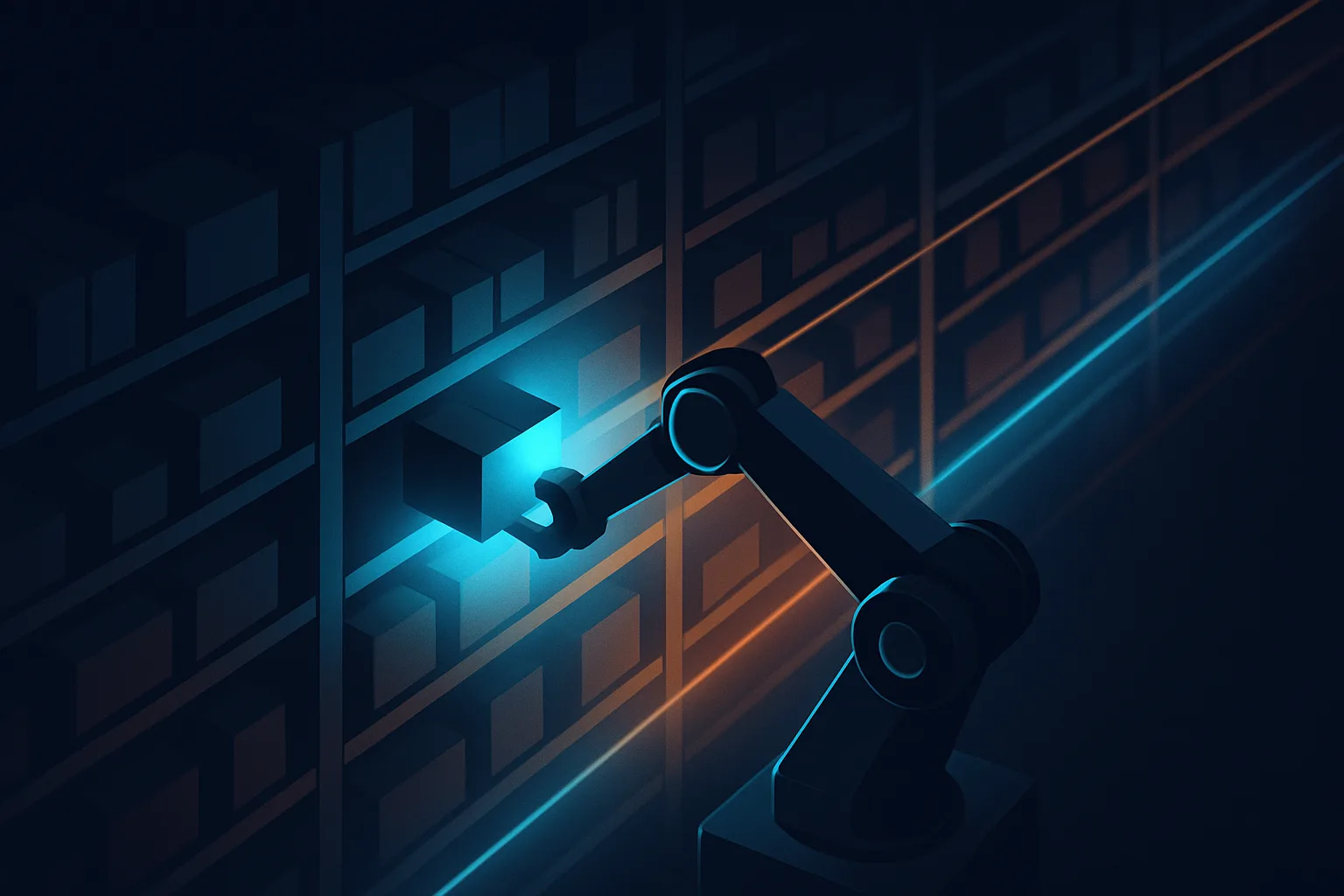
Most inventory teams in 2025 were still doing the same thing they did in 2019: opening spreadsheets, comparing last month's sales to current stock levels, and making reorder calls based on a category manager's gut. Stockouts got discovered after they'd already cost revenue. Overstock got flagged when the carrying costs became genuinely painful.
That model is collapsing fast. Not because AI tools got smarter at answering questions, but because AI agents got good enough to make decisions autonomously across complex, multi-variable inventory environments. The shift is bigger than it sounds. It's not AI assisting a human decision. It's AI replacing the decision loop entirely for a specific class of problems.
This piece covers what that actually looks like in practice, where the real value is concentrated, what can go badly wrong, and how to think about deploying these systems without the overselling that tends to accompany any automation trend.
If you're already thinking about AI automation more broadly across your e-commerce operation, the piece on How Small E-Commerce Stores Should Actually Set Up AI Customer Service in 2026 covers the customer-facing side of the same stack. Inventory is the back-end problem. Customer service is the front-end one. Both are worth solving.
What an Inventory AI Agent Actually Does
The term "AI agent" gets used loosely enough that it's worth being precise. An inventory AI agent isn't a dashboard with better charts, and it isn't a chatbot you ask questions. It's a system that operates in a continuous autonomous loop: sense current state, predict future state, decide on action, execute action, and repeat.
In practice, for an inventory context, that loop looks like this:
- The agent ingests live sales velocity data from your e-commerce platform, POS systems, and warehouse management system.
- It layers in demand signals: seasonality, promotional calendars, weather patterns, competitor activity.
- It checks supplier lead times and current on-hand stock positions across every location.
- It calculates reorder quantities by SKU, factoring in minimum order quantities and safety stock parameters.
- It generates purchase orders and routes them for human approval or executes them automatically, depending on order value thresholds you set.
This happens continuously, across your full catalog, 24 hours a day. Not weekly. Not when someone remembers to run the report.
The contrast with the manual model is stark. A fashion retailer with 50,000 SKUs across 200 stores can't have a merchandising team manually reviewing velocity data at that resolution. An agent can. It does it every cycle, without shortcuts, without skimming the middle of the spreadsheet when the morning is busy.
Where the Value Actually Shows Up
The ROI conversation around inventory agents tends to get vague. Let's get specific about where the value concentrates.
Reorder accuracy and stockout prevention
Traditional rule-based reorder systems use static triggers: when stock drops below a threshold, generate a purchase order. The problem is that the threshold is usually set once and rarely updated. It doesn't know about the promotion you're running next month or the supplier who just extended their lead time by two weeks.
AI-driven demand forecasting meaningfully improves forecast accuracy versus traditional statistical methods, which translates directly into fewer stockouts and less overstock. The mechanism is continuous adjustment: the agent recalculates reorder points based on current demand signals rather than historical averages frozen at setup time.
Labor reduction in inventory operations
Inventory teams that previously spent four hours per day reviewing reorder reports have, in documented deployments, eliminated that process entirely after agent adoption. The agent surfaces an exception list: SKUs below threshold, SKUs approaching threshold, overdue inbound orders. The human reviews exceptions instead of reviewing everything.
For businesses running omnichannel operations, this matters even more. Syncing online and offline stock signals manually creates constant reconciliation work. An agent that connects to both your Shopify store and your warehouse management system handles that continuously.
Carrying cost reduction through allocation optimization
One of the less obvious applications is inter-store transfer optimization. When specific SKUs are overstocked at some locations and understocked at others, a manual process usually catches this too late, after markdowns become necessary. An inventory agent can identify the imbalance early and orchestrate transfers before the margin damage occurs.
In deployments across large retail networks, agents have delivered measurably improved store-level inventory visibility and reduced the manual operational burden on store teams.
The Four Agent Types Worth Understanding
Not all inventory agents do the same thing. It helps to think about them by function.
| Agent Type | What It Does | Primary Metric It Moves |
|---|---|---|
| Demand Forecasting Agent | Continuously adjusts reorder points based on live sales signals | Forecast accuracy, stockout rate |
| Replenishment Agent | Generates and routes purchase orders automatically | Reorder cycle time, carrying cost |
| Allocation Optimization Agent | Balances stock across locations and channels | Inter-location stock variance |
| Dynamic Pricing Agent | Adjusts prices based on demand signals and competitor data | Margin, sell-through rate |
The dynamic pricing agent deserves its own mention because it operates differently from the others. Where inventory agents are largely about preventing loss (stockouts, overstock), pricing agents are about capturing value. They monitor competitor pricing, demand velocity, and inventory levels simultaneously, then adjust your prices in real time. A product that's selling fast with low remaining stock can be priced up before a human would even notice the demand signal. A slow-moving SKU gets promotional pricing automatically before it turns into a markdown problem.
That said, pricing agents are also the riskiest to deploy without proper guardrails. Margin protection logic matters a lot here.
The Data Problem Nobody Talks About Enough
Here's the part that gets left out of most vendor pitches: an inventory agent is only as good as the data it has access to.
An inventory agent working from incomplete or inconsistent inventory records will make confidently wrong reorder decisions. A pricing agent with inaccurate competitor price data will make pricing errors that damage margin or competitiveness. The garbage-in-garbage-out problem is worse with agents than with any previous tool category, because agents execute at scale and at speed. A human working from bad data makes one bad call. An agent makes thousands of them before anyone notices.
Data remediation frequently accounts for 60% of the implementation timeline for high-performing agentic deployments. That's the number that surprises most operations teams when they start a project. The agent itself installs in days. Cleaning and connecting the data that the agent needs to function correctly takes months.
Before any agent deployment, audit every data source the agent will use. Specifically: inventory records across all locations, sales velocity data from every channel, supplier lead time data, and promotional calendars. If any of these is inconsistent, incomplete, or out of date, fix it first. Deploy the agent second.
Human-in-the-Loop Design Is Not Optional
The second mistake that trips up early deployments is treating automation as binary. Some teams deploy agents with no approval gates because they want the efficiency. Some teams add approval gates to everything and end up with agents that are slower than the manual process they replaced.
The right model is tiered by order value and risk:
- Small, routine reorders (high-velocity SKUs, established suppliers, predictable demand): fully automated execution.
- Mid-size orders (seasonal SKUs, new suppliers, first-time reorder quantities): agent generates the order, human approves in a single click.
- Large or unusual orders: full human review with agent-generated supporting analysis.
This design keeps the efficiency gains where they're real while maintaining oversight where the stakes are high enough to warrant it. It also builds team trust in the system over time, which matters more than most implementations acknowledge. Teams that feel like the agent is acting on their behalf, not instead of them, adopt faster and catch edge cases better.
The AI Collaboration Problem: Why Your Team's AI Tools Are Creating Silos Instead of Solving Them covers the broader team trust issue in AI adoption, and the patterns there apply directly to inventory agent rollouts.
Integration Requirements: What You Actually Need Connected
An inventory agent that only sees your Shopify data will make worse decisions than one that sees your Shopify data plus your warehouse management system plus your supplier communication history plus your marketing calendar. Integration depth is directly proportional to decision quality.
The core integrations that matter:
E-commerce platform (Shopify, BigCommerce, etc.): Live sales velocity, returns, promotion data. Not static exports. The agent needs to update based on real demand signals, not last night's batch.
Warehouse Management System: On-hand stock, inbound receipts, transfers, and fulfillment activity. This is how the agent handles multi-location stock allocation.
Supplier systems or EDI: Lead times, minimum order quantities, current capacity signals. Without this, the agent can't factor in whether its reorder recommendation is actually achievable in the required timeframe.
Marketing and promotions calendar: This is the one that gets missed most often. An inventory agent without visibility into your upcoming promotions will understock for demand spikes it can't predict.
Most modern inventory agent platforms offer API-based deployment and pre-built connectors for major e-commerce and WMS platforms. The integration work is real but not typically the hard part. The data quality issue behind the integrations is harder.
What "Autonomous" Actually Means for Your Team
This is worth addressing directly because it creates anxiety in operations teams that's sometimes warranted and sometimes not.
"Autonomous" in the inventory agent context means the agent executes actions without a human initiating each one. It doesn't mean unsupervised. Well-designed inventory agents generate complete audit trails of every action taken, every decision made, and every data signal used to make it. If an agent generates a purchase order that looks wrong, you can trace exactly why it made that call.
That auditability is what separates credible enterprise inventory agent deployments from the over-promised, under-built tools that appeared in 2024. Ask any vendor you evaluate: can I see the reasoning behind every reorder decision? If the answer is vague, that's telling.
The broader pattern of trusting AI outputs without verification infrastructure is a real problem across every AI use case. The AI Verification Gap: Why You're Trusting Outputs You Shouldn't (And How to Fix It) covers the verification habit in detail.
What This Means for Inventory Teams
The honest answer to "will this replace my inventory team" is: it will replace a significant portion of the mechanical work your inventory team does. Monitoring, report generation, reorder triggers, exception flagging, supplier follow-ups. These get automated.
What doesn't get automated is the judgment layer. Supplier relationship decisions. Decisions about whether to switch suppliers after repeated lead time failures. Category strategy. Promotional planning. The agent surfaces better information faster, but the strategic calls still require human context that an agent doesn't have.
The teams that adapt well are the ones that consciously shift their focus from data management to decision-making. The morning routine that used to involve reviewing a 500-row spreadsheet becomes reviewing a 12-item exception list and spending the saved time on the supplier conversations and category decisions that actually move the business.
That shift is real, and it's available right now for most mid-size e-commerce operations. The tools exist. The integrations exist. The remaining variable is the data quality and the organizational willingness to audit it honestly before deployment.
Operations teams thinking about the full AI automation picture should also look at What AI Recruiting Tools Actually Do After the Resume Gets Screened for a useful parallel: it covers a different function where AI handles the mechanical layer and humans own the judgment layer, and the pattern of what works and what fails is strikingly similar.
A Note on Over-Reordering Risk
One objection that comes up consistently in inventory agent evaluations is the fear that an agent will over-order, accumulating excess stock and inflating carrying costs.
This is a legitimate concern with a concrete solution: order caps, reorder thresholds, and approval gates. By incorporating lead times, minimum order quantities, and real-time stock levels directly into the agent's decision parameters, you can constrain how aggressively it acts. The agent doesn't work around your limits. It operates within them.
The psychological version of this risk is harder to manage: the tendency to set approval gates so conservative that the agent never actually executes autonomously, and you end up with an expensive recommendation engine rather than an automated system. Set your thresholds based on actual business risk tolerance, not on the anxious version of risk tolerance that tends to show up in the first implementation meeting.
The Competitive Pressure Is Real
Here's the part that makes this urgent rather than interesting: the retailers and e-commerce operators who deployed inventory agents in 2024 and early 2025 have been running more efficiently for 12 to 18 months. Their stockout rates are lower. Their carrying costs are lower. Their pricing responds to market conditions faster.
If your competitors are operating on agent-driven inventory intelligence and you're operating on weekly spreadsheet reviews, you're not competing on equal terms. That gap compounds over time.
The good news is that deployment timelines have compressed significantly. What took six months to implement in 2024 is closer to six to ten weeks in 2026, assuming your data is in reasonable shape. The bad news, if you've been waiting, is that you've already given up a head start.
Start with the data audit. It's not the exciting part, but it's the part that determines whether your agent deployment succeeds or joins the growing pile of enterprise AI projects that never delivered what they promised.
Frequently Asked Questions
Tools & Services Mentioned

infobro.ai Editorial Team
We research every tool from its documentation, pricing pages, product screenshots and public developer discussion, and say plainly what the evidence does and does not show. Drafts are AI-assisted and reviewed by our editors before publication. We revisit each article every 6 months to reflect platform changes. Learn more about our process.