The AI Ownership Problem: Why Nobody on Your Team Actually Knows Who's Responsible for AI Results
AI tools are everywhere in your organization, but nobody owns the outcomes. Here's why diffuse accountability is quietly killing your AI results, and how to fix it.

Most teams using AI in 2026 have the same invisible problem. It doesn't show up in your tool subscriptions. It doesn't appear in any benchmark. You can't debug it with a better prompt or a smarter model.
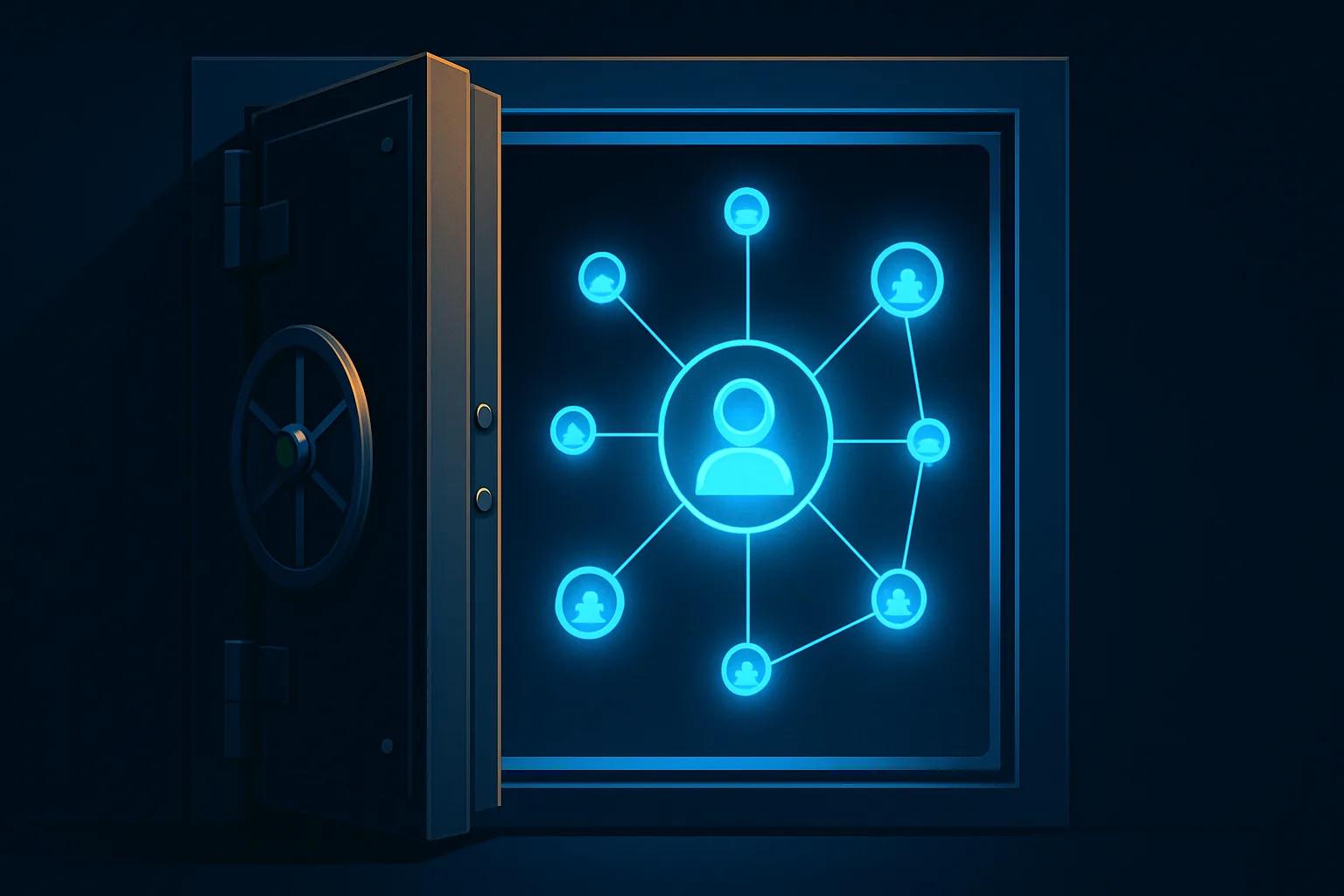
The problem is that nobody actually owns the AI.
Not the outcomes. Not the process. Not the standards. Everyone uses the tools. Nobody is accountable for the results. And when results are everyone's responsibility, they're effectively no one's.
This is the AI ownership problem, and it's quietly undermining teams that have otherwise done everything right. They've picked good tools, they're paying for the right subscriptions, they've done the onboarding sessions. But outputs are inconsistent, quality varies wildly by person, and when something goes wrong, there's no clear answer to "who's responsible for this?"
If that sounds familiar, you're not alone. But familiar doesn't mean inevitable.
Why Diffuse Accountability Destroys AI Quality
Here's what typically happens in organizations that adopt AI without assigning ownership.
Each person uses AI tools in their own way, with their own prompts, their own standards, their own judgment about when to trust the output and when to override it. Over time, you get a team where one person produces excellent AI-assisted work and another produces something that needed three rounds of revision. Nobody connects those outcomes to how they're using the tools, because nobody's watching and nobody's measuring.
This isn't about effort or intelligence. It's about accountability structures. When there's no owner, there's no feedback loop. When there's no feedback loop, individuals can't improve systematically. They just keep doing what they've always done, which means the team's AI capability is permanently capped at whatever level each individual figured out on their own.
Compare that to how you handle other critical processes. Your finance team doesn't let everyone handle invoicing differently based on personal preference. Your legal team doesn't let each person interpret compliance guidelines however feels right. There are owners, standards, review processes, and accountability chains. AI should be no different, especially now that it touches almost every output your team produces.
The AI ROI problem is often downstream of this. You can't prove value from tools that nobody owns, because you can't measure what nobody's tracking.
The Four Ways Ownership Breaks Down
Ownership problems tend to cluster into four distinct failure modes. Most teams have at least two of them running simultaneously.
1. Tool Sprawl Without a Curator
Teams accumulate tools. Someone tries Gamma for presentations, someone else finds Simplified for marketing copy, a third person builds a workflow in a no-code tool nobody else knows about. Within a year, the team is running a dozen AI tools with overlapping functions, unknown costs, and zero centralized knowledge about what works.
Nobody audits this. Nobody decides which tools stay and which get cut. And when a tool produces bad output, there's no one to flag it to, so the problem just persists.
2. Prompt Standards That Live in No One's Head
Prompting is a skill, and like all skills it varies by person. But when prompt quality determines output quality, and prompt quality varies by 10x across your team, your AI outputs vary by 10x too. The AI prompting problem is real, and it compounds when nobody owns the solution.
Most teams never build a shared prompt library. They never establish what a "good prompt" looks like for their specific use cases. Every individual reinvents from scratch, which means the institutional knowledge from your best AI user never spreads to your weakest one.
3. Verification That's Assumed But Never Assigned
When AI produces an output, someone needs to verify it. Not just skim it. Actually check it against facts, against brand standards, against the specific requirements of the task. Who does that? In most teams, the answer is "whoever wrote the prompt", which means the person least likely to catch their own errors is the only one checking.
This isn't a model problem. GPT-5.4, Claude Opus 4.7, Gemini 3.1 Pro. They all hallucinate. They all have blindspots. The question is whether your team has a defined process for catching errors before they ship. Without an owner, the answer is usually no.
4. Integration That's Siloed by Default
AI tools that connect to each other, to your CRM, to your project management system, to your data sources, require someone to maintain those connections. When those integrations break, someone needs to fix them. When a new tool joins the stack, someone needs to decide how it connects. Without a clear owner, integrations either never happen or quietly break and stay broken.
The AI integration problem is fundamentally an ownership problem in disguise. The technical barriers to integration are lower than ever in 2026. The organizational barriers, meaning the question of whose job it is, are still very high.
What AI Ownership Actually Means in Practice
Ownership doesn't mean one person uses all the AI tools. It means specific people have specific accountability for specific parts of your AI capability.
Here's how to break it down.
Tool portfolio ownership. Someone is responsible for the list of approved AI tools your team uses. They evaluate new tools, deprecate old ones, track costs, and maintain a living document of what each tool is for. This person doesn't need to be technical. They need to be organized, opinionated, and willing to say no to shiny new tools that duplicate existing functionality.
Prompt and standard ownership. Someone maintains your team's shared prompt library and quality standards. This means documenting the prompts that consistently produce good results for your most common tasks, setting the bar for what "good" looks like in AI-assisted outputs, and updating those standards as models change. This is a significant time investment upfront and a modest maintenance commitment ongoing. It pays back fast.
Verification process ownership. Someone defines your team's verification protocol for AI outputs. What gets checked? By whom? Against what criteria? This doesn't mean every output goes through a committee. It means your team has a clear answer to "how do we know this is right before it goes out?" That answer should vary by stakes, low-stakes internal drafts get a lighter touch than client-facing deliverables, but both should have a defined process.
Integration and workflow ownership. Someone is responsible for the technical layer connecting your AI tools to each other and to your existing systems. In larger teams, this might be a dedicated ops or engineering role. In smaller teams, it's often a technically-inclined team member who maintains automation workflows built in tools like Workato or Pipedream.
Building the Ownership Model: A Practical Framework
You don't need a dedicated "Head of AI" to fix this. Most teams can distribute these ownership responsibilities across existing roles with modest incremental time.
Step 1: Audit what you have. Before assigning owners, know what you're actually using. Run a two-week audit where every team member logs every AI tool they touch and what they use it for. You'll find duplicates, abandoned subscriptions, and critical dependencies nobody else knew about.
Step 2: Map tasks to tools, not tools to people. The goal isn't to assign ownership of each tool. It's to assign ownership of each task category where AI is used. Who owns AI-assisted client communication? Who owns AI-assisted research? Who owns AI-assisted content creation? Once you know that, the tool ownership follows naturally.
Step 3: Document one prompt per use case. Don't try to build a comprehensive prompt library in week one. Pick your five highest-volume AI use cases and write one canonical prompt for each. Get the relevant owner to test it, refine it, and put it somewhere everyone can find it. Add to the library incrementally.
Step 4: Define your verification tiers. Sort your AI outputs into three categories: low-stakes (internal notes, first drafts, brainstorming), medium-stakes (internal reports, team communications, early client materials), and high-stakes (final deliverables, external publications, anything with legal or financial implications). Define a different verification protocol for each tier. The specifics matter less than the fact that the protocols exist and are followed.
Step 5: Run a monthly ownership review. Once a month, the people with AI ownership responsibilities spend 30 minutes together. What's working? What broke? What new tools did team members adopt that aren't in the portfolio yet? What prompts need updating because a model changed? This is the feedback loop that most teams never build, and its absence is why AI capability stagnates.
The Accountability Gap Is Getting More Expensive
The cost of not owning your AI isn't static. As teams rely on AI for more consequential work, the downside of unverified, inconsistent, unowned outputs grows.
The AI data problem is one dimension of this. But the accountability gap is broader. When models like GPT-5.4 and Claude Opus 4.7 are capable enough to produce outputs that look authoritative and polished, the risk of shipping something wrong without noticing goes up, not down. More impressive outputs are easier to wave through without scrutiny.
This is particularly relevant as enterprises start deploying agents for longer, multi-step workflows. A bad output from an agent that triggers downstream actions doesn't just need a correction. It needs a rollback. The stakes of unowned AI compound with capability.
Microsoft's push into enterprise AI deployment reflects exactly this reality. The infrastructure for powerful AI is becoming more accessible. But infrastructure without governance is just faster failure.
The Right Mental Model: AI as a Managed Function
The teams getting consistent, scalable results from AI in 2026 treat it like any other managed business function. They don't treat it as a personal productivity tool that varies by individual. They treat it as a team capability with owners, standards, processes, and accountability.
This shift in framing changes everything. Instead of asking "which AI tools should I use?", the question becomes "how do we build and maintain our team's AI capability?" Instead of measuring individual productivity gains, you measure team output quality and consistency. Instead of hoping everyone figures it out, you build the systems that make good outcomes repeatable.
That's not a technology problem. It's an organizational design problem. And unlike most technology problems, you can fix it this week without waiting for a better model or a new feature.
The tools are already good enough. The models are already capable enough. The missing piece is ownership, and that's entirely within your control.
Start small. Pick one use case. Assign one owner. Build one canonical prompt and one verification protocol. Run the monthly review once and see what surfaces. The goal isn't a perfect AI governance system by end of quarter. The goal is to move from "everyone's responsible" to "someone's responsible", because that single shift is the difference between AI capability that compounds and AI capability that drifts.
For a look at tools that actually fit into a managed AI workflow, the Top 10 AI Tools for Productivity in 2026 is a useful starting point for building a curated stack rather than an accidental one.
Frequently Asked Questions
Tools & Services Mentioned

infobro.ai Editorial Team
We research every tool from its documentation, pricing pages, product screenshots and public developer discussion, and say plainly what the evidence does and does not show. Drafts are AI-assisted and reviewed by our editors before publication. We revisit each article every 6 months to reflect platform changes. Learn more about our process.