Florida Sues OpenAI and Sam Altman Over Violent Incidents. Here's What That Actually Means.
Florida has filed the first state-level lawsuit against OpenAI and Sam Altman, citing a campus shooting and ChatGPT's alleged role. Here's what's at stake and what it signals.
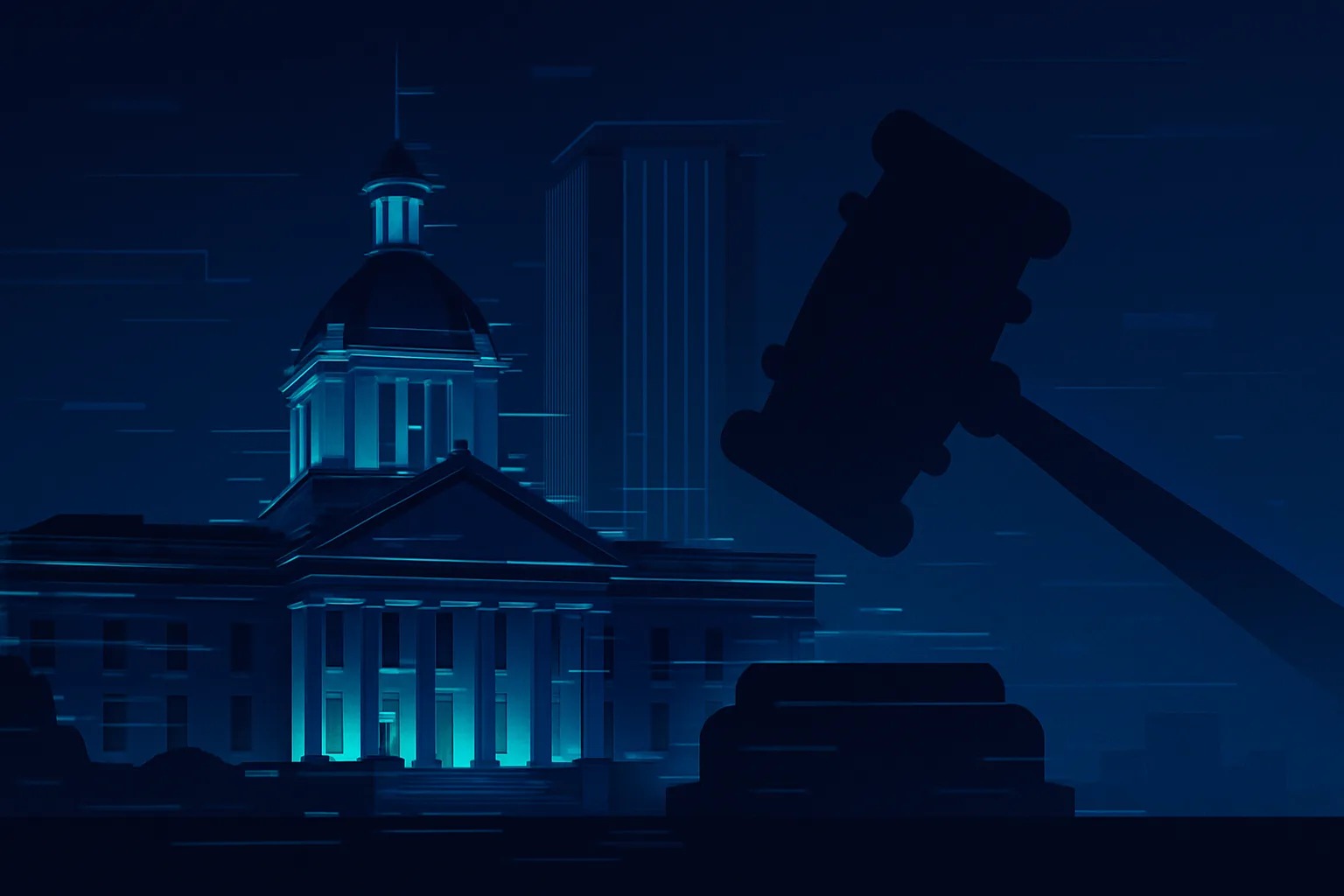
Florida's attorney general filed suit against OpenAI and CEO Sam Altman on June 1, making it the first state in the country to bring this kind of legal action against a large AI company over real-world violence. The lawsuit centers partly on a shooting at Florida State University in 2025 and alleges that ChatGPT played a role in the incident. It is not a minor regulatory complaint. It is a product liability and negligence case aimed directly at the company's leadership.
This is new territory. And it's worth understanding exactly what's being claimed, why it matters beyond Florida, and what professionals using AI tools should take away from it.
What Florida Is Actually Alleging
The lawsuit argues that OpenAI deployed a product it knew carried serious risks, that it failed to adequately safeguard vulnerable users, and that Sam Altman personally bears some responsibility for those decisions. The FSU shooting is the anchor of the complaint, but the suit references multiple violent incidents where ChatGPT conversations allegedly preceded or contributed to harmful actions.
The core legal theory is that OpenAI acted negligently by releasing and iterating on a product without sufficient safeguards for users in crisis. Florida is treating ChatGPT less like a search engine and more like a product with foreseeable harm potential, similar to the legal framing used against pharmaceutical companies or gun manufacturers in past landmark cases.
Naming Altman personally is aggressive and probably strategic. It signals that Florida wants to pierce the corporate structure and hold an individual executive accountable. That rarely succeeds but it almost always raises stakes and press coverage.
Why This Is Different From Prior AI Lawsuits
Most AI litigation to date has focused on copyright, data privacy, or labor displacement. This is different. Florida is making a direct causal argument: a person was harmed, ChatGPT was involved, and OpenAI bears liability. That is a much harder argument to build, but if it succeeds even partially, it rewrites the liability calculus for every major AI company overnight.
The distinction matters because it shifts the conversation from "did you steal training data" to "did your product contribute to someone's death." Courts treat those claims very differently. Juries treat them even more differently.
OpenAI has faced legal pressure from multiple directions this year already, but a state-level tort case tied to a named violent incident is a different animal entirely. It doesn't need to win to be consequential. Discovery alone could force OpenAI to disclose internal safety discussions, red-teaming results, and product decisions that the company has never had to surface publicly before.
The Broader Trend This Fits Into
This lawsuit doesn't exist in a vacuum. It lands in an environment where AI companies are expanding fast, regulators are scrambling to catch up, and public trust is eroding in specific, documented ways.
Apple is rebuilding Siri with a heavier focus on on-device processing partly in response to user concerns about what happens to sensitive conversations. DuckDuckGo saw a traffic surge after launching a no-AI browser extension, which tells you something about where a meaningful slice of the public's head is at right now. People are paying attention to what AI systems do with their data and their words, and some of that concern has migrated from abstract privacy fears into something more visceral.
At the same time, Anthropic just filed to go public after raising $65 billion at a valuation near $965 billion, and the industry is in the middle of an enormous capital expansion. Alphabet is raising $80 billion to fund AI infrastructure buildout. The money is enormous. The legal and ethical frameworks governing what these systems can do to users are still thin.
Florida is essentially betting that this gap is exploitable in court.
What OpenAI Is Likely to Argue
OpenAI's defense will almost certainly lean on Section 230 of the Communications Decency Act, which has historically shielded internet platforms from liability for user-generated content and third-party actions. The company will argue that ChatGPT is a platform, that it can't be held responsible for how individual users interpret or act on its outputs, and that the causal chain between a chatbot conversation and a violent act is too attenuated to survive legal scrutiny.
That argument has worked for social media companies for decades. It may work here. But courts have been steadily chipping away at platform immunity, and a state-level case built around product liability rather than content moderation creates a different legal surface. Florida's lawyers almost certainly picked their framing deliberately.
The personal liability claim against Altman is probably the weakest part of the suit. Corporate officers typically aren't held personally liable for product decisions unless there's evidence of fraud or willful misconduct. Still, it keeps his name on the complaint, which ensures media coverage and signals seriousness.
What This Means for AI Tool Users and Builders
If you build products on top of large language model APIs, this case is worth watching carefully. The legal theory being tested here, that an AI company can bear negligence liability for harms that flow through its products, would apply downstream if it holds. Developers building mental health apps, crisis support tools, or anything serving emotionally vulnerable users on top of OpenAI's or Anthropic's APIs should be reviewing their own terms of service and safety disclosures now, not after a verdict.
For individual professionals using AI tools, the immediate practical impact is minimal. ChatGPT still works. Nothing changes in your workflow today. But this case is a marker. The period of AI companies operating in a near-liability-free zone is shortening.
The deeper issue for daily users is one worth sitting with: AI tools designed for productivity are increasingly being used in emotional and psychological contexts they weren't designed for. That's not just a legal problem. It's a design problem, and it connects to broader questions about whether people are actually getting better at using these tools or just using them more, as the AI skill plateau problem illustrates. Using ChatGPT as a therapist, a confessor, or a crisis companion is a use case the product wasn't built to handle safely, and it's happening at enormous scale.
The Timeline to Watch
Florida's lawsuit will take years to resolve. There will be motions to dismiss, Section 230 arguments, appeals, and probable settlement negotiations long before any jury sees the case. The near-term impact is in discovery and in the precedent-setting that happens even in early rulings.
Other states are watching. If Florida's initial motions survive, expect parallel filings. Texas, California, and New York all have active AI regulatory agendas and tort bars that know how to move on a visible precedent.
The more immediate thing to watch is whether Congress uses this case as a peg for AI liability legislation. There have been several attempts to carve out AI-specific exceptions to Section 230 protection. Florida's lawsuit hands legislators a concrete, emotionally legible example to cite. That's often all it takes to unstick stalled bills.
What to Do Right Now
If you run a product or service with an AI component, audit your safety documentation and user disclosures this week. "The AI might say harmful things" is not sufficient legal coverage anymore. If you serve vulnerable populations, healthcare, education, crisis support, the Florida case is a direct signal that regulators and courts are starting to treat AI outputs as products with foreseeable harm profiles, not neutral outputs.
If you're an individual user, nothing urgent changes. But it's worth being clear-eyed about what large language models are and aren't. They are pattern-matching systems trained to produce plausible text. They are not therapists, not safety nets, and not accountable in the way a licensed professional is. The Florida case is partly a story about what happens when that distinction breaks down in practice.
The lawsuit may not win. But it doesn't need to. It's already doing what first-of-its-kind cases do: it's raising the cost of ignoring the question.

Founder and editor of infobro.ai
We research every tool from its documentation, pricing pages, product screenshots and public developer discussion, and say plainly what the evidence does and does not show. Drafts are written with AI assistance under our editorial rules, and we revisit articles to reflect platform changes. Learn more about our process.