Apple Is Rebuilding Siri From the Ground Up. Here's What iOS 27 Actually Changes.
Apple's iOS 27 redesign gives Siri a standalone app and a complete AI overhaul. Here's what the new architecture looks like, and why it matters.
Apple has spent two years watching ChatGPT eat its lunch. With iOS 27, the company is finally doing something serious about it.
New details about the planned Siri overhaul reveal a more ambitious redesign than most people expected. This isn't a tweak to the existing assistant. Apple is rebuilding the experience from scratch, giving Siri a dedicated standalone app, a redesigned interface, and an architecture that positions it as a direct competitor to ChatGPT, Gemini, and Claude. If the renders circulating now match what ships in the fall, it will be the biggest change to Siri since the assistant launched in 2011.
What the New Siri Actually Looks Like
The most visible change is structural. Siri gets its own first-party app, separate from the system-level invocation that's existed since iOS 5. That matters because it signals intent: Apple wants users to open Siri the way they open ChatGPT. Not just to set a timer or send a text, but to actually work through problems, get answers, and stay in the tool.
The interface in the leaked renders shows a persistent conversation view with chat history, something the current Siri explicitly doesn't have. Every exchange with the current assistant is essentially stateless. You ask, it answers, it forgets. The new design treats conversations as ongoing sessions, which is the baseline expectation anyone has after using a modern AI chatbot for more than five minutes.
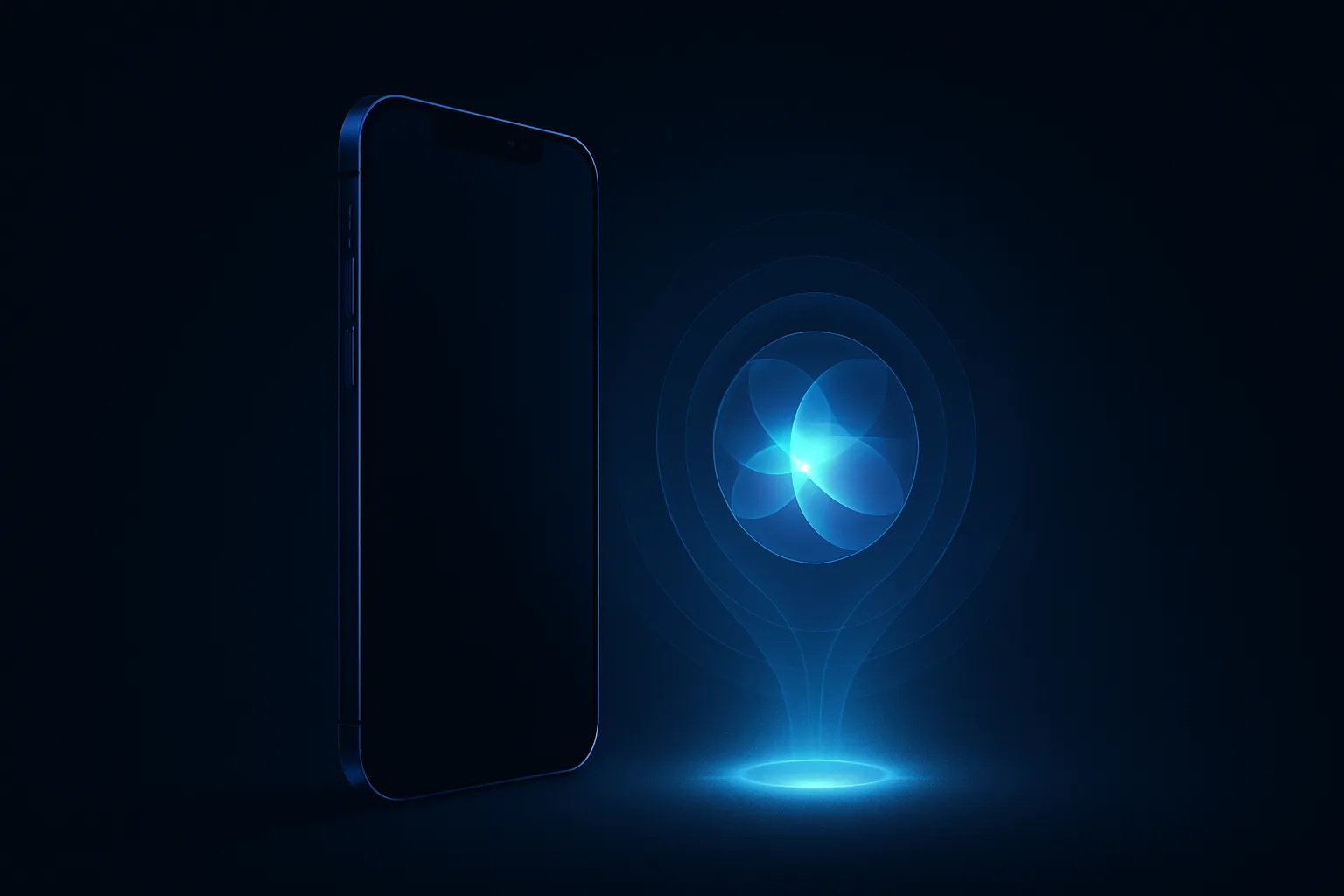
The visual design pulls away from the familiar pulsing orb. The new look is cleaner and more app-like, closer to how you'd expect a productivity tool to look than a voice widget. There's also evidence of richer response formatting, including the ability to display structured content rather than just plain spoken answers.
Why Apple Fell So Far Behind
The honest answer is that Apple optimized Siri for a world where voice assistants were feature demonstrations, not primary interfaces. Siri was built to do narrow, fast tasks on-device with tight privacy constraints. That architecture made sense in 2012. It became a liability the moment large language models showed what a general-purpose AI conversation could actually feel like.
The gap between what Siri could do and what ChatGPT launched with in late 2022 wasn't just technical. It was philosophical. Apple built a task-executor. OpenAI built a reasoning interface. Users noticed immediately, and the behavior change showed up in app download charts that Apple couldn't ignore.
The company responded by partnering with OpenAI to bring ChatGPT into iOS 18 as a fallback option when Siri couldn't handle a query. That arrangement was practical but also embarrassing in a specific way: Apple's own assistant was officially admitting defeat to a third party, inside Apple's own operating system. The iOS 27 rebuild is, in part, an attempt to end that arrangement, or at least reduce its visibility.
This dynamic is worth watching in the context of the broader competitive pressure Apple faces. Greg Brockman's return to drive OpenAI's product strategy means OpenAI isn't slowing down on the consumer side either.
The Standalone App Strategy
Making Siri a proper app is a bigger deal than it looks. Right now, Siri has no icon on your home screen unless you put a shortcut there manually. Most iPhone users engage with it through the side button or "Hey Siri," which frames it as a voice utility rather than a thinking tool. That mental model is the problem Apple needs to fix.
A standalone app changes the usage pattern. It's discoverable. It's accessible the same way any other app is. It invites the kind of deliberate, session-based use that characterizes how people actually work with ChatGPT. People don't use ChatGPT only when their hands are full. They sit down with it, paste in documents, think through problems, and come back to threads they started earlier. That behavior is worth a lot, and it's almost entirely captured by non-Apple apps right now.
The strategic implication is that Apple wants to own that time on-device rather than watching users route around Siri to open a third-party app. Every minute a user spends in ChatGPT or Gemini on an iPhone is a minute Apple didn't capture. The new Siri app is an attempt to reclaim that.
This is also consistent with how Apple has been thinking about intelligence features more broadly since the Apple Intelligence rollout that started with iOS 18. The company has been building the infrastructure for on-device model execution, and a persistent Siri app is the natural consumer-facing product that sits on top of that infrastructure.
What's Still Unknown
The renders don't tell us everything. The critical unknowns are the model quality and the on-device versus cloud tradeoff.
Apple has been pushing hard on on-device inference, which has real privacy advantages but also caps what's achievable with a given generation of hardware. Flagship AI performance right now comes from very large models running in data centers, and Apple's privacy architecture makes routing everything through its own servers complicated. The company has been building Private Cloud Compute as a middle path, running cloud inference with privacy guarantees it controls, but how much of the new Siri experience runs there versus on-device isn't clear yet.
The model quality question matters even more. A beautiful interface on top of a mediocre model doesn't fix anything. Apple's previous AI features have been inconsistent. Writing tools in iOS 18 were useful but narrow. Image generation was limited at launch. The underlying question is whether Apple has invested enough in model capability to make the new Siri experience actually competitive with what ChatGPT, Claude, and Gemini offer.
For what it's worth, the Anthropic profitability story suggests the frontier model providers aren't running out of steam. Apple has to chase a moving target.
The Broader Context: Every Platform Is Doing This
Apple isn't acting in isolation. The pattern across 2025 and 2026 has been every major platform attempting to own the AI interaction layer on its own surface. Google rebuilt Search around AI Overviews and launched the Gemini Enterprise Agent Platform at Cloud Next. Microsoft shipped Copilot Wave 3 in March 2026, bringing autonomous multi-step task execution into Microsoft 365 with a new E7 license tier at $99 per user per month. Meta has been pushing its AI assistant across all its apps.
The logic in every case is the same: if AI assistants become the primary interface for getting things done, then whoever owns the assistant owns the user. Apple, with over a billion active iPhone users, has more to lose from getting this wrong than almost anyone else.
Figma's AI assistant launch and the YouTube labeling push are part of the same wave. Every platform with scale is either building AI into its core experience or risking irrelevance as users go elsewhere to get it.
The pattern is also showing up in enterprise software. Payroll provider Remote recently crossed $300 million in ARR and became cash-flow positive, citing a 50% increase in revenue per employee driven by AI adoption, all without adding headcount. The efficiency story of AI is compressing across every category.
What You Should Actually Do With This Information
If you're an iPhone user waiting for Siri to become genuinely useful: iOS 27 looks like the real attempt. Don't expect perfection at launch, Apple's first versions of major features rarely are, but this is a meaningful architectural change, not another incremental update. It's worth paying attention to when the WWDC announcement comes.
If you're building products that currently rely on Siri integration or voice commands: the new standalone app model may shift how users interact with on-device assistants, and any integration work you've done against the current Siri API may need revisiting after iOS 27 ships.
If you're a business evaluating AI tools more broadly, the platform-level AI race has a direct implication for your stack. The tools you use inside Apple's ecosystem are about to change, and so are the ones inside Microsoft's and Google's. Keeping up with what's actually worth using matters more this year than in any previous cycle.
Apple hasn't formally announced any of this yet. The full picture comes at WWDC, and the product ships with iOS 27 in the fall. But based on what's visible now, this is the Siri redesign Apple has needed for four years. Whether it's the one that actually closes the gap is still an open question.

Founder and editor of infobro.ai
We research every tool from its documentation, pricing pages, product screenshots and public developer discussion, and say plainly what the evidence does and does not show. Drafts are written with AI assistance under our editorial rules, and we revisit articles to reflect platform changes. Learn more about our process.