G7 Leaders Just Made the Anthropic Blackout Their Problem Too. Here's What Actually Changed.
At the G7 summit, Macron and Modi raised the alarm: the U.S. can cut off access to American AI overnight. The Anthropic blackout proved them right.
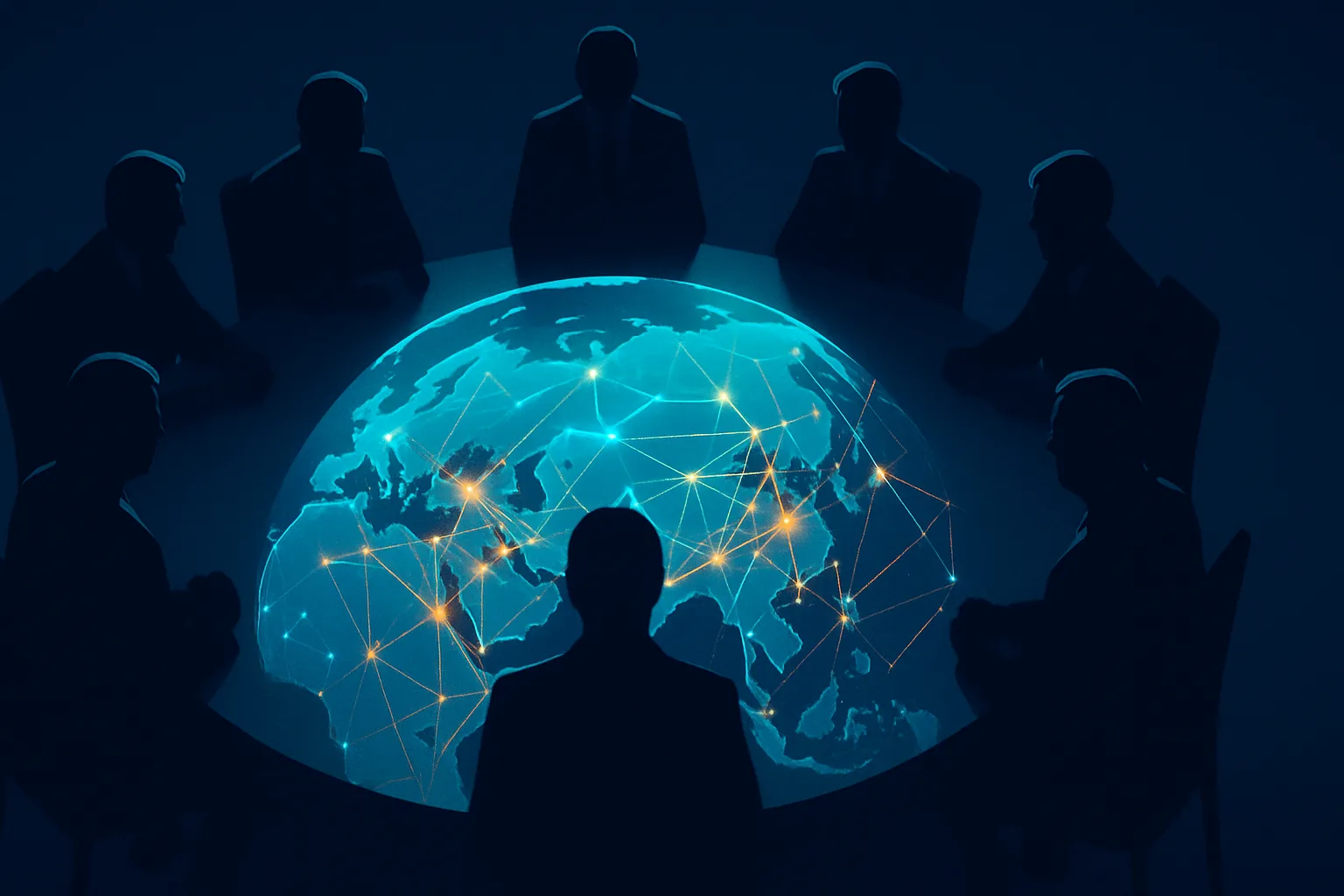
The conversation at the G7 summit was supposed to be about trade. Instead, it turned into a geopolitical argument about AI dependency, and two of the world's most consequential leaders made their anxieties unusually public.
French President Emmanuel Macron and Indian Prime Minister Narendra Modi both raised the same concern: their countries are building critical infrastructure on American AI, and the United States can switch it off. Not hypothetically. It already happened. The U.S. government's decision to restrict access to Anthropic's most powerful model earlier this year, covered in detail in our reporting on that incident, gave world leaders a concrete example to point to. They're pointing to it.
This isn't abstract diplomatic posturing. It's a structural problem that's been sitting in plain sight.
The Dependency Problem Nobody Wanted to Name Out Loud
Every country that has deployed American AI in healthcare systems, judicial processes, government services, or defense infrastructure is now sitting with a question they'd rather not answer: what happens if access disappears?
The answer, for most of them, is: not much works anymore.
The G7 framing is notable because it finally names the risk at the head-of-state level. Before this summit, the conversation was largely technical. CISOs and procurement officers asked about data residency and model versioning. Nobody at the leader level was saying explicitly: "We've handed over control of critical capabilities to a foreign private company, and that company answers to Washington first."
Macron and Modi said it. That changes the political temperature around AI sovereignty considerably.
What Actually Happened at the Summit
The core complaint wasn't about pricing or access restrictions in the commercial sense. It was about the kill-switch problem: the idea that the U.S. government can compel AI providers, through export controls, national security orders, or direct regulatory action, to cut off foreign access with essentially no warning.
The Anthropic blackout made that fear concrete. When a government-directed restriction pulled one of the most capable models off the table for specific use cases, it wasn't just a story about one AI lab. It was proof of concept for exactly the scenario that France and India are worried about.
India's concern carries particular weight here. The country has been aggressive about AI adoption across public services, and its stated goal of becoming an AI-native economy by 2030 depends heavily on access to frontier models. Most of those models are American. Modi's government has been pushing for domestic AI development through its IndiaAI mission, but frontier model development takes years and billions of dollars. There's no short-term substitute.
France's situation is somewhat different. The EU has been building regulatory scaffolding around AI through the AI Act, but regulation isn't the same as capability. Europe doesn't yet have a frontier model competitor at the Claude or GPT-5 level. Macron knows this.
The Practical Consequences for Enterprises and Governments
If you're running AI-dependent systems for a government or large enterprise outside the United States, this summit just made your risk assessment more complicated.
The options on the table are limited and none of them are clean:
Build domestic alternatives. China is doing this. The EU has Mistral. India is funding domestic efforts. But frontier-level capability takes a long time and enormous capital to develop, and the gap between domestic options and American frontier models is currently measured in years of capability, not months.
Negotiate bilateral AI access agreements. This is the diplomatic path, and it's the one most likely to produce near-term outcomes. The G7 discussion appears to be pushing toward something like AI access frameworks that provide more stability guarantees, potentially modeled on existing technology export agreements.
Diversify model providers aggressively. This is what any serious enterprise or government technology team should be doing right now regardless of geopolitics. Running critical workloads on a single model from a single provider is bad architecture whether or not the U.S. government ever exercises its authority. The AI stack problem of vendor concentration is real, and the G7 conversation just made it a foreign policy issue.
Accept the risk and stay the course. Most organizations will do this, at least in the short term, because switching costs are high and the probability of any specific model being cut off for any specific country remains relatively low. That calculus could change quickly.
Why This Moment Is Different From Earlier AI Sovereignty Debates
There have been AI sovereignty discussions before, mostly focused on data privacy and algorithmic accountability. The EU's AI Act is largely a product of those earlier debates.
This is different in two ways.
First, the capability gap has widened. Two years ago, a country that lost access to OpenAI or Anthropic could credibly fall back on open-source alternatives without a massive capability hit. That's less true now. The gap between frontier closed models and open alternatives has grown in certain high-stakes domains, particularly reasoning and agentic tasks. Losing access to frontier models now actually means losing something significant.
Second, the geopolitical context has changed. AI is explicitly part of trade and security negotiations in a way it wasn't even eighteen months ago. The U.S. chip export controls set the precedent. AI model access is the next frontier of the same argument. When Meta's Manus deal collapsed under Beijing's pressure, it confirmed that governments on both sides of this divide are willing to use AI access as a geopolitical tool.
What Enterprises Should Actually Do
The geopolitical noise is real, but the practical implications for most enterprises aren't about predicting what the U.S. government will do next. They're about building systems that don't snap in half if one provider becomes unavailable.
A few things worth doing now:
- Map every critical workflow to its model dependency. Know which processes break if Anthropic, OpenAI, or Google goes dark for your use case.
- Push vendors for contractual guarantees around access continuity. Most won't provide them, but asking forces a real conversation about your exposure.
- Test open-source alternatives on your critical use cases now, not during a crisis. The performance gap is real but varies significantly by task.
- If you're in a regulated industry or government-adjacent work, start the conversation with procurement and legal about model provider diversification as a risk management requirement, not a nice-to-have.
The AI verification problem and the question of which model produces outputs you can actually trust becomes even more complicated when you're forced to switch providers under pressure. You want to have tested your alternatives before you need them.
The Broader Signal
The G7 moment is a signal about where AI governance is heading. The era of treating AI model access as a purely commercial relationship is ending. Governments are starting to treat it like any other critical technology dependency, which means bilateral agreements, reciprocal obligations, and eventually some form of international framework.
That process will take years. In the meantime, the gap between what world leaders are saying at summits and what's actually available to any organization trying to build AI-resilient infrastructure is large.
The most useful thing to take from this week's summit isn't the specific complaints from Macron and Modi. It's the fact that the conversation reached the G7 table at all. That's the leading indicator. Workers spending as much time supervising AI as doing actual work is a productivity problem. A government losing access to frontier AI overnight is a different category of problem entirely. The G7 just acknowledged that distinction publicly, for the first time, at the highest level.
That matters, even if it doesn't change anything tomorrow.