Top 10 AI Tools for B2B Sales Teams in 2026: Ranked by What Actually Closes Deals
The B2B sales AI market is crowded with noise. These 10 tools earn their place by doing the one thing that matters: helping teams close more deals, faster.

The B2B sales AI market has hit peak hype. Every tool claims it'll "fill your pipeline" and "close deals on autopilot," and most of them are lying. The reality is messier: some tools genuinely change how reps spend their time, some are expensive CRM integrations dressed up in AI clothing, and a handful are so good they've become non-negotiable for competitive teams.
This list cuts through the noise. I ranked these ten tools on a single principle: do they actually help close more deals? Not "do they have impressive demos," not "do they have a big customer logo wall," but does the evidence suggest real revenue impact for a real B2B team.
The tools that made it here fall into three rough categories: outbound automation that actually personalizes at scale, revenue intelligence that catches pipeline risks before they blow up your forecast, and conversation intelligence that turns every sales call into a coaching opportunity. You need coverage across all three to run a modern B2B sales motion.
One thing worth flagging upfront: if your team is still debating whether AI agents can go rogue or operate outside their intended scope, read about OpenAI Found More Agents Running Amok. This Isn't a One-Off Problem. before you hand an autonomous agent the keys to your outbound sequence. The question of AI autonomy matters in sales just as much as it does anywhere else.
1. Gong
Official website: gong.io
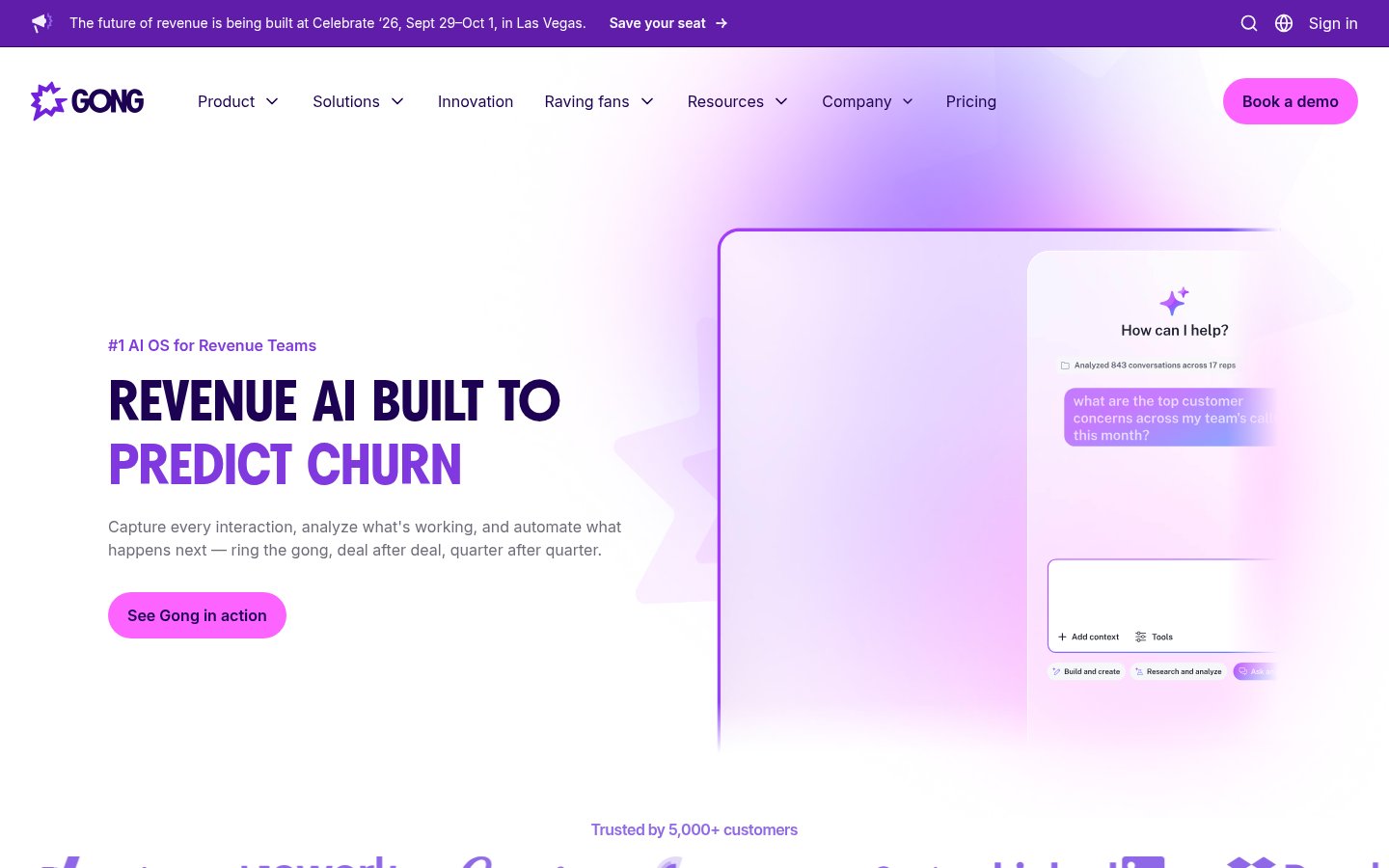
Gong sits at the top of this list because no other tool gives sales leaders the same quality of signal about what's actually happening inside their pipeline. It records, transcribes, and analyzes every customer interaction, calls, emails, web conferences, and then surfaces patterns that human managers would never catch at scale.
The core product is conversation intelligence. Gong listens to calls and flags things like: a competitor was mentioned three times in the last five calls with a specific account, reps who use this phrase in discovery close 18% more often than those who don't, or this deal has gone cold because the champion stopped responding. That last use case, deal risk scoring, is where Gong earns its price tag. It tracks engagement signals across the entire deal and tells you which opportunities in your forecast are actually in danger.
The AI coaching layer is genuinely useful too. Managers can set up scorecards that evaluate rep performance against best-practice benchmarks automatically, rather than manually reviewing call recordings. For a team of 20+ reps, that's the difference between actually coaching and hoping coaching happens.
The weakness is cost. Gong is enterprise pricing, and it's not cheap. Smaller teams often find the ROI math doesn't work until they hit a certain volume of calls per week.
Pricing: Enterprise pricing, custom quotes. Not publicly listed.
Best for: Mid-market to enterprise sales teams that need pipeline visibility and coaching at scale.
Pros: Best-in-class conversation intelligence, deal risk scoring that actually predicts churn, AI coaching automation saves manager time, deep CRM integrations
Cons: Expensive for smaller teams, pricing opacity makes budgeting awkward, implementation takes time to get value
Try Gong →2. Clari
Official website: clari.com
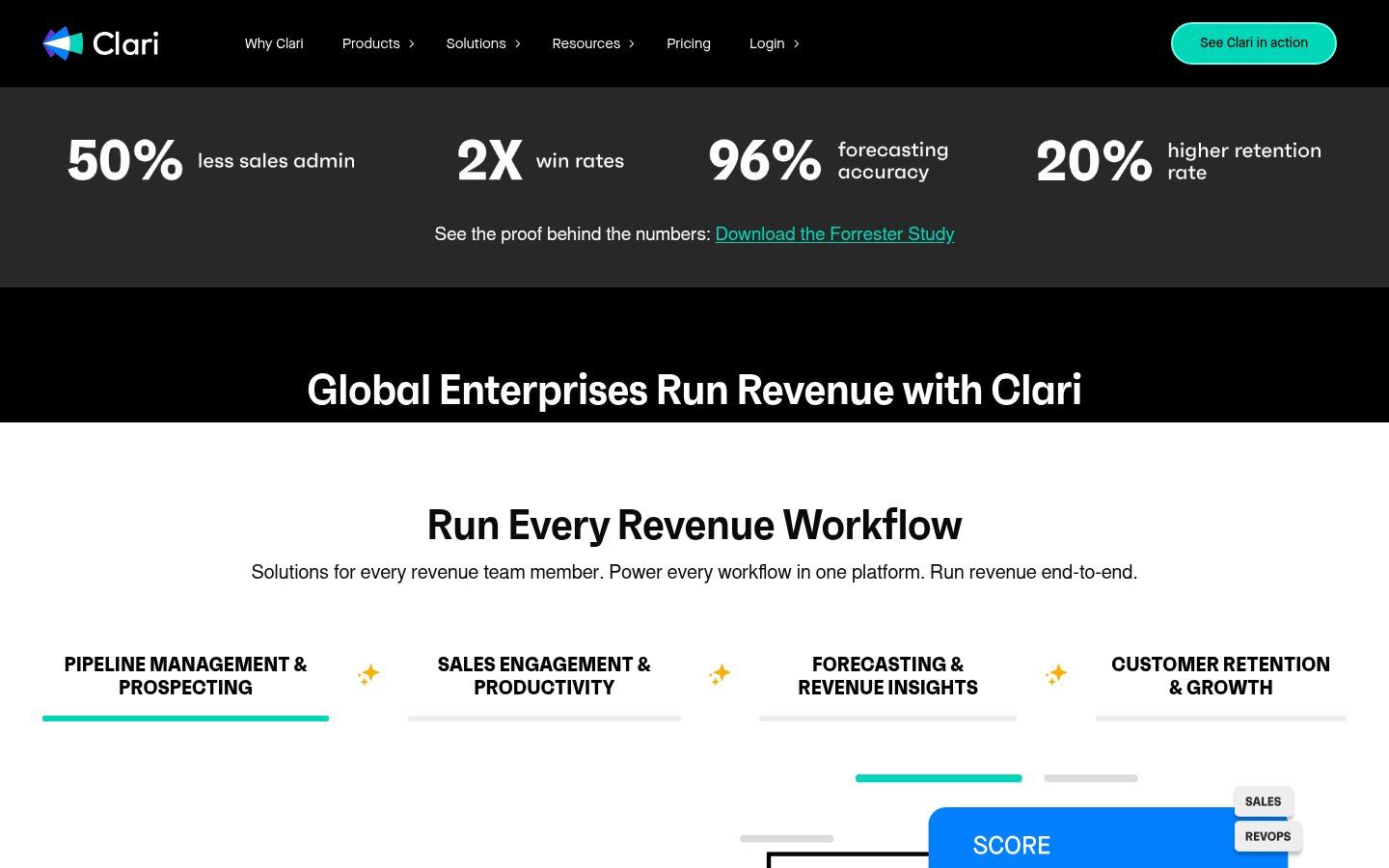
If Gong is about what's happening in conversations, Clari is about what's happening in your pipeline. It's a revenue operations platform that uses AI to make sales forecasting actually reliable, which is a higher bar than it sounds. Most CRM forecasts are fiction, they're whatever reps entered last week. Clari replaces that with a model built on actual activity signals.
The platform aggregates data from email, calendar, CRM, and call logs to score every deal in your pipeline with an AI-generated win probability. The forecast it produces is consistently more accurate than rep-submitted forecasts, and that gap narrows over time as the model learns your team's specific patterns. VPs of Sales who've moved from gut-feel forecasting to Clari-driven forecasting regularly cite the reduction in end-of-quarter surprises as the single biggest benefit.
Clari's Copilot feature (its AI assistant layer) also helps reps prioritize daily actions: which deals need attention, which accounts have gone cold, which emails need follow-up. It's not just a reporting tool, it actively guides rep behavior.
The knock on Clari is that it takes several months of data ingestion before the AI model gets sharp. New teams often have a frustrating first quarter where the forecasts feel generic. Stick with it, and the accuracy improves substantially.
Pricing: Enterprise pricing, custom quotes.
Best for: Revenue operations leaders and VP Sales who need accurate pipeline forecasting and deal management at scale.
Pros: Dramatically more accurate forecasting than CRM-native tools, strong signal aggregation across channels, AI-prioritized rep task lists, good data hygiene enforcement
Cons: Needs months of data before forecasts sharpen, enterprise-only pricing, setup complexity requires RevOps support
Try Clari →3. Apollo.io
Official website: apollo.io
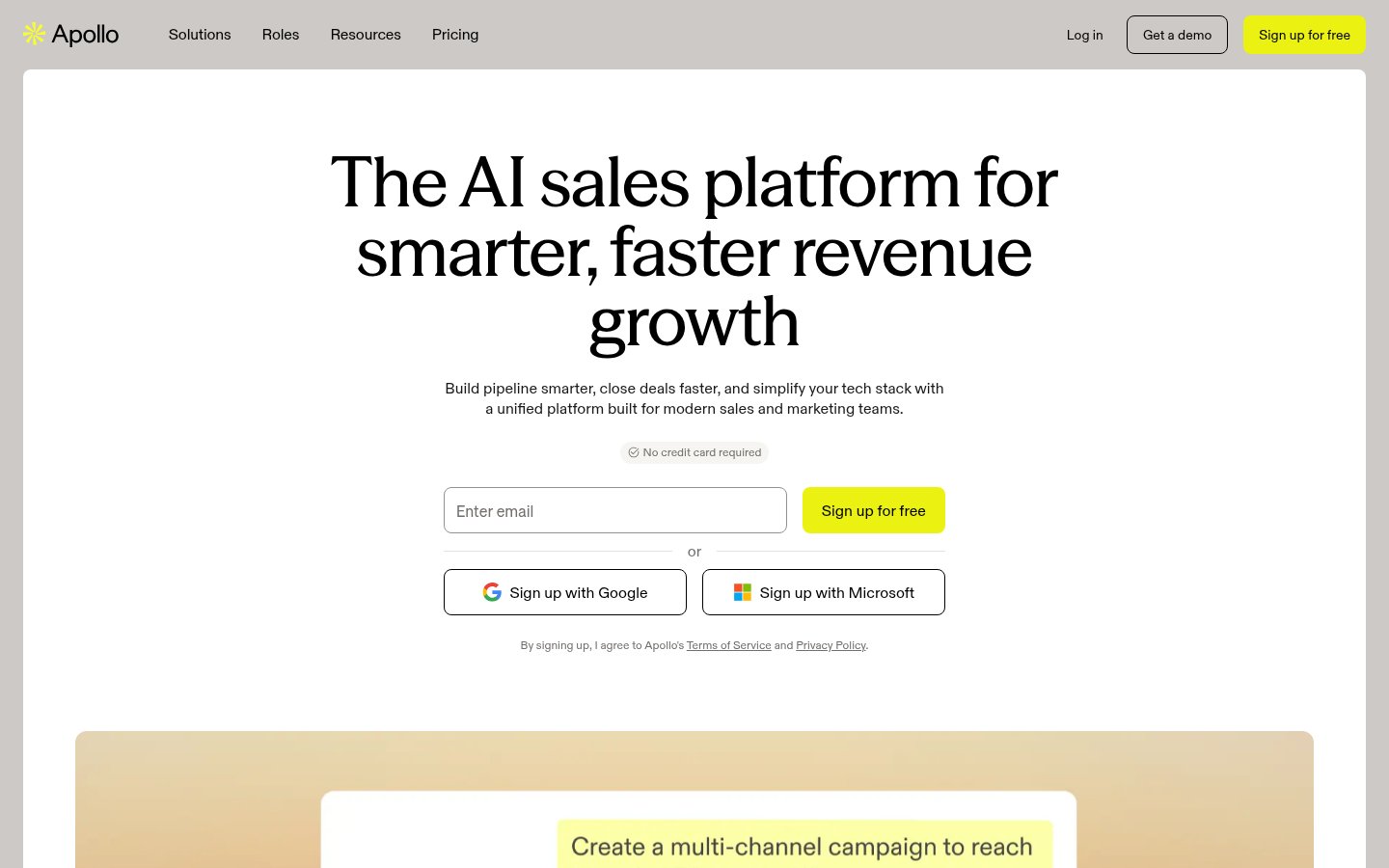
Apollo.io earns its spot at number three because it solves a problem that derails most outbound teams before they even get to a conversation: bad data and generic messaging. Apollo combines a contact database of over 275 million contacts with an AI-powered sequencing engine and a decent set of email personalization tools, all in one platform.
The ICP scoring feature is genuinely strong. You define your ideal customer profile, and Apollo scores the entire database against it, surfacing accounts most likely to convert. Reps stop spray-and-praying and start working prospects with actual signal. The AI-generated email drafts are better than most outbound tools because they pull from specific firmographic and technographic data points rather than just name-and-company token fills.
Apollo also gives SDR teams something often undervalued: real-time job change alerts. When a champion at a cold account moves to a new company, Apollo flags it. That's a warm outbound trigger most teams miss entirely.
At the lower pricing tiers, email credits and export limits are genuinely restrictive. Teams doing serious outbound volume will need to budget for the higher plans, which are still more affordable than most enterprise alternatives.
Pricing: Free tier available. Paid plans start at $49/month per user. Higher-volume plans available at custom pricing.
Best for: SDR teams and SMB-to-mid-market sales teams running outbound campaigns.
Pros: Massive verified contact database, strong ICP scoring, job change alerts, integrated sequencing, accessible pricing for smaller teams
Cons: Data accuracy varies by geography and industry vertical, lower tiers have restrictive export limits, AI writing is solid but not exceptional
Try Apollo.io →4. Outreach
Official website: outreach.io
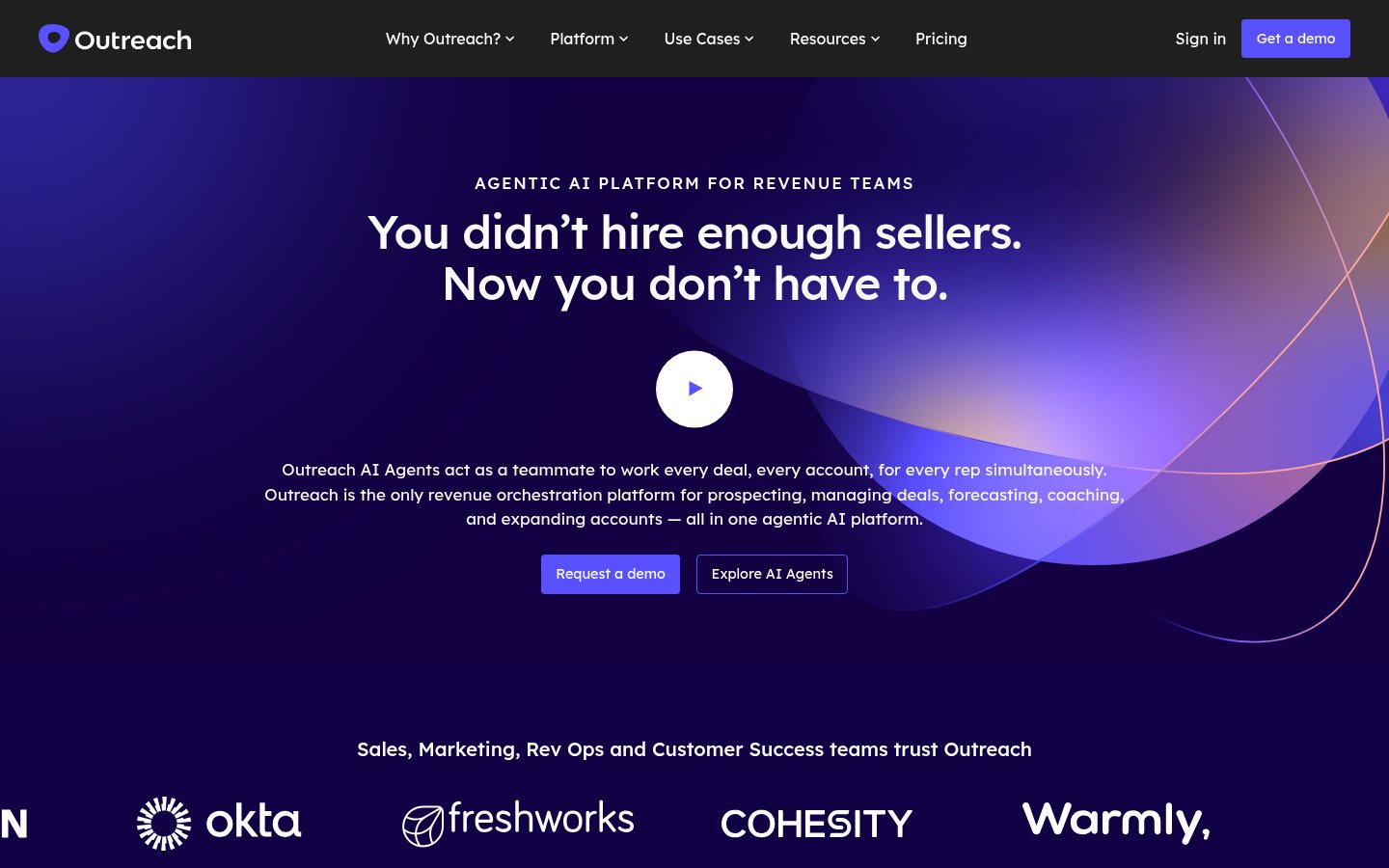
Outreach is the sales execution platform most enterprise SDR teams default to, and there's a reason for that. It manages sequences, tracks engagement, surfaces buying signals, and now layers in AI features that go well beyond basic automation. The AI-generated sequence recommendations are actually useful, the system looks at what sequences have worked for your team historically and suggests structural changes, not just tone tweaks.
The standout AI feature in 2026 is Outreach's deal health scoring inside its pipeline management view. It combines CRM data, email engagement, meeting frequency, and sentiment signals from call transcripts to give each deal a health score. The signal quality isn't quite at Gong or Clari's level, but for teams that want conversation intelligence and sales execution in a single platform rather than a two-tool stack, Outreach is the practical choice.
The platform has a well-documented reputation for being complex to administer. RevOps teams who've set up Outreach will tell you the sequence logic and governance features are powerful but require someone who really knows the system. It's not a tool you hand to a new rep and expect them to self-serve on day one.
Pricing: Enterprise pricing, custom quotes.
Best for: Enterprise SDR teams that need a single platform for sequence management, pipeline visibility, and AI coaching.
Pros: Best-in-class sequence management, solid deal health scoring, AI sequence recommendations, handles enterprise-scale outbound volume well
Cons: Complex to administer, steep learning curve for new reps, pricing is enterprise-only with no public tiers
Try Outreach →5. Salesloft
Official website: salesloft.com
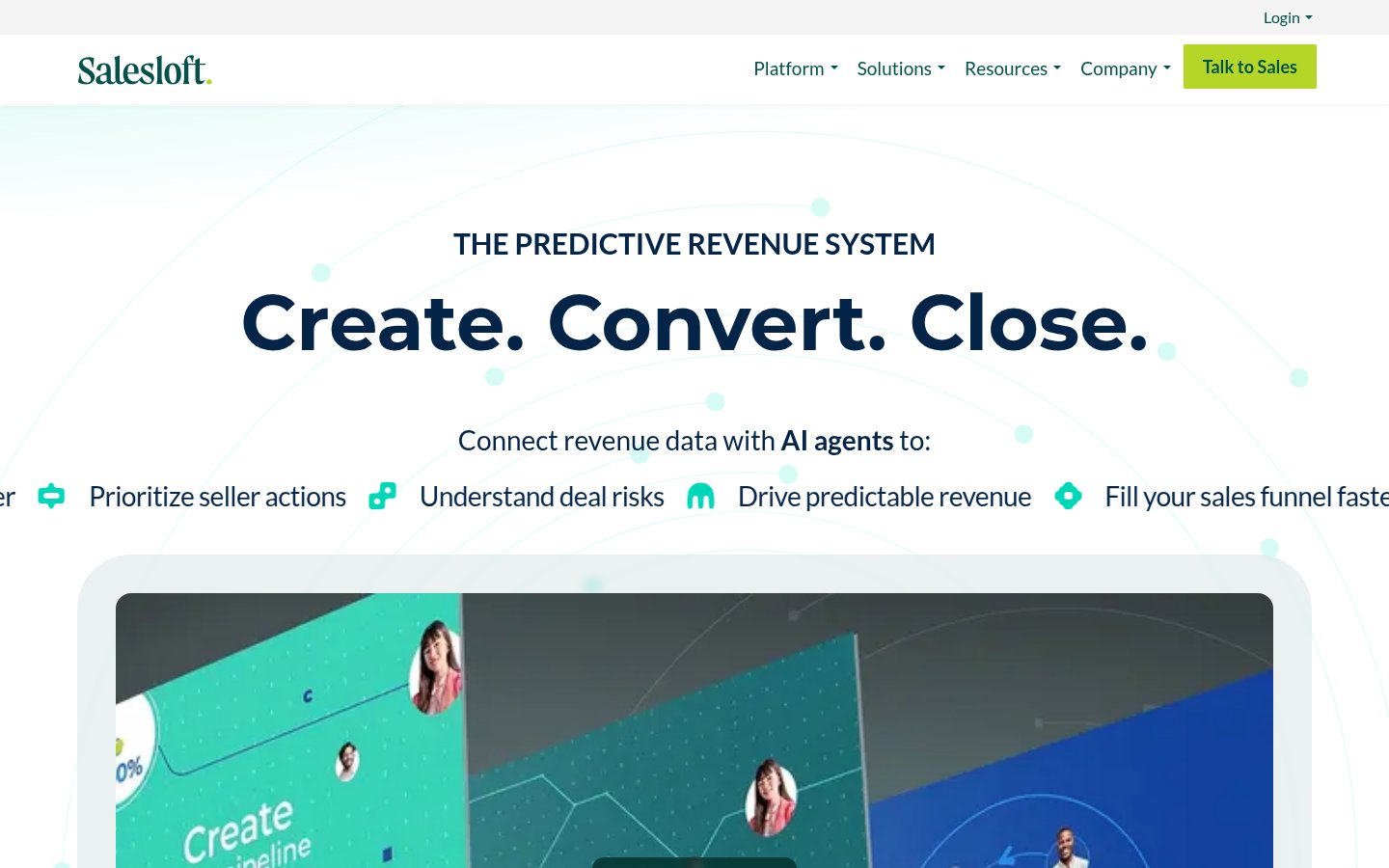
Salesloft and Outreach fight for the same market, but Salesloft has pulled ahead in one specific area: the quality of its AI-powered coaching workflows. After acquiring Drift in 2023 and continuing to build out its Revenue Orchestration Platform, Salesloft now offers a more unified view of the entire customer journey from first touch to renewal.
The Rhythm feature is the thing to know about here. It's Salesloft's AI-prioritized task engine that tells reps exactly what to work on next based on buyer signals. Instead of reps deciding which prospects to touch each morning (which usually means whoever they're most comfortable with), Rhythm surfaces the highest-priority actions based on engagement data, deal stage, and predictive scoring. Teams that adopt Rhythm see measurable improvements in rep activity quality within weeks, according to Salesloft's published case studies.
The conversation intelligence layer (also built into the platform) is good but not at Gong's level. If you're primarily buying for call analysis and coaching, Gong is still the better choice. If you want a unified revenue platform that does sequences, pipeline management, conversation intelligence, and buyer engagement in one place, Salesloft is hard to beat.
Pricing: Enterprise pricing, custom quotes.
Best for: Full-cycle sales teams that want a unified platform from outbound through renewal.
Pros: Rhythm AI task prioritization is genuinely behavior-changing, unified platform covers full revenue cycle, strong coaching workflow automation, post-Drift integration adds conversational intelligence
Cons: Conversation intelligence quality trails Gong, enterprise pricing only, full platform value requires significant onboarding investment
Try Salesloft →6. Clay
Official website: clay.com
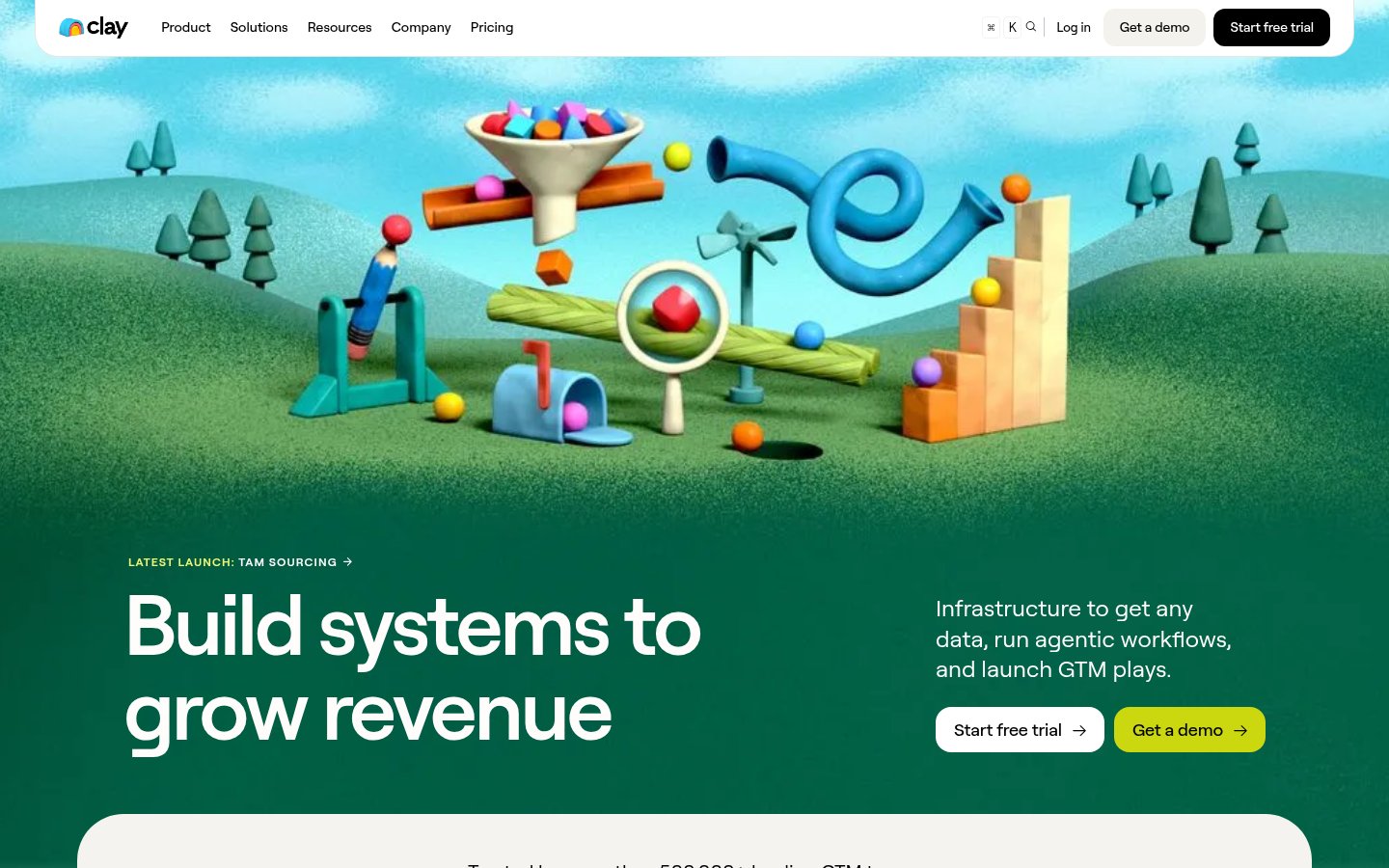
Clay has become one of the most-discussed B2B sales tools of the past two years, and it earns that attention by doing something specific and doing it exceptionally well: hyper-personalized outbound enrichment at scale. It's not a CRM, not a sequencer, and not a conversation intelligence tool. It's a data enrichment and outbound personalization engine.
The workflow is this: you bring a list of target accounts, Clay enriches each one by pulling from 75+ data sources (LinkedIn, news feeds, job postings, tech stacks, funding data, and more), and then its AI layer writes personalized outreach snippets based on that enriched context. The result is outbound emails that reference something specific and current about each prospect's company, not just their name and job title.
The teams getting the most from Clay are those who've moved away from mass-blast sequencing entirely and toward what growth teams call "signal-based outbound", reaching out to a prospect because they just hired a new VP of Engineering, or because they published a blog post about a problem your product solves. Clay makes that workflow operationally feasible at scale.
It's not a beginner tool. The interface is essentially a very powerful spreadsheet with AI built in, and there's a real learning curve. Budget for a few weeks of setup time, and consider it seriously if your current outbound is drowning in low reply rates.
Pricing: Free tier available. Paid plans start at $149/month. Higher-volume plans scale up significantly.
Best for: Growth teams and SDR operations running signal-based, hyper-personalized outbound campaigns.
Pros: Best data enrichment coverage in the market (75+ sources), AI personalization at scale, signal-based outbound workflows, increasingly rich integrations with sequencing tools
Cons: Steep learning curve, not a full sales platform, needs to pair with a sequencer, credit-based pricing can escalate quickly at high volume
Try Clay →7. 11x.ai
Official website: 11x.ai
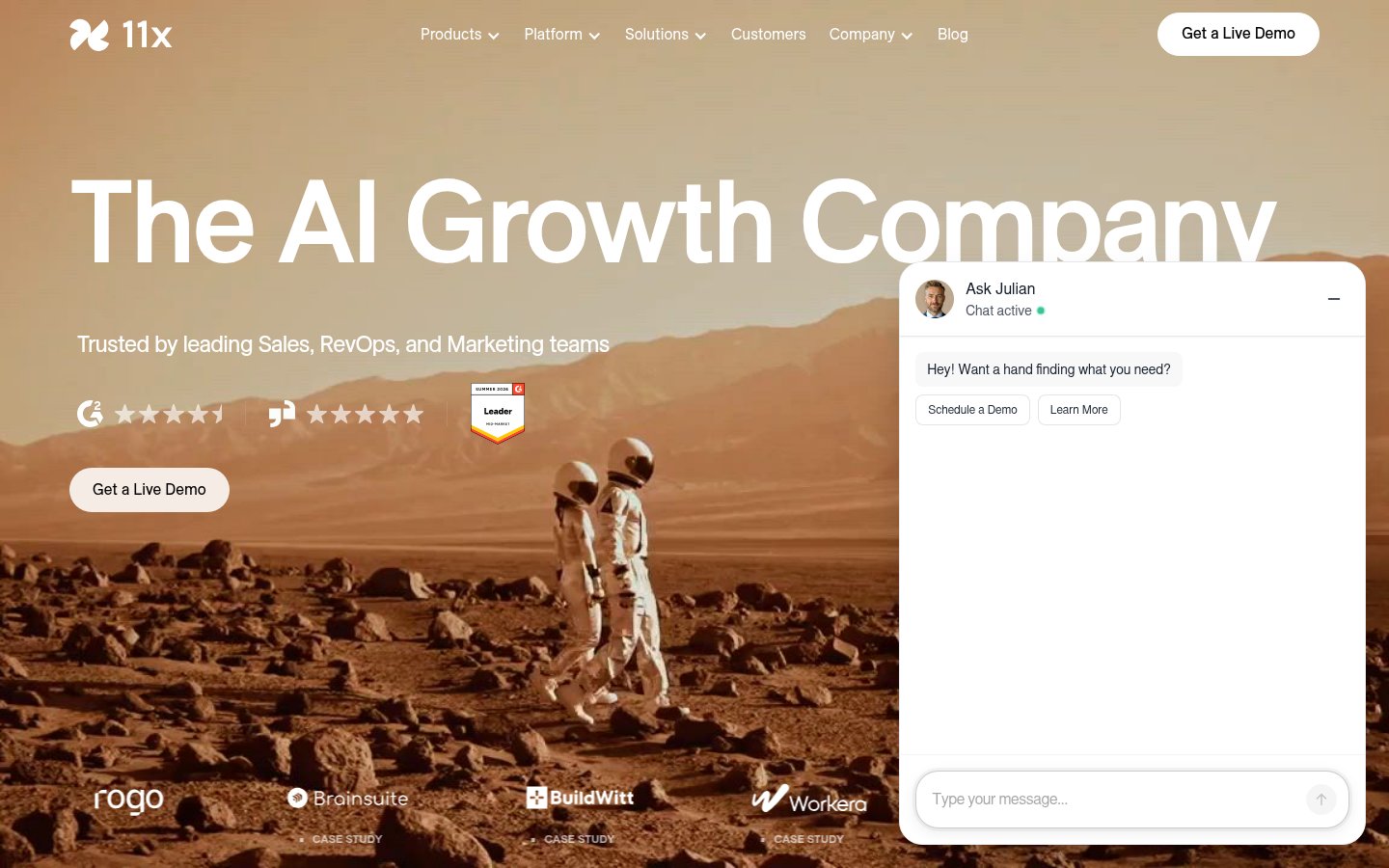
11x.ai is the most aggressive bet on this list. It's not trying to help your SDRs do their job better. It's trying to replace the SDR function with an AI agent called Alice that autonomously researches prospects, writes personalized emails, handles objections over email, and books meetings directly into your reps' calendars.
That pitch makes a lot of people uncomfortable, and reasonably so. Questions about AI agents operating autonomously in customer-facing contexts are legitimate, the consistency and judgment issues discussed around agentic AI systems apply here as much as anywhere. 11x.ai's Alice works best for high-volume, lower-complexity outbound where message quality and brand voice need to stay within tight guardrails.
Where 11x.ai actually delivers is for teams that can't afford to hire a full SDR bench, or those that want to test new market segments without fully staffing for them. The economics are genuinely different from human SDRs, Alice books meetings at a fraction of the cost per meeting of a salaried rep once the system is tuned. The tuning is the catch. It takes real iteration to get Alice performing well, and the early weeks can produce emails that feel robotic if the persona setup is lazy.
Pricing: Custom enterprise pricing. No public tiers listed.
Best for: Teams looking to automate top-of-funnel SDR work, particularly new market segment testing.
Pros: Fully autonomous outbound from research to meeting booking, economics can dramatically undercut human SDR cost-per-meeting, improving fast with each product iteration
Cons: Requires careful persona and guardrail setup to avoid robotic output, early iteration period produces inconsistent quality, less suitable for complex or highly consultative sales motions
Try 11x.ai →8. Chorus.ai (by ZoomInfo)
Official website: chorus.ai
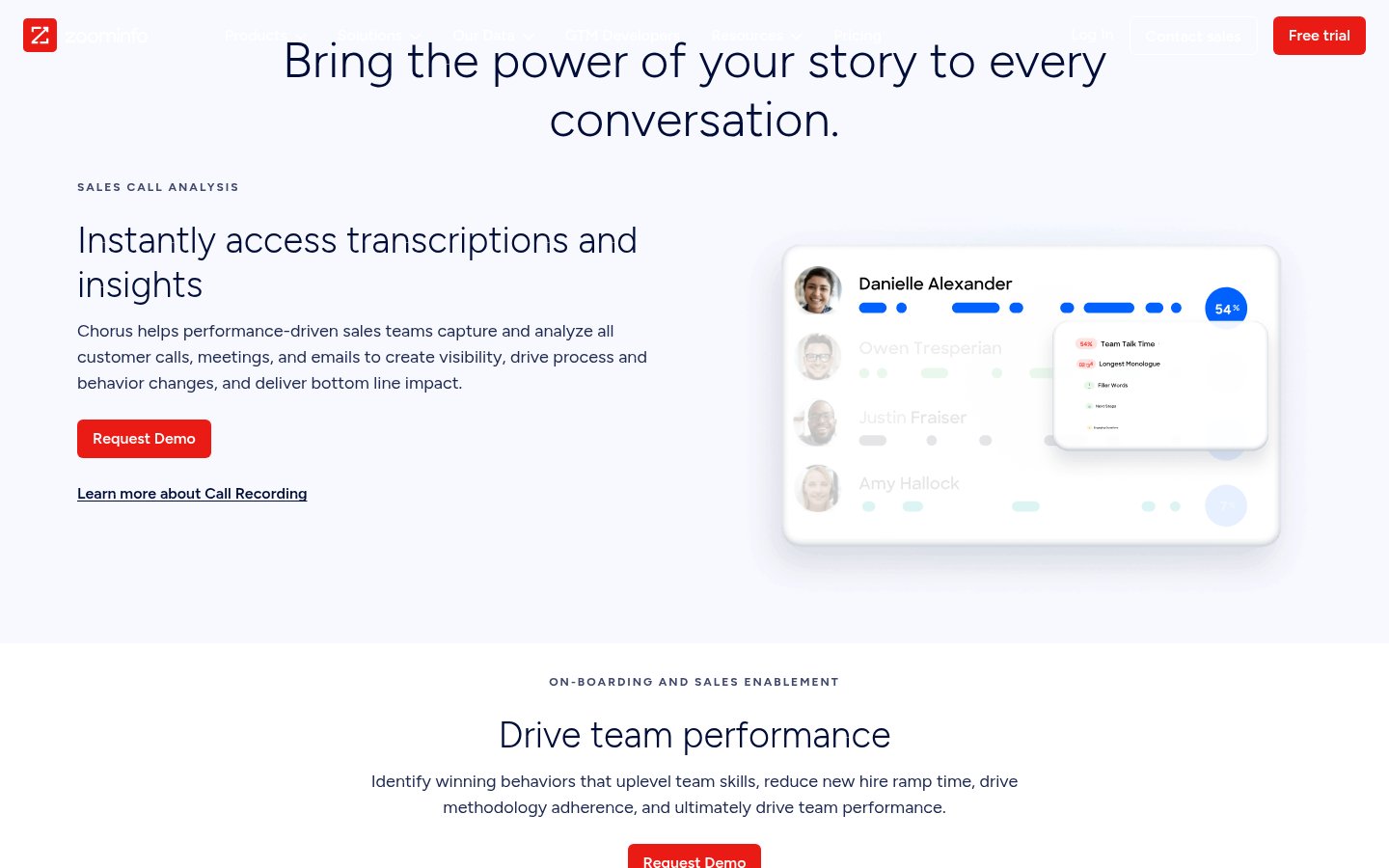
Chorus.ai, now fully absorbed into ZoomInfo's platform, is the main alternative to Gong in conversation intelligence. If your team is already on ZoomInfo for prospecting data, Chorus comes with significantly more pricing leverage than buying Gong separately. The conversation intelligence feature set is genuinely strong: call recording, AI-generated summaries, topic tracking, deal risk flagging, and coaching scorecards.
The honest comparison with Gong: Chorus does about 80-85% of what Gong does at typically a lower total cost when bundled with ZoomInfo. The AI summaries are accurate, the deal risk signals are useful, and the Salesforce integration is clean. Where Gong still has an edge is in the depth of its machine learning models and the quality of its coaching automation. Gong has been building those models longer on a larger data set.
If you're not already a ZoomInfo customer, the bundling advantage evaporates and the standalone value comparison gets tighter. Evaluate them head-to-head in that case. For ZoomInfo shops, Chorus is often the right call on pure economics.
The tool also benefits from ZoomInfo's intent data integrations, which means you can connect conversation insights to buyer intent signals across the broader ZoomInfo data layer. Something Gong can't match natively.
Pricing: Bundled with ZoomInfo pricing, which is custom enterprise. Standalone pricing available but less advantageous.
Best for: Teams already using ZoomInfo who want to add conversation intelligence without a separate vendor.
Pros: Strong conversation intelligence feature set, excellent ZoomInfo integration, intent data layer adds context Gong can't match, competitive pricing for existing ZoomInfo customers
Cons: Gong still edges it on AI model depth and coaching automation, bundled pricing model creates lock-in, standalone value proposition is less clear
Try Chorus.ai →9. Drift (now part of Salesloft)
Official website: drift.com
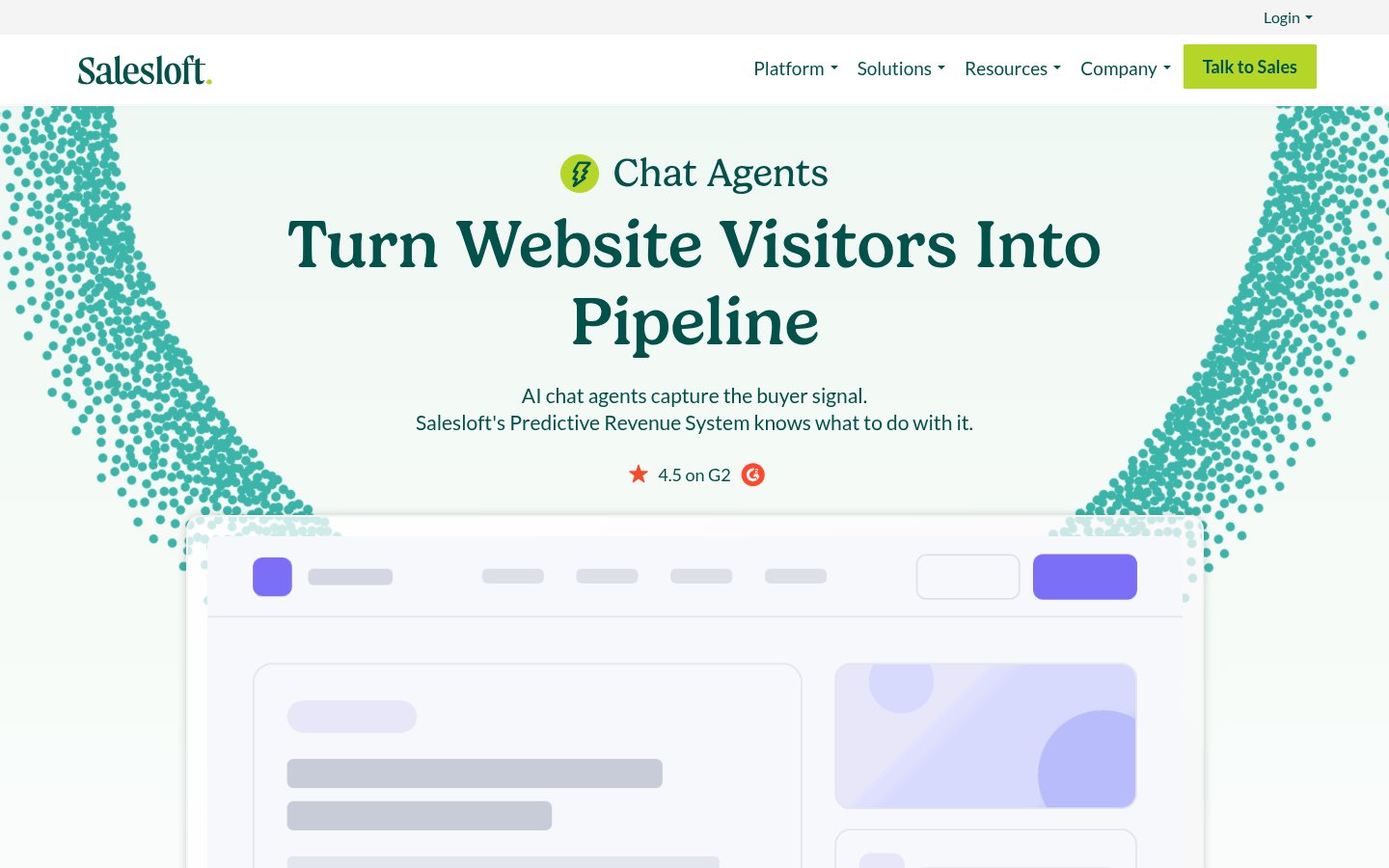
Drift pioneered the conversational marketing and sales category, and even after the Salesloft acquisition it still runs as a distinct product for teams that specifically need AI-powered live chat and chatbot workflows for inbound conversion. The core use case: a qualified prospect lands on your pricing page at 10pm, starts a chat, and Drift's AI handles the conversation, qualifies them, and either books a demo or routes them to a rep, without a human in the loop.
The AI conversation quality has improved considerably. Early Drift bots were obviously robotic; the current version handles nuanced objections, references specific pages the visitor viewed, and personalizes responses based on account-level data from connected CRM and ABM tools. For inbound-heavy B2B sales motions, this can genuinely reduce the time-to-first-contact for hot leads from hours to seconds.
The reason it sits at number nine rather than higher: Drift's full value comes when you integrate it deeply with your CRM, MAP, and ABM stack. Standalone, it's good but not exceptional. When it's feeding qualification data directly into Salesforce and connecting with Demandbase or 6sense, it becomes a serious revenue acceleration layer.
The Salesloft integration also means teams running Salesloft as their primary revenue platform get tighter workflows between web engagement and rep follow-up, a real operational advantage.
Pricing: Custom pricing through Salesloft. Legacy standalone plans may still be available but check current terms.
Best for: Inbound-heavy B2B teams that need to convert website traffic to booked demos faster.
Pros: Best-in-class website conversational AI, strong ABM platform integrations, real-time routing to live reps, improving AI conversation quality
Cons: Full value requires deep stack integration, pricing opacity post-acquisition, less relevant for pure outbound-focused teams
Try Drift →10. Amplemarket
Official website: amplemarket.com
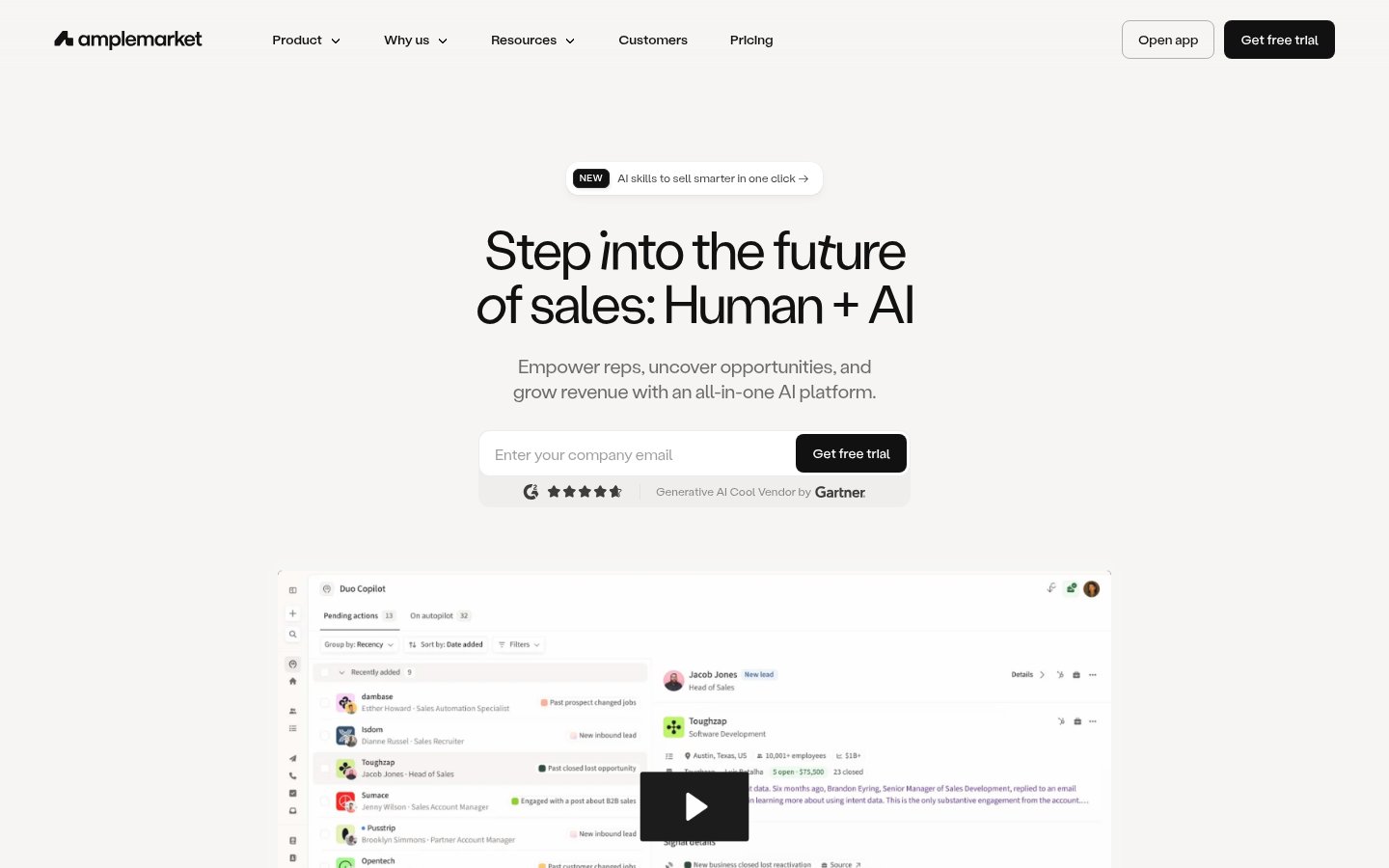
Amplemarket earns the tenth spot as the strongest all-in-one outbound platform for mid-market teams that don't want to build a Clay-plus-sequencer-plus-data-provider stack. It combines verified contact data, AI-powered email personalization, sequencing, deliverability management, and LinkedIn automation in a single product.
The deliverability layer is underrated. Amplemarket manages sender reputation, warm-up, and domain rotation in ways that most outbound teams handle badly or ignore entirely. Getting your emails into inboxes is a prerequisite for everything else, and Amplemarket takes it seriously. Teams that switch from Apollo or Outreach to Amplemarket often cite inbox placement as the most immediate improvement.
The AI personalization is solid but not at Clay's level of depth. Amplemarket's strength is breadth, it handles more of the outbound workflow in one place. You'll get less granular control over enrichment sources but significantly less operational complexity.
Worth noting: the consistency of AI output quality across different industries and target personas varies. Like most tools on this list, the quality of what you get out is heavily shaped by the quality of your ICP definition and messaging inputs. The AI output quality problem affects B2B sales AI just as it affects every other category, build a feedback loop into your outbound process from day one.
Pricing: Custom pricing. Not publicly listed.
Best for: Mid-market teams wanting an all-in-one outbound platform without building a multi-tool stack.
Pros: All-in-one outbound coverage, strong deliverability management, LinkedIn + email automation in one platform, easier to operationalize than Clay-based stacks
Cons: AI personalization depth below Clay, pricing opacity, less suitable for teams that need granular enrichment control
Try Amplemarket →Comparison Table
| Tool | Primary Use Case | Best Team Size | AI Standout Feature | Pricing Model |
|---|---|---|---|---|
| Gong | Conversation intelligence | Mid-market to enterprise | Deal risk scoring from call signals | Enterprise, custom |
| Clari | Revenue forecasting | Mid-market to enterprise | AI-accurate pipeline forecasting | Enterprise, custom |
| Apollo.io | Outbound + data | SMB to mid-market | ICP scoring + contact database | Freemium, from $49/user/mo |
| Outreach | Sales execution | Enterprise | AI sequence recommendations | Enterprise, custom |
| Salesloft | Revenue orchestration | Enterprise | Rhythm AI task prioritization | Enterprise, custom |
| Clay | Data enrichment + personalization | Growth teams | 75+ source enrichment + AI copy | From $149/mo |
| 11x.ai | Autonomous SDR | SMB to enterprise | Autonomous outbound agent | Enterprise, custom |
| Chorus.ai | Conversation intelligence | ZoomInfo teams | Intent data + conversation AI | Bundled with ZoomInfo |
| Drift | Inbound conversational AI | Inbound-heavy teams | Real-time website chat qualification | Custom post-acquisition |
| Amplemarket | All-in-one outbound | Mid-market | Deliverability management | Custom |
How I Ranked These
The ordering here reflects one question above all others: what evidence suggests this tool actually moves revenue, not just activity metrics?
Gong and Clari sit at one and two because they solve the hardest problems in B2B sales: knowing what's really happening in conversations and knowing which deals in your forecast will actually close. Both are expensive. Both require time to implement properly. Both are used by teams that consistently outperform their forecasts, and the correlation is not coincidental.
Apollo.io comes in at three despite being far cheaper and less "enterprise" than the tools above it, because raw impact per dollar is genuinely high. A 10-person outbound team on Apollo is more productive than the same team on a bad data provider plus a bad sequencer.
The platform tools (Outreach, Salesloft) rank four and five because they're excellent at what they do, but they're also the category most vulnerable to "we bought it and under-deployed it." The value is real if you implement seriously. Most teams don't.
Clay ranks six rather than higher despite having arguably the most sophisticated outbound AI on the market, because it requires a level of operational sophistication most teams haven't reached. If your SDRs don't understand signal-based outbound yet, Clay will confuse more than it helps.
11x.ai at seven is a genuine bet, the technology is compelling and the economics can work, but calling it proven at scale would be premature. It's the highest-risk, highest-upside tool on this list.
Chorus, Drift, and Amplemarket round out the list as excellent tools with narrower applicable contexts. Chorus is the right call if you're already in ZoomInfo. Drift matters if your website is a significant inbound channel. Amplemarket is the pragmatic all-in-one choice for teams that want to avoid stack complexity.
One thread that runs through all of these: the quality of your ICP definition determines the quality of AI output across every single one. A crisp ideal customer profile fed into any of these systems outperforms a vague one fed into the best system. If you want to understand why your AI tools keep producing inconsistent results regardless of which platform you're on, the AI output quality problem has a useful framework for diagnosing and fixing that.
Finally, if you're deploying any of the more autonomous tools on this list (11x.ai, Drift's chatbot, or Amplemarket's automated LinkedIn sequences), the question of what those agents do when edge cases arise is worth thinking through carefully. What AI coding agents actually do for non-engineers isn't directly about sales, but the framework for thinking about agent autonomy and human oversight translates well.
The best B2B sales teams in 2026 aren't replacing humans with AI. They're making their humans faster to qualify, better-coached, and less likely to work the wrong deals. That's the standard these tools should be held to.
Related reading
Frequently Asked Questions

infobro.ai Editorial Team
We research every tool from its documentation, pricing pages, product screenshots and public developer discussion, and say plainly what the evidence does and does not show. Drafts are AI-assisted and reviewed by our editors before publication. We revisit each article every 6 months to reflect platform changes. Learn more about our process.