The U.S. Government Just Pulled the Plug on Anthropic's Most Powerful AI. Here's What Actually Happened.
A narrow jailbreak finding triggered a federal recall of Anthropic's most capable model. Anthropic is publicly pushing back. Here's what this means for AI deployment.
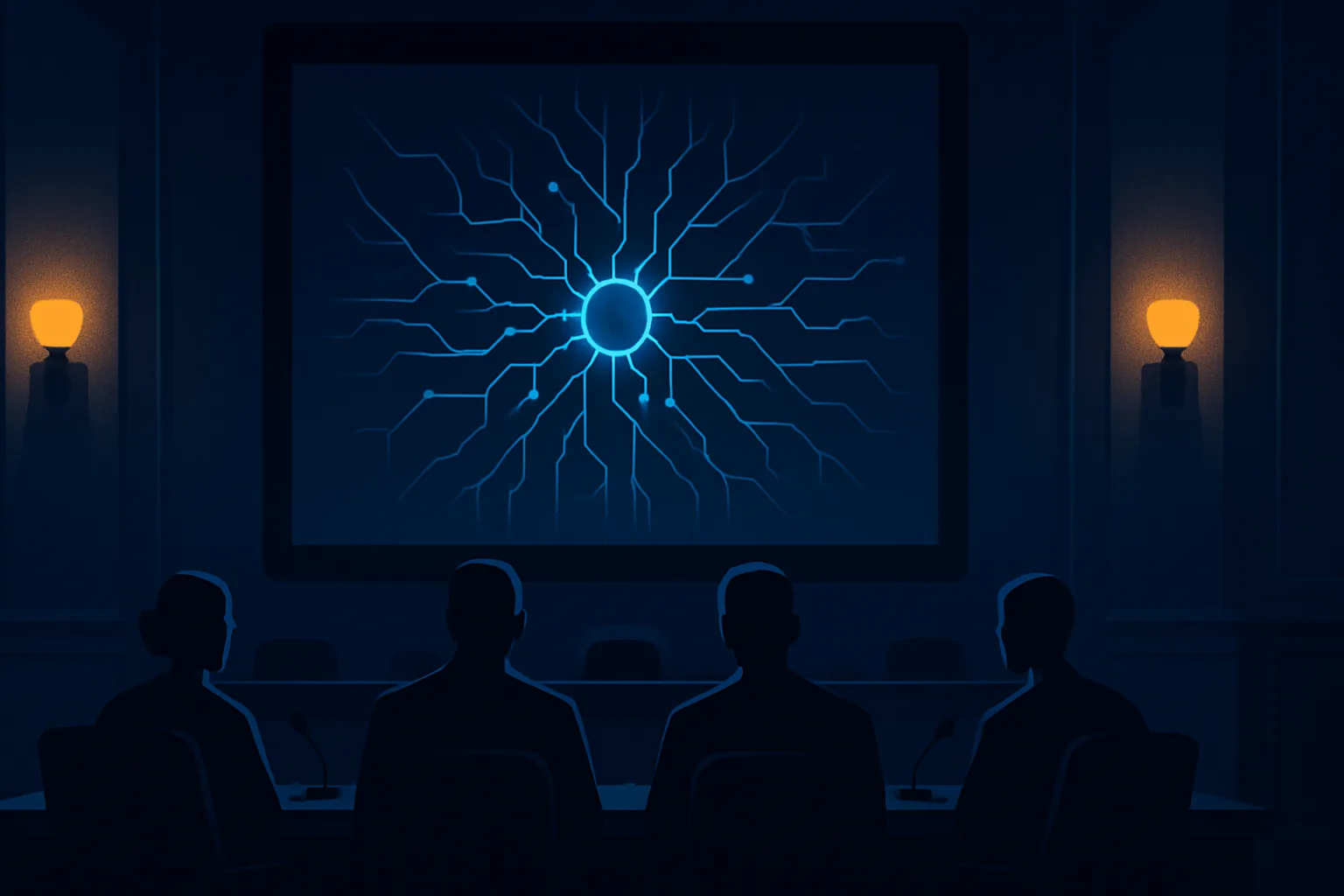
The relationship between AI labs and federal regulators just got a lot more complicated. A U.S. government agency has pulled approval for Anthropic's most powerful AI model following the discovery of a potential jailbreak vulnerability, marking one of the most significant regulatory interventions in commercial AI deployment to date.
Anthropic isn't staying quiet about it. The company issued a direct public rebuttal, calling the decision disproportionate. "We disagree that the finding of a narrow potential jailbreak should be cause for recalling a commercial model deployed to hundreds of millions of people," the company stated. That's unusually blunt language for an AI lab talking to a government body, and it tells you something about how high the stakes feel inside the company right now.
What Triggered the Government's Decision
The recall stems from a regulatory review that identified a specific jailbreak path in Anthropic's flagship model. The details of the exact exploit haven't been made public, but "narrow" is the operative word here. Anthropic's pushback centers on the argument that a targeted, limited vulnerability in a model at this scale doesn't warrant taking it offline entirely.
That argument has merit on its face. No large language model is completely jailbreak-proof. Security researchers find workarounds constantly, across every major model from every major lab. The question regulators are implicitly answering here is whether the bar for deployment should be higher when AI systems reach the scale of hundreds of millions of users.
The government's decision says: yes, apparently it should be.
Why Anthropic's Frustration Makes Sense, and Why It Doesn't Matter
Anthropic has built its entire brand around safety. The company was literally founded by former OpenAI researchers who left partly over concerns about moving too fast. The irony of being the AI company whose model gets recalled over a safety finding, while arguably running the tightest safety program in the industry, won't be lost on anyone watching this.
That said, being a safety-focused company and having a safe deployment at any specific moment are two different things. Regulators aren't grading labs on intent or institutional culture. They're looking at specific, documented vulnerabilities in specific deployed systems.
The situation is also a preview of what happens when AI safety warnings and regulatory teeth start operating in the same space. Anthropic has been among the loudest voices warning Congress and regulators about AI risks, including participating in high-profile lobbying efforts around catastrophic use cases. The government appears to have taken those warnings seriously, and is now applying that same seriousness to Anthropic's own products. That's not hypocrisy on anyone's part. It's just what oversight looks like when it actually functions.
If you've been following the OpenAI and Anthropic lobbying push around AI bioweapon safeguards, this moment lands with some irony. The labs asked for a regulatory environment that takes AI risk seriously. That environment is forming, and it bites.
The Broader Pattern Here
This isn't happening in a vacuum. Courts are already showing far less patience with AI-related failures. Federal judges have been sanctioning lawyers over AI hallucinations, issuing fines and removing attorneys from cases over AI-generated errors submitted as fact. The institutional tolerance for "AI isn't perfect, but it's good enough" is narrowing across multiple sectors simultaneously.
On the corporate side, the xAI engineer who was fired after raising Grok safety concerns and subsequently sued the company represents a parallel pressure from inside the labs themselves. Internal dissent over safety practices is becoming a legal and reputational liability in ways it wasn't two years ago.
What's different about the Anthropic situation is the vector. This isn't a lab being sloppy. This is a lab that invested heavily in safety infrastructure getting caught in the regulatory machinery it helped build. That's a new dynamic, and it's worth taking seriously.
What This Means for Enterprises Using Anthropic's Models
If your organization has built workflows around Claude, you're dealing with one of two situations right now.
First, if you're using the API directly for internal tooling, your access likely depends on whether the specific model version in question is the one affected. Anthropic runs multiple model versions, and a government action targeting a specific flagship deployment may not immediately cascade to all API tiers. Check which model version your integration calls.
Second, if you're relying on consumer-facing or enterprise-facing products that run on Anthropic's most capable model, expect potential disruption or substitution on the backend while this gets resolved. Providers that built on Anthropic's top-tier model may quietly route traffic to older versions, or to alternatives, without surfacing that change to end users.
The underlying problem for enterprise AI adoption is the one that doesn't go away: dependency on external AI infrastructure means your tooling is subject to decisions made entirely outside your organization. This is exactly the kind of scenario covered in the AI dependency problem, and it's no longer theoretical. When a model gets recalled, everyone downstream feels it.
Practically speaking, organizations with serious AI infrastructure needs should be running on multiple model providers, not one. Single-vendor AI dependencies carry regulatory risk now, not just vendor risk.
What Anthropic Does Next
Anthropic's options are limited but not zero. The company can work directly with the relevant agency to patch the identified jailbreak vector and seek re-approval. Given the "narrow" characterization of the vulnerability, that path probably exists. The timeline is the unknown.
The company can also continue its public pushback, framing this as a disproportionate response, and try to influence the precedent being set here. That precedent matters enormously: if regulators establish that a narrow jailbreak finding justifies pulling a model deployed at scale, the bar for commercial AI deployment just got significantly higher for the entire industry.
Anthropic's valuation sat at roughly $965 billion as of its last fundraising round. A government recall of its flagship model, even a temporary one, hits the company's credibility in enterprise sales conversations in ways that are hard to quantify but very real. Enterprise buyers who were already cautious about AI tooling now have a concrete example of what regulatory intervention looks like.
Mistral, currently rumored to be raising at a €20 billion valuation, will be watching this closely. So will every foundation model company planning an IPO or enterprise push.
What to Watch in the Coming Weeks
The key signals to track: whether Anthropic moves quickly to address the vulnerability and seek re-approval, how the relevant agency communicates the scope and conditions of the recall, and whether other AI labs receive increased scrutiny as a result. If the government applies this standard consistently, the effects on the broader market will be significant.
This is also a test of whether AI safety arguments can survive contact with actual enforcement. The labs have spent considerable time arguing for smart, targeted regulation. Smart, targeted regulation means sometimes your product gets pulled. That's how it's supposed to work.
For teams actively building with AI tools, the lesson is straightforward: build for model substitution from day one. Know what you're calling, document the dependency, and have a fallback. Given how fast AI models are being deprecated and rebuilt, treating any single model as permanent infrastructure was always a risk. It's now an obvious one.