Meta Is Unwinding Its $2 Billion Manus Deal After Beijing Said No. Here's What That Means.
Meta is dismantling its $2 billion acquisition of Manus after Beijing ordered the deal reversed. It's a rare case of China blocking a U.S. tech company's own acquisition.
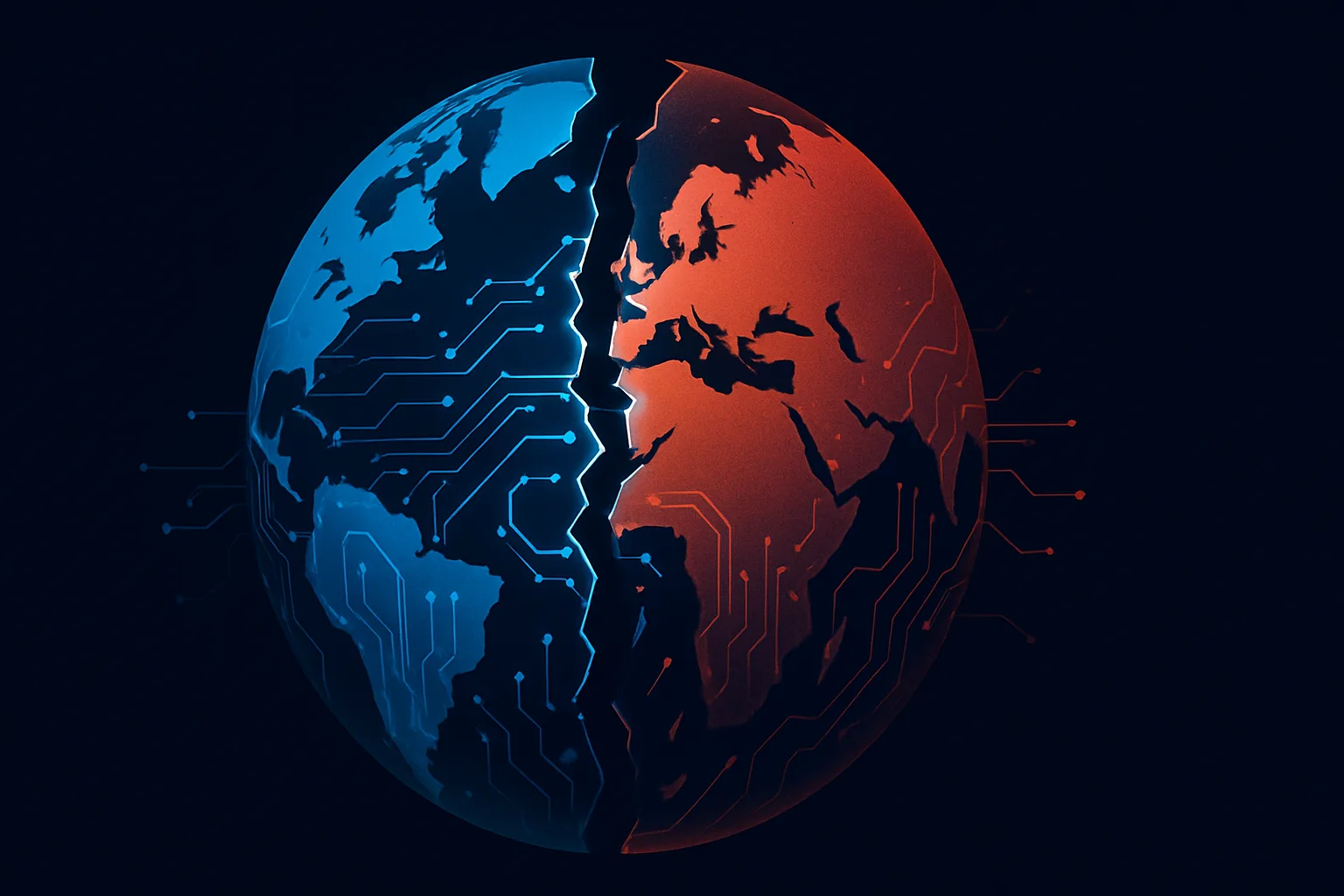
Meta spent $2 billion acquiring Manus, an AI agent startup that had generated enormous buzz earlier this year. Now it's undoing the deal, not because of U.S. regulators, not because the technology didn't work, but because Beijing told it to.
That's the situation as of this weekend. Meta is actively dismantling the Manus acquisition after the Chinese government demanded the transaction be reversed. It's one of the more remarkable regulatory interventions in recent AI industry memory, and it signals something important about how geopolitical friction is starting to reshape the way AI companies acquire talent and technology.
What Actually Happened
Manus emerged in early 2026 as one of the most-hyped AI agent products to come out of China. The product, built by a team with Chinese roots, drew comparisons to OpenAI's operator-style agents and attracted intense interest from Western investors and acquirers almost immediately after launch.
Meta moved quickly, closing a $2 billion deal to bring Manus inside its walls. The acquisition looked like a straightforward talent and technology grab, exactly the kind of move big tech makes when a promising team builds something it doesn't want to compete with.
Beijing had a different view. Chinese authorities ordered the deal reversed, and Meta is now complying. The company is in the process of unwinding the acquisition.
The specific legal or regulatory mechanism Beijing used hasn't been made fully public. But the outcome is clear: a U.S. company spent $2 billion on an AI startup and is now giving it back because the Chinese government said so. That's genuinely unusual.
Why Beijing Stepped In
China has been tightening its grip on outbound technology transfers for several years. The country's data security and export control frameworks give the government broad authority to block or reverse transactions it considers strategically sensitive, and AI agent technology, particularly anything touching autonomous decision-making or large-scale data processing, sits squarely in that sensitive category.
Manus isn't a defense contractor. It makes AI agents. But that framing misses the point. China's government has been explicit that advanced AI capabilities constitute a national strategic resource, and it has shown it's willing to act on that position even when the transaction involves a private company and a foreign buyer.
The irony is that Meta was the acquiring party. This wasn't a Chinese company trying to buy American AI. It was the reverse. Beijing blocked its own startup from being absorbed into Meta's ecosystem.
This matters beyond the Manus deal itself. It tells every Western company eyeing Chinese AI talent that the acquisition path carries political risk that standard due diligence won't catch. A deal can clear U.S. national security review, get signed, close, and still get unwound if the Chinese government decides it doesn't like the outcome.
The Manus Hype Cycle, Briefly
It's worth remembering how fast Manus rose. When it launched, the AI agent space was crowded with claims but short on products that actually worked. Manus generated genuine excitement because it demonstrated multi-step autonomous task completion in a way that felt qualitatively different from what most Western agent products were doing at the time.
That excitement is part of why Meta paid $2 billion. It's also probably part of why Beijing moved to block the deal. A product that attracted that level of attention from the world's largest social media company is exactly the kind of asset Chinese regulators would want to keep in Chinese hands, or at least out of American ones.
The Pressure Inside Meta's AI Unit
This deal reversal lands at an uncomfortable moment for Meta's AI organization. The company's AI unit, which now employs roughly 6,500 people, has been described internally as deeply troubled. Engineers inside the group have characterized the culture as demoralizing, with concerns about direction, autonomy, and the gap between the unit's headcount and its output.
Unwinding a $2 billion acquisition doesn't help any of that. Whatever integration work had begun on Manus now has to be reversed. Teams that were presumably excited about working with the Manus technology now don't have it. And the $2 billion question of where that capital goes next remains open.
For context on how much AI infrastructure spending has accelerated across the industry, the sums being thrown at acquisitions and compute are staggering. Amazon Just Borrowed $17.5 Billion From Banks to Fund AI. The Debt Is Piling Up Across the Industry. is a useful frame for understanding the financial scale at play.
What This Means for AI Acquisitions Going Forward
The Manus situation creates a new category of deal risk that M&A teams will need to price in. Call it sovereign reversal risk: the possibility that a government with jurisdiction over a target company's founders, IP, or data can unwind a completed transaction.
This isn't theoretical anymore. It happened. Meta has the invoice to prove it.
A few things follow from that:
Due diligence now includes exit risk. Acquirers need to assess not just whether a deal can close, but whether it can stay closed. If a target has significant connections to a government that treats AI as a strategic asset, that's a material risk factor, not a footnote.
Talent acquisitions may replace company acquisitions. One way around sovereign reversal risk is to hire individuals rather than acquire entities. Meta and others may move toward "acqui-hire lite" structures where the legal and IP exposure is narrower and there's less for a foreign government to claw back.
Chinese AI startups face a harder path to Western exits. For founders building AI companies in China who want to eventually sell to a Western acquirer, Beijing's intervention in the Manus deal is a discouraging data point. It suggests the government will exercise its authority when it wants to, regardless of what the founders themselves prefer.
The broader context here is that AI companies are operating in an increasingly fractured regulatory environment. The xAI Fired an Engineer for Raising Grok Safety Concerns. Now He's Suing. case and the U.S. Government's intervention in Anthropic's model access both point to the same underlying reality: governments are no longer passive observers of the AI industry's deal-making.
The OpenAI Comparison
It's worth noting the contrast with OpenAI's current trajectory. While Meta is unwinding a deal under government pressure, OpenAI is pushing forward with its IPO plans and outlining what Sam Altman is calling AI's "third phase", centered on abundance, safety, and global collaboration. Two very different trajectories for two companies nominally operating in the same industry.
The structural difference is that OpenAI's ambitions are primarily domestic and its cap table is predominantly American. Meta's global footprint creates exposure to exactly the kind of sovereign friction that just cost it $2 billion.
What You Should Actually Do With This Information
If you're building AI products that depend on third-party capabilities, the Manus story is a reminder that supply chain resilience matters. A tool or platform that gets acquired and then unwound, or whose access gets suspended for geopolitical reasons, creates the same kind of disruption as a model getting pulled by a government order. We've written about how to think through AI tool dependency more broadly and the core advice holds: don't build critical workflows on single points of failure.
If you're in corporate development or M&A at a tech company, update your cross-border AI deal framework. The Manus case isn't an edge case anymore. It's a precedent.
And if you're watching the AI agent space for product reasons, the Manus technology is presumably now back in independent hands, or at minimum no longer part of Meta's roadmap. Where it goes next is worth tracking. The product was genuinely interesting before the geopolitics swallowed it.
The AI industry has spent the last two years focused almost entirely on model capability and capital raises. The Manus reversal is a reminder that geopolitics operates on its own timeline, and it doesn't care about your deal terms.