Top 9 AI Tools for HR and Recruiting in 2026: Ranked by What Actually Moves the Hire
These 9 AI recruiting and HR tools are ranked by real hiring impact, from sourcing and screening to onboarding. No fluff, just what actually works in 2026.

Hiring has always been slow, expensive, and more subjective than anyone in HR wants to admit. What's changed in 2026 is that AI has genuinely started to fix some of those problems, not all of them, and not without creating new ones, but enough that teams using the right tools are closing roles measurably faster than those who aren't.
The catch: there are now dozens of tools claiming to "transform" recruiting with AI, and most of them are glorified keyword filters with a chatbot slapped on top. The ones worth your time do something specific very well, whether that's sourcing passive candidates at scale, cutting interview scheduling from days to minutes, or writing job descriptions that attract the right applicants instead of repelling them.
This list covers the nine tools that actually move the needle. I've ranked them by how directly they affect hiring outcomes: time-to-fill, quality-of-hire signals, and the reduction of recruiter busywork that doesn't require human judgment. If you're thinking about the broader cost of building out your AI stack, The AI ROI Problem: Why You're Spending More on AI Every Month But Struggling to Prove It's Working is worth reading before you commit to anything annual.
1. Workable
Official website: workable.com
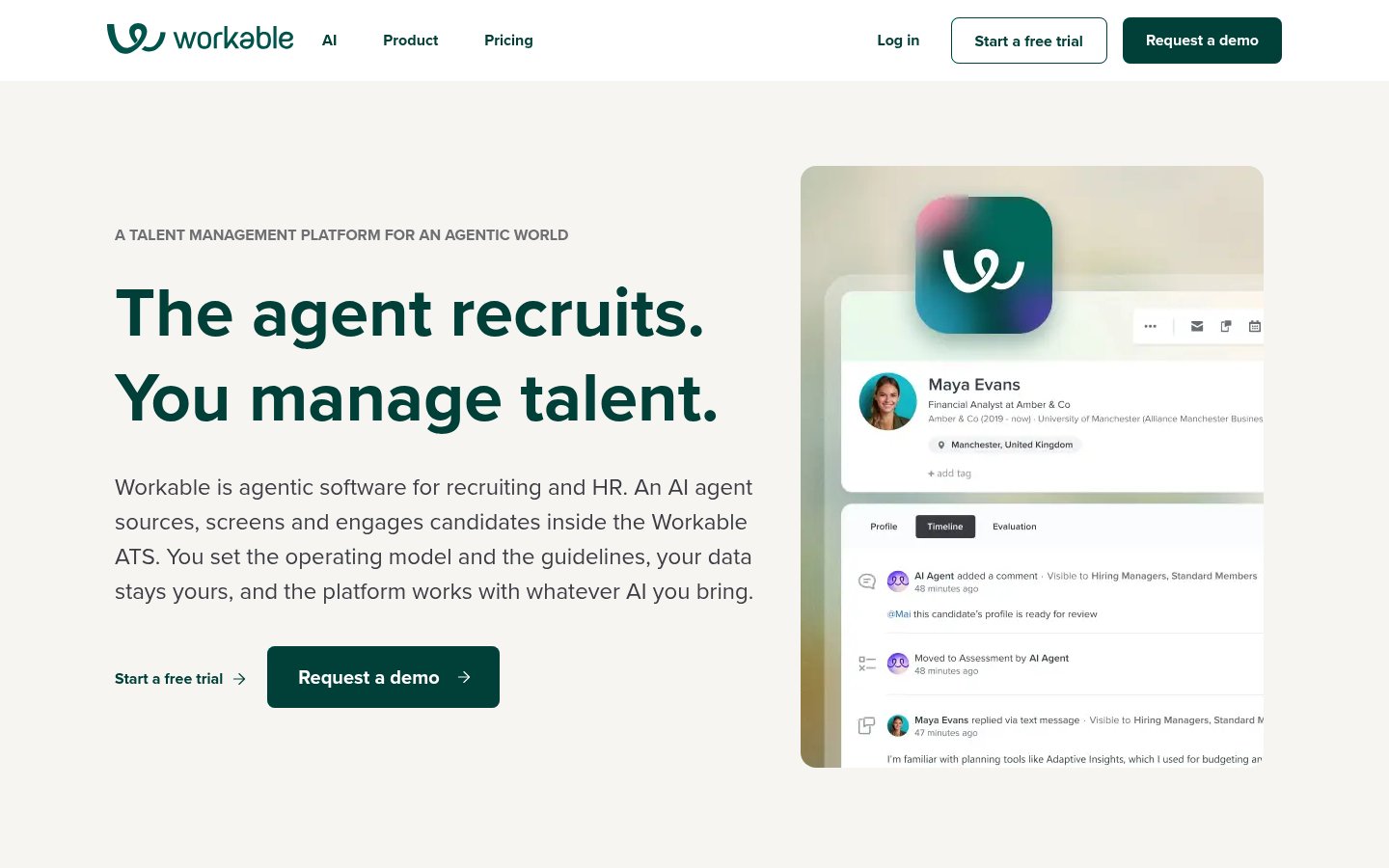
Workable is the closest thing to a complete AI recruiting platform that actually works for companies that aren't Fortune 500. It covers the full funnel: AI-powered job post writing, sourcing from a network of 400+ million candidate profiles, resume screening with scored shortlists, interview scheduling, and structured interview kits. That's not a list of features bolted together, they genuinely talk to each other.
The sourcing engine is the standout. You describe the role, and Workable surfaces passive candidates from its database ranked by fit, not just keyword matches. In 2025, they added AI-assisted "candidate reasoning" that shows you why a profile was surfaced, which matters when you're explaining a shortlist to a hiring manager who didn't build it.
Screening scores help, but they're a starting point, not a verdict. Workable is clear about this and doesn't try to pretend the AI makes the hire. That intellectual honesty is refreshing in a category full of overconfidence.
Pricing: Starter plan from $149/month (up to 2 active jobs), Standard from $299/month, Premier custom pricing. Annual billing discounts available.
Best for: Growing companies (50-2,000 employees) that need a single platform covering sourcing through offer, without enterprise procurement headaches.
Pros: Genuinely integrated pipeline, strong passive sourcing network, clear AI reasoning on candidate scores, fast setup, good hiring manager collaboration tools.
Cons: Sourcing database quality varies by geography (strongest in North America and Western Europe), no dedicated executive search features, mobile app is functional but not great.
Try Workable →2. HireVue
Official website: hirevue.com
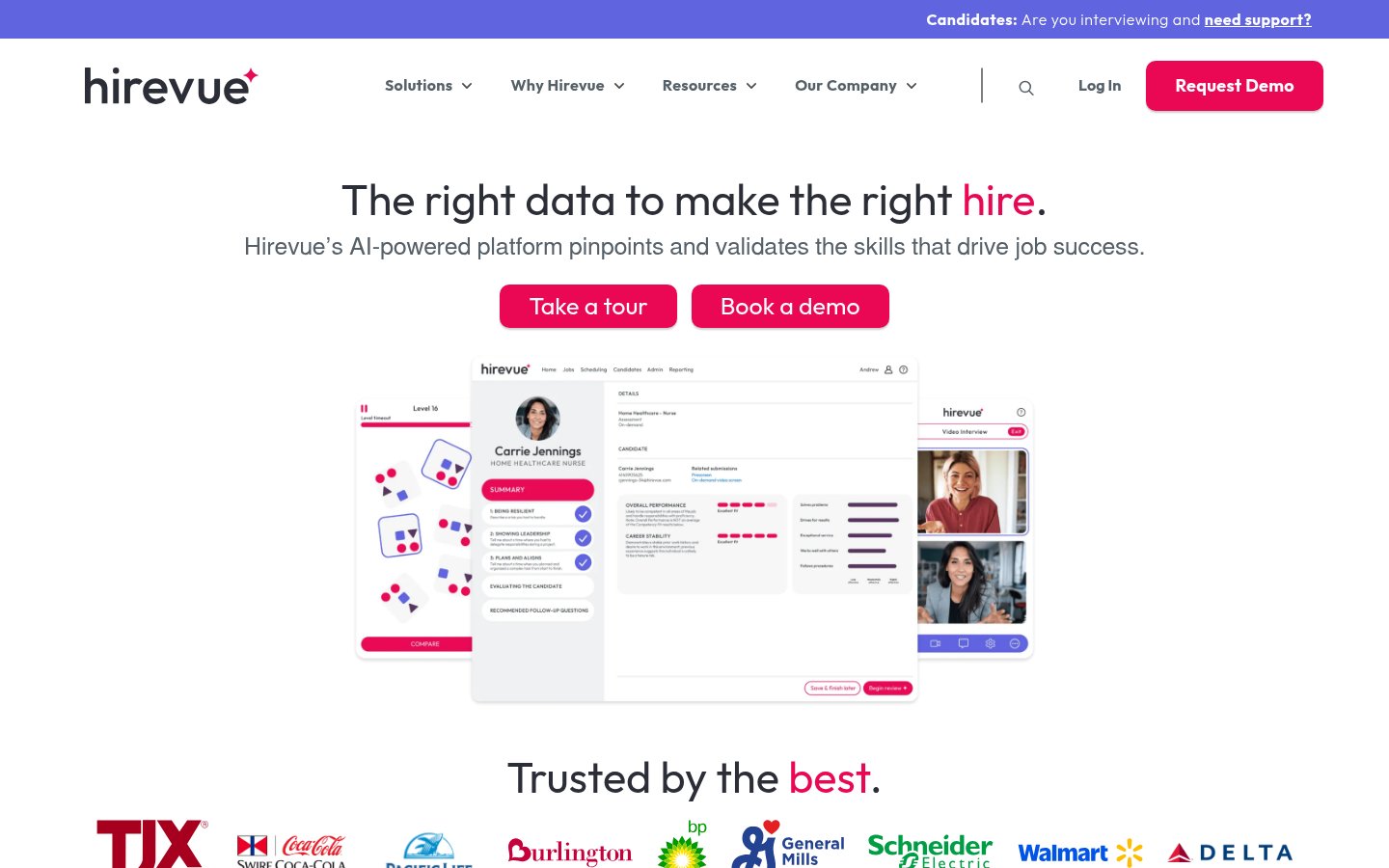
HireVue owns the AI video interview space in a way no competitor has managed to replicate at scale. The platform lets candidates complete asynchronous video interviews on their own schedule, which removes the scheduling bottleneck that kills so many early-stage pipelines. Recruiters then review responses with AI-generated summaries and structured scoring rather than watching every minute of every submission.
The 2025 version added "game-based assessments" that measure cognitive and behavioral traits without the candidate sitting through a traditional psychometric test, the UX is cleaner and completion rates are higher. HireVue's enterprise clients (it works with a significant portion of the Fortune 500) use it to screen thousands of candidates for high-volume roles in days rather than weeks.
The controversy around facial expression analysis is worth addressing directly: HireVue retired its visual analysis feature in 2021 after criticism from researchers and civil liberties groups. What remains is language-based analysis of what candidates actually say, which is a more defensible approach. Still, if your legal team is cautious about AI in hiring decisions, get them to review the documentation before you roll this out.
Pricing: Enterprise pricing only, typically starting around $35,000/year for mid-market deployments. Not suitable for small teams.
Best for: Enterprise and mid-market companies hiring at volume (100+ candidates per role) where scheduling and initial screening are the primary bottlenecks.
Pros: Industry-leading async video infrastructure, solid AI summaries, high-volume screening capability, strong compliance documentation, good candidate experience scores.
Cons: Enterprise pricing puts it out of reach for most small businesses, setup requires significant IT involvement, overkill for low-volume hiring.
Try HireVue →3. Greenhouse
Official website: greenhouse.io
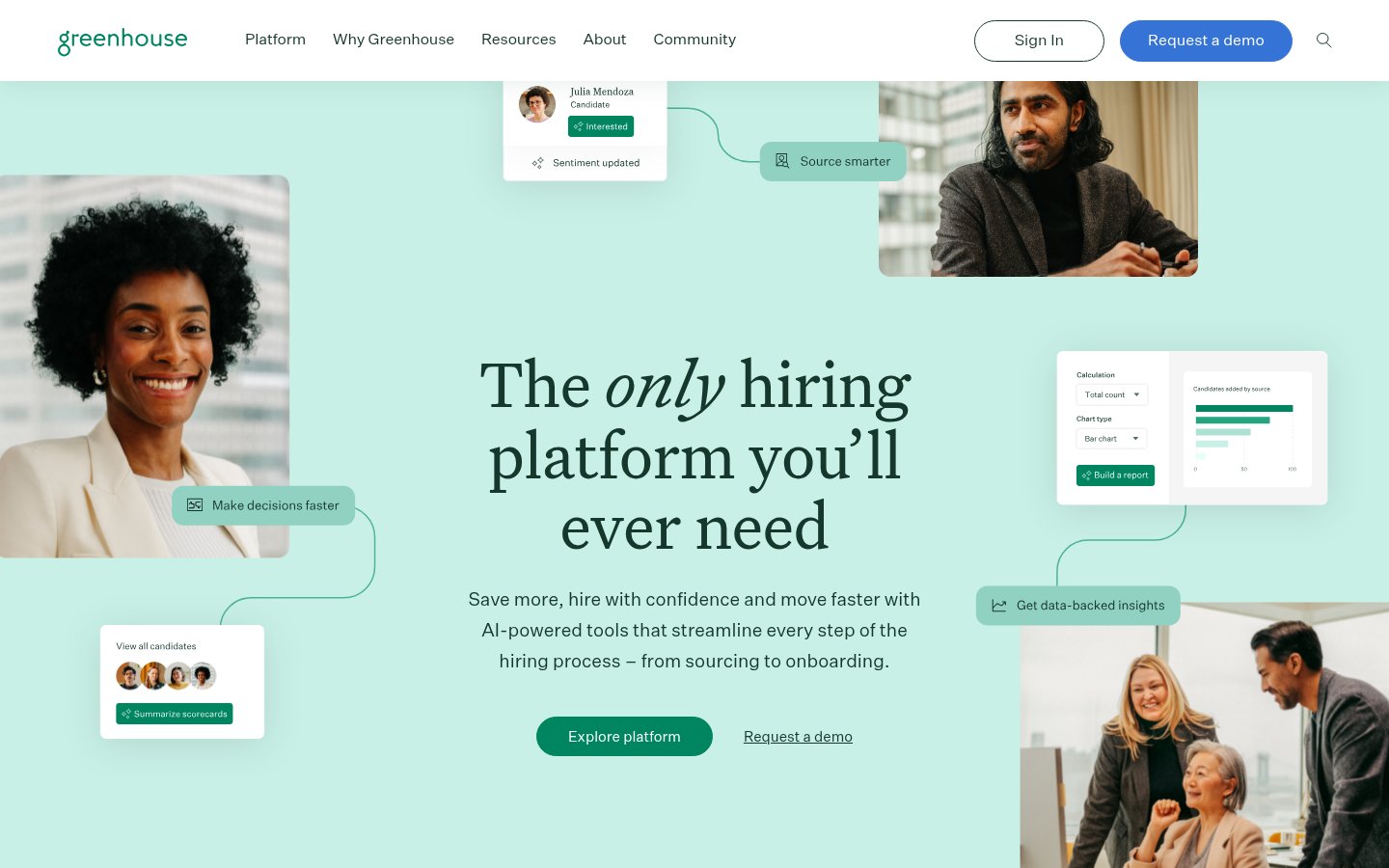
Greenhouse isn't the flashiest AI recruiter on this list, it's the most mature. The platform has spent a decade building structured hiring processes into its core, and its AI layer (added properly in 2024-2025) sits on top of that foundation rather than replacing it. That's the right architecture.
The AI features that matter most: automated job post optimization that adjusts language for inclusivity and search performance, AI-assisted resume screening that applies your custom scorecard criteria rather than generic signals, and interview intelligence that transcribes and tags conversations for review. The transcription integration works with most video conferencing tools without requiring candidates to download anything.
Where Greenhouse beats most competitors is in the data it surfaces over time. After a few hundred hires, the platform starts showing you which sourcing channels produce candidates who actually pass interviews, which interview stages are losing good candidates, and where your pipeline velocity is slowing down. That's genuinely useful for a VP of Talent who needs to defend budget decisions.
Pricing: Pricing is custom and quote-based. Roughly $6,000-$10,000/year for companies under 200 employees, scaling up from there. Not transparent on their website.
Best for: Scaling companies (200-5,000 employees) that care about hiring process quality and want reporting they can actually use to improve over time.
Pros: Best-in-class structured hiring framework, excellent reporting and pipeline analytics, strong integrations ecosystem (500+), reliable AI that doesn't hallucinate candidates, solid DEI tooling.
Cons: Pricing isn't transparent, setup takes real effort, AI features are less aggressive than some competitors (which is also a feature, depending on your risk tolerance).
Try Greenhouse →4. Paradox
Official website: paradox.ai
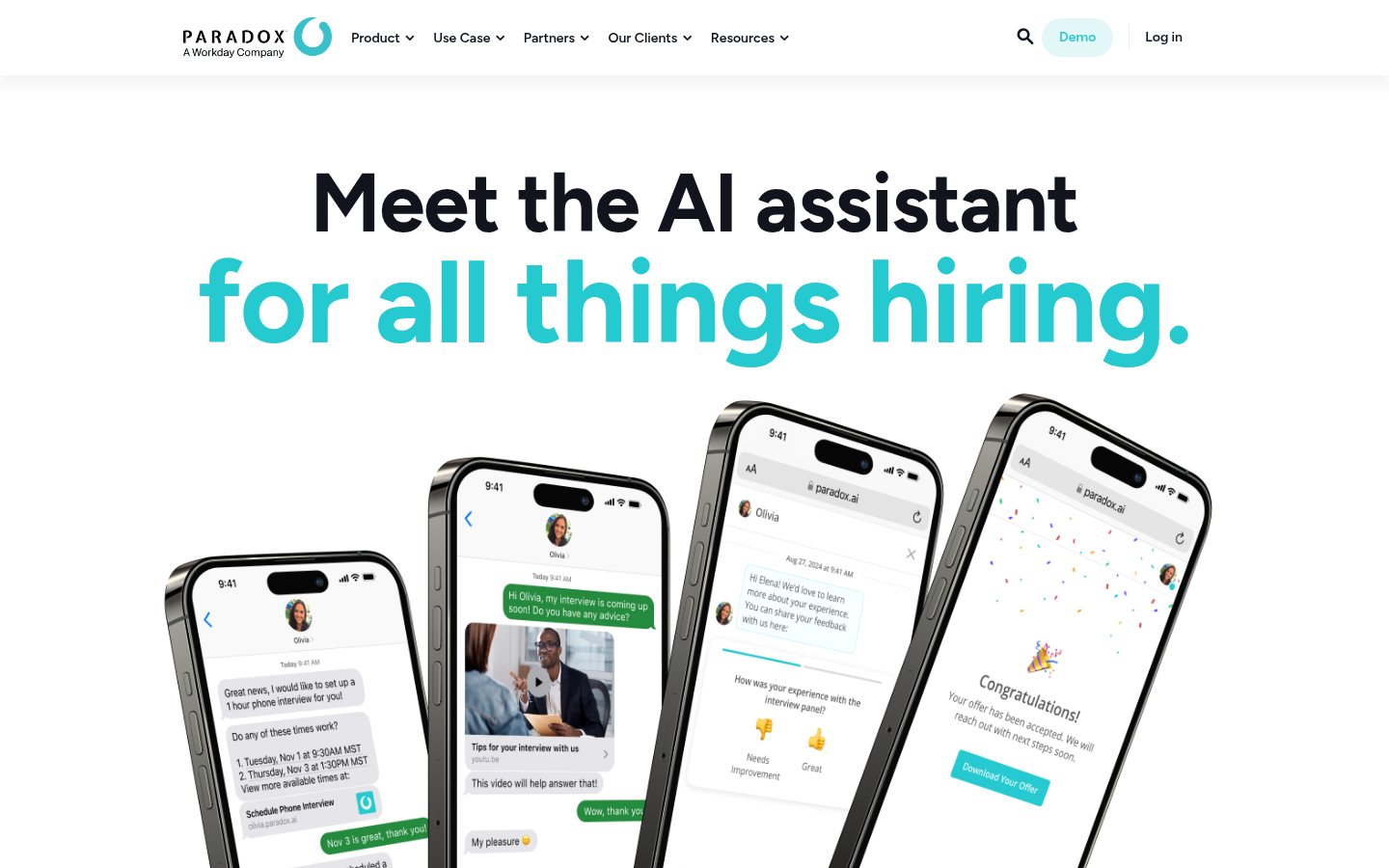
Paradox built its reputation on one thing: getting candidates to show up. Their AI assistant, Olivia, handles everything between "job seeker clicks apply" and "recruiter sits down for a real conversation", answering questions, screening with conversational AI, scheduling interviews, sending reminders, and collecting pre-hire paperwork. For high-volume, frontline hiring (retail, hospitality, logistics, healthcare), this is probably the highest-ROI tool on this list.
The numbers Paradox quotes are aggressive but consistent across customer testimonials: time-to-hire dropping from weeks to days, offer acceptance rates improving because candidates don't fall off during scheduling delays, and recruiter time shifting from administrative to actual human interaction. The conversational AI is genuinely good, candidates often don't realize they're talking to a bot until well into the process, which is either impressive or unsettling depending on your view of disclosure.
One thing Paradox doesn't do well: complex, senior role hiring. Olivia is optimized for structured, repeatable processes. If every role requires a custom conversation, the value drops significantly.
Pricing: Custom enterprise pricing. Typically starts around $50,000/year for mid-market deployments. Paradox focuses on companies doing at least 500 hires per year.
Best for: Companies with high-volume, structured hiring needs, retail, hospitality, logistics, healthcare, and other frontline-heavy industries.
Pros: Best conversational AI in recruiting, dramatically reduces time-to-schedule, high candidate engagement rates, strong mobile experience, proven ROI for volume hiring.
Cons: Expensive for what smaller teams need, not designed for senior or specialized hiring, heavy reliance on conversation flow limits customization for unusual roles.
Try Paradox →5. Eightfold AI
Official website: eightfold.ai
Eightfold takes a different approach to the sourcing problem: instead of building a candidate database you search, it builds a skills graph of your entire talent ecosystem, current employees, past applicants, alumni, and external candidates, and maps potential across all of them. The pitch is that you stop looking at what someone has done and start looking at what they can do.
That's not marketing spin. The platform's matching algorithm uses role trajectories (what skills people in similar roles typically develop) to identify high-potential candidates who don't have the exact experience a job post asks for. For companies struggling to hire in competitive markets, this genuinely opens up pools they'd otherwise ignore.
The talent intelligence layer is also useful beyond recruiting. HR teams use it for internal mobility, succession planning, and workforce forecasting. That breadth makes it harder to evaluate against pure-play recruiting tools, but it also makes the investment easier to justify at the enterprise level.
The AI tools discussion keeps bumping up against a real organizational challenge, The AI Ownership Problem: Why Nobody on Your Team Actually Knows Who's Responsible for AI Results describes exactly the governance gap that can trip up an Eightfold deployment if you haven't assigned clear ownership.
Pricing: Enterprise only. Full platform implementations typically run $100,000+/year. Modular pricing available for specific use cases.
Best for: Large enterprises (5,000+ employees) that need talent intelligence across the full employee lifecycle, not just external recruiting.
Pros: Skills-based matching genuinely surfaces non-obvious candidates, excellent for internal mobility, strong workforce analytics, well-regarded bias mitigation approach.
Cons: Expensive and complex to implement, requires significant data integration work upfront, overkill for companies without a dedicated people analytics team.
Try Eightfold AI →6. Findem
Official website: findem.ai
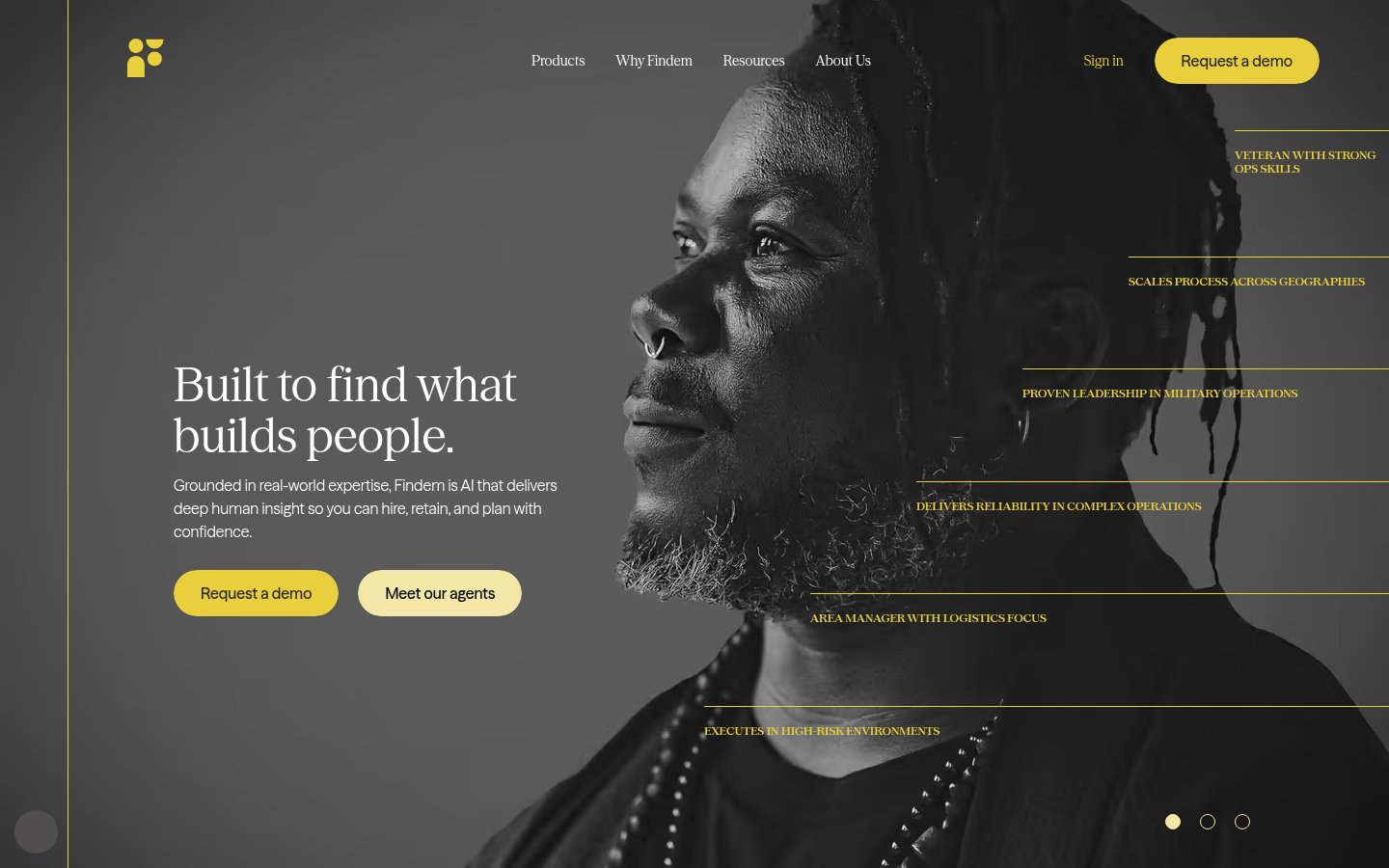
Findem's core innovation is what they call "3D candidate data", pulling attributes from hundreds of public data sources and combining them in ways that LinkedIn alone can't. You can search for candidates by attributes like "has experience scaling an engineering team through a Series B" or "has worked at both a startup and a FAANG company," not just job titles and skills. That's a meaningfully different search capability.
The talent CRM layer lets recruiting teams build and nurture pipelines over time, tracking warm candidates who aren't ready to move yet. In 2026, good recruiting is largely relationship management, and Findem's approach to this is more sophisticated than most ATS systems manage. The AI automatically enriches profiles as candidates update their public footprint, so your pipeline doesn't go stale.
Findem sits in a niche that matters most for technical and specialized recruiting where generic sourcing tools consistently underperform. If you're hiring software engineers, data scientists, or niche domain experts, the multi-attribute search capability alone is worth the investment.
Pricing: Starts around $2,000/month for team plans. Enterprise pricing is custom. They offer a free trial for initial candidate searches.
Best for: Technical recruiting teams and talent acquisition functions hiring specialized roles where LinkedIn search falls consistently short.
Pros: Multi-attribute candidate search is genuinely differentiated, strong pipeline nurturing tools, automated profile enrichment, good for hard-to-fill technical roles.
Cons: Less useful for high-volume frontline hiring, data coverage varies by industry and geography, UI has a learning curve.
Try Findem →7. Manatal
Official website: manatal.com
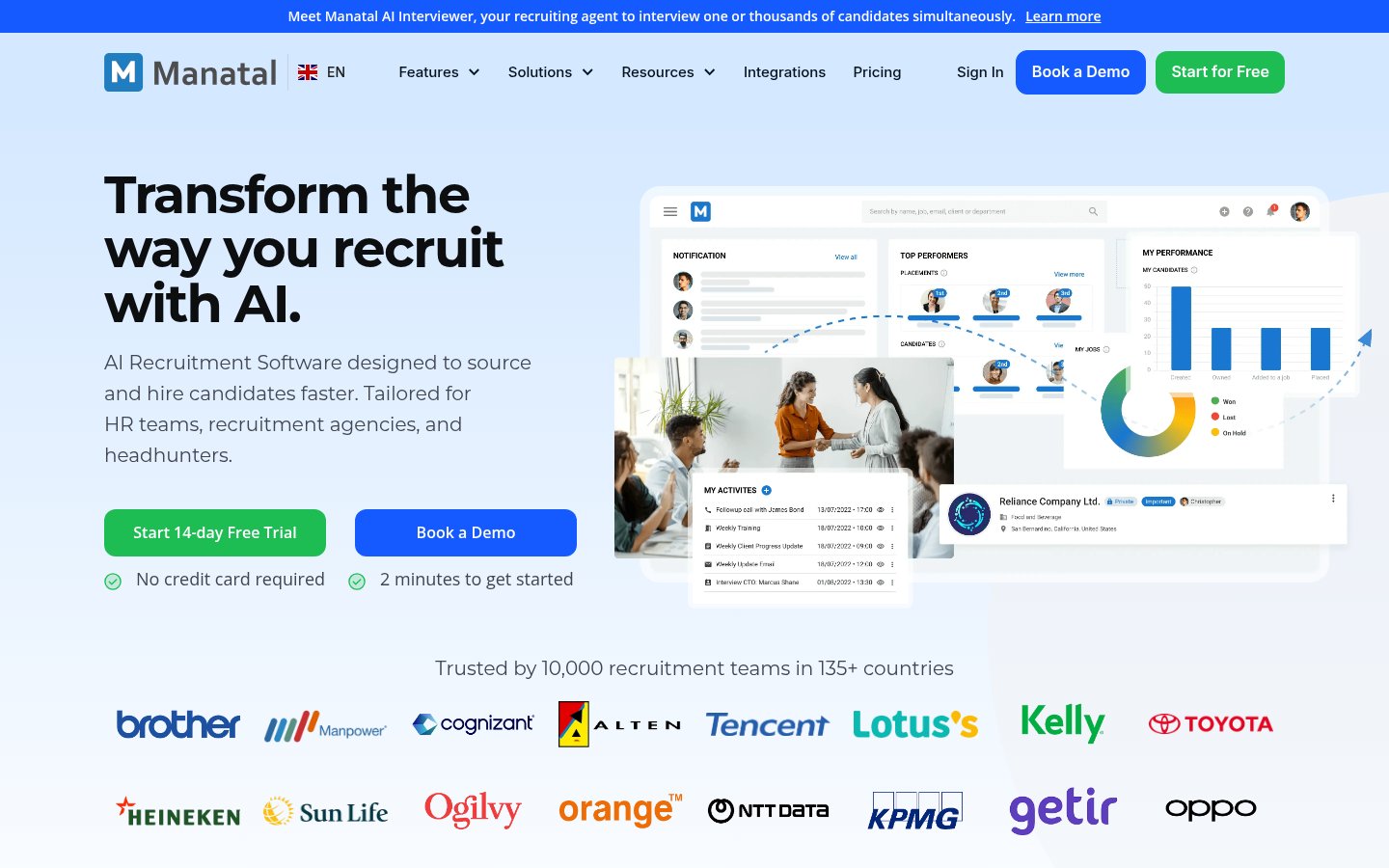
Manatal is the tool I'd recommend to any recruiter or small agency that finds Workable too expensive and Greenhouse too complex. It's a well-built ATS with a genuinely useful AI scoring layer, priced for teams that can't write five-figure software checks. Starting at $15 per user per month, it's accessible in a category where pricing often feels punitive.
The AI candidate scoring pulls from LinkedIn, GitHub, and other social profiles to build a fuller picture than the resume alone. The recommendations are ranked by fit against your job requirements, and the UI makes it easy for a solo recruiter to manage multiple open roles without losing track. The built-in job posting to 2,500+ boards is a real time-saver.
What Manatal doesn't do is proactive sourcing, you're working with applicants who come to you, not going out to find passive candidates. For agencies and SMBs filling roles from inbound applications, that's fine. For talent acquisition teams trying to hire in competitive markets, you'll need to pair it with a sourcing tool.
Pricing: Professional plan at $15/user/month, Enterprise at $35/user/month, Enterprise Plus at $55/user/month. 14-day free trial available.
Best for: Small recruiting agencies, HR teams at SMBs, and individual recruiters who need a capable ATS with AI screening without enterprise pricing.
Pros: Genuinely affordable, clean UI, AI scoring that's actually useful, multi-board posting, fast to get started, good customer support.
Cons: No proactive sourcing capability, reporting is basic compared to Greenhouse, integrations are narrower than enterprise competitors.
Try Manatal →8. Textio
Official website: textio.com
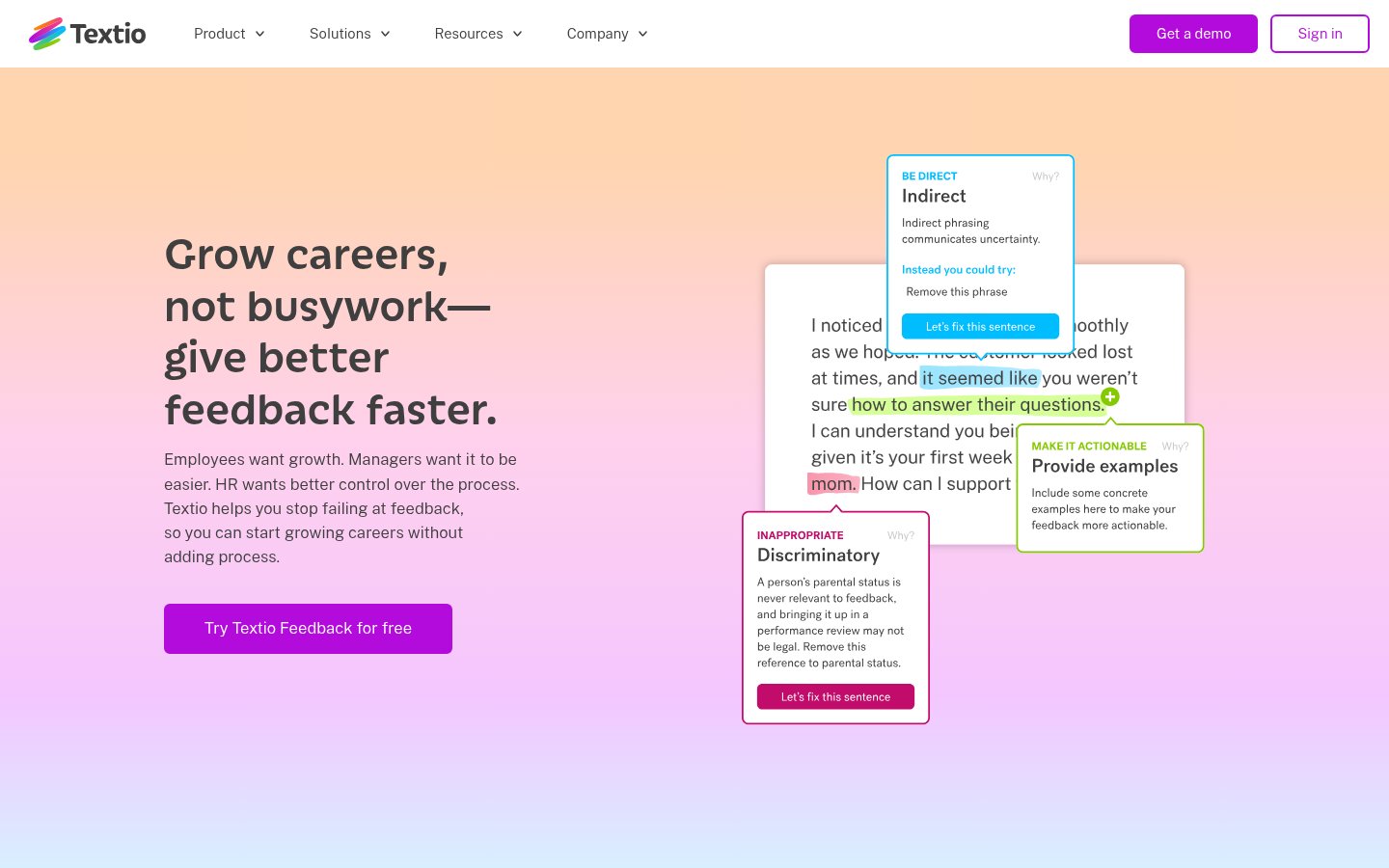
Most AI recruiting tools focus on finding candidates. Textio focuses on what happens before any candidate sees your role: the words you use to describe it. That sounds narrow, but the impact is real. Textio's research consistently shows that job post language predicts who applies, certain phrasing patterns attract more applicants from underrepresented groups, while others quietly filter them out before they even click.
The platform scores your job descriptions in real time and suggests specific rewrites, with data on how those changes have affected application pools across similar roles. It's not just removing gendered language (though it does that), it catches corporate jargon that tanks response rates, overly long requirement lists that discourage qualified applicants, and phrases that research links to lower diversity outcomes.
In 2025, Textio expanded into performance review language, which is a smart adjacency. The same bias patterns that appear in job posts show up in how managers write evaluations, and the consequences there are just as significant.
This isn't a tool that replaces an ATS, it sits alongside one. But for companies serious about both hiring quality and DEI outcomes, it's worth the investment as a layer on top of whatever pipeline tool you're already using.
Pricing: Team plans start around $299/month. Enterprise pricing scales with seat count and is custom. Free trial available.
Best for: HR and TA teams that care about the quality and inclusivity of their written hiring communications, from job posts to offer letters.
Pros: Genuinely moves the needle on application quality and diversity, research-backed recommendations, easy to integrate into existing workflows, now covers performance reviews too.
Cons: Single-purpose tool (you'll still need an ATS), value is harder to measure immediately, enterprise pricing can be steep for the scope.
Try Textio →9. Fetcher
Official website: fetcher.ai
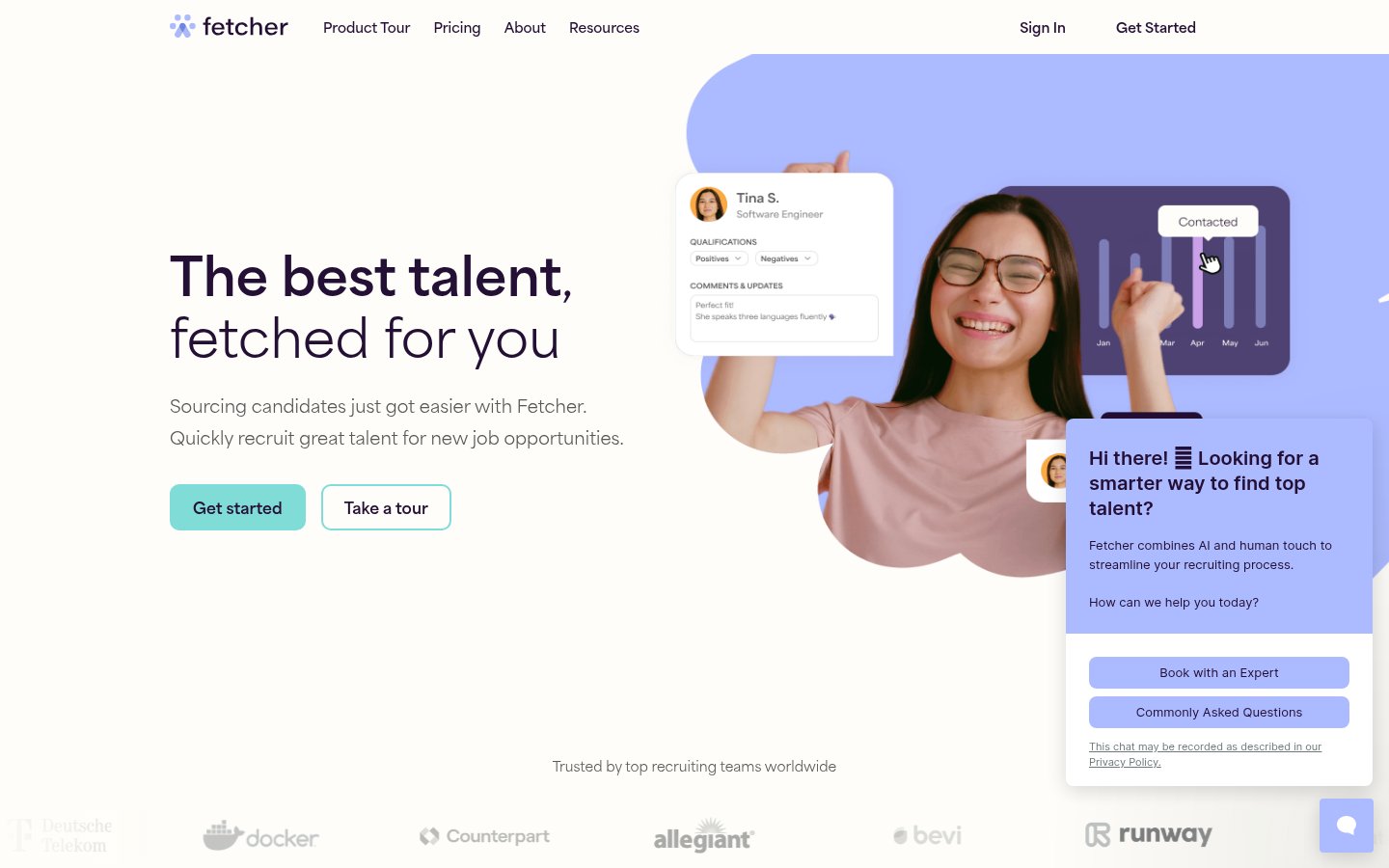
Fetcher is a focused sourcing automation tool that does one thing most recruiting teams genuinely struggle with: finding and reaching out to passive candidates without requiring a full-time sourcer to do it. You define the ideal candidate profile, Fetcher surfaces matches from across the web, and sends personalized outreach sequences on your behalf. The AI learns from your feedback, thumbs up or down on candidates, and gets noticeably better over time.
The outreach quality is better than you'd expect from an automated tool. Messages don't read like spam, and Fetcher's open rates on sequences are respectable compared to generic outreach tools. The human-in-the-loop feedback loop is the key: because recruiters are rating candidates regularly, the sourcing gets more accurate with each cycle.
Where Fetcher fits best is at the top of the funnel for companies that need a consistent pipeline of warm candidates but don't have a dedicated sourcing team. It's not trying to replace a strategic recruiter, it's replacing the hours a strategic recruiter spends on LinkedIn doing manual searches.
Thinking about how tools like this fit into your broader automation strategy? The AI Integration Problem: Why Your Tools Don't Talk to Each Other (And How to Finally Fix It) is a useful read before connecting Fetcher to your ATS.
Pricing: Starts at $549/month for small teams (up to 3 open roles). Growth plans around $1,200/month. Enterprise pricing is custom.
Best for: Growing companies (50-500 employees) that need consistent passive candidate sourcing without hiring a dedicated sourcer.
Pros: Learning algorithm improves quickly with feedback, outreach quality is above average, good ATS integrations, saves significant recruiter hours on sourcing.
Cons: Pricing is steep for a single-function tool, best results require consistent feedback from recruiters, coverage thinner outside North America and Western Europe.
Try Fetcher →Comparison Table
| Tool | Best For | Pricing Model | AI Focus | Volume Hiring | SMB-Friendly |
|---|---|---|---|---|---|
| Workable | Growing companies, full-funnel | From $149/mo | Sourcing + screening | Medium | Yes |
| HireVue | Enterprise, high-volume screening | Enterprise ($35K+/yr) | Video + assessment | Very High | No |
| Greenhouse | Scaling companies, process quality | Custom ($6K+/yr) | Screening + analytics | Medium | Somewhat |
| Paradox | Frontline, high-volume hiring | Enterprise ($50K+/yr) | Conversational AI | Very High | No |
| Eightfold AI | Large enterprise, full lifecycle | Enterprise ($100K+/yr) | Skills intelligence | High | No |
| Findem | Technical, specialized roles | From ~$2K/mo | Multi-attribute sourcing | Low | Somewhat |
| Manatal | Agencies and SMBs | From $15/user/mo | Resume scoring | Low-Medium | Yes |
| Textio | Job post quality and DEI | From ~$299/mo | Language analysis | N/A | Somewhat |
| Fetcher | Passive sourcing at scale | From $549/mo | Outreach automation | Medium | Somewhat |
How I Ranked These
The order reflects where each tool has its highest-impact effect on actual hiring outcomes, weighted by how broadly applicable that impact is.
Workable leads because it's the only tool here that covers the full pipeline with genuine AI capability and doesn't require an enterprise budget or a six-week implementation. That combination of breadth and accessibility is rare.
HireVue and Greenhouse come next because they're best-in-class at what they do, but "what they do" requires enterprise investment and significant organizational buy-in to get right. They're excellent tools for the right company, not the right tool for every company.
Paradox sits fourth despite being arguably the highest-ROI tool for its specific use case, volume frontline hiring. The reason it's not higher is that use case is narrow. If you're not doing 500+ hires per year in structured roles, you're paying for a platform built for someone else.
Eightfold is fifth because the skills intelligence approach is genuinely differentiated and will matter more as companies think seriously about internal mobility and workforce planning, not just external recruiting. But the implementation complexity and price keep it firmly in enterprise territory.
Findem, Manatal, Textio, and Fetcher round out the list as best-of-breed for specific use cases, technical sourcing, SMB ATS, job post quality, and passive outreach respectively. Each one belongs on this list because it's genuinely good at one thing that matters. None of them is a complete platform, but none of them claims to be.
One consistent thread across all nine tools: the AI handles the parts of recruiting that don't require human judgment, scheduling, initial screening, sourcing at scale, writing quality checks, and the best implementations are honest about where the human still needs to make the call. Teams getting the most value from these tools aren't replacing recruiters. They're letting recruiters focus on the conversations that actually close candidates.
If you're evaluating these for your organization and wondering how to track whether they're actually paying off, the framework in The AI ROI Problem: Why You're Spending More on AI Every Month But Struggling to Prove It's Working is directly applicable. Time-to-fill, cost-per-hire, and offer acceptance rate are the metrics that matter, and most of these tools make them easy to track if you set up the reporting correctly from the start.
Frequently Asked Questions
Tools & Services Mentioned

infobro.ai Editorial Team
We research every tool from its documentation, pricing pages, product screenshots and public developer discussion, and say plainly what the evidence does and does not show. Drafts are AI-assisted and reviewed by our editors before publication. We revisit each article every 6 months to reflect platform changes. Learn more about our process.