Top 9 AI Tools for Marketing Teams in 2026: Ranked by Real Output Quality
The best AI tools for marketing teams in 2026, ranked by actual output quality, not hype. From content creation to campaign automation, here's what works.

Entry price, per month
The cheapest plan with a published monthly price. 9 of 9 tools publish one; the rest are quote-only.
- 1. Jasper AI$49/mo
- 2. GammaFree / $10
- 3. SynthesiaFree / $29
- 4. BardeenFree / $20
- 5. VismeFree / $29
- 6. BufferFree / $6
- 7. DescriptFree / $19
- 8. SimplifiedFree / $30
- 9. Opus ClipFree / $15
Most "best AI tools for marketing" lists read like they were written by someone who has never shipped a campaign. They recommend everything, rank nothing, and leave you no closer to knowing which tool to open on Monday morning.
This list is different. I picked nine tools that marketing teams actually use to produce output, copy, visuals, presentations, video, automation. I ranked them by how much real, publishable work they help you ship, and how fast. The usual suspects are here, but the order might surprise you.
One quick note before you dive in: the biggest mistake marketing teams make isn't picking the wrong tool. It's using one model for everything. If you haven't read The AI Model Switching Problem: Why You're Using the Wrong Model for Every Task (And How to Fix It), do that first. It changes how you think about this entire category.
1. Jasper AI
Official website: jasper.ai
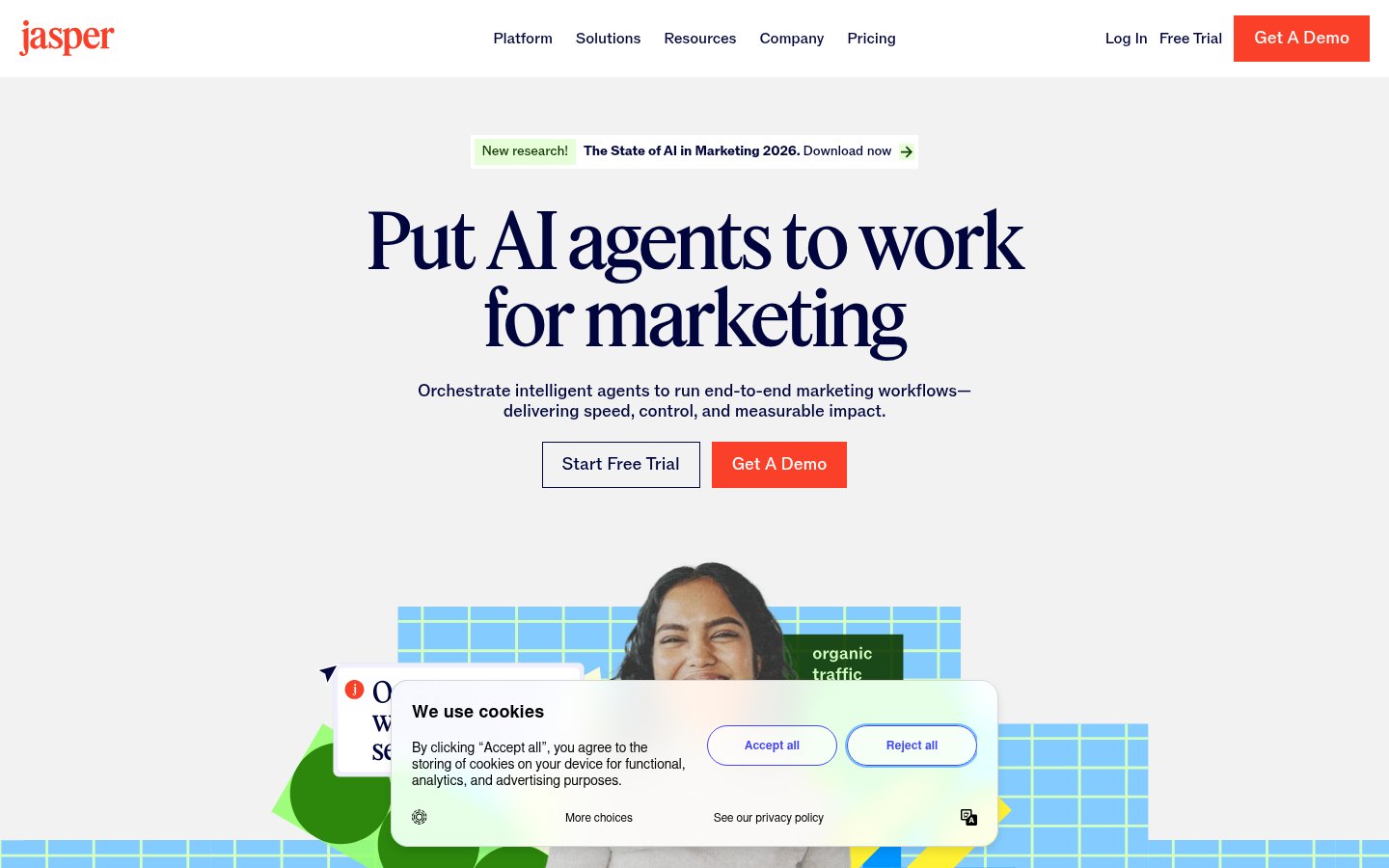
Jasper has been the closest thing to a category standard in AI marketing copy since 2022, and it hasn't coasted on that reputation. The 2025-2026 version is a proper marketing platform: brand voice training, campaign workflows, multi-channel content generation, and a decent SEO mode. It's not just a text box that wraps GPT-4.
What separates Jasper from general-purpose models is the Brand Voice engine. You feed it your existing copy, website, emails, ads, and it learns your tone. Output actually sounds like your brand, not like every other AI-generated brand. That alone saves editing hours every week.
The Campaign Accelerator feature lets you brief a whole campaign (objective, audience, channels) and get a full content suite back: landing page copy, email sequence, social posts, and ad variants. The quality varies, but the structure is solid and the time savings are real.
Pricing: Creator plan at $49/month, Pro at $69/month (5 users), Business pricing on request. Free trial available.
Best for: Marketing teams that produce high volumes of written content across multiple channels and need consistent brand voice without constant editing.
Pros: Best brand voice training in the category, strong campaign-level workflows, solid SEO integration, large template library, team collaboration built in
Cons: Expensive for solo users, output still needs editing for nuance, business pricing isn't transparent
Try Jasper AI →2. Gamma
Official website: gamma.app
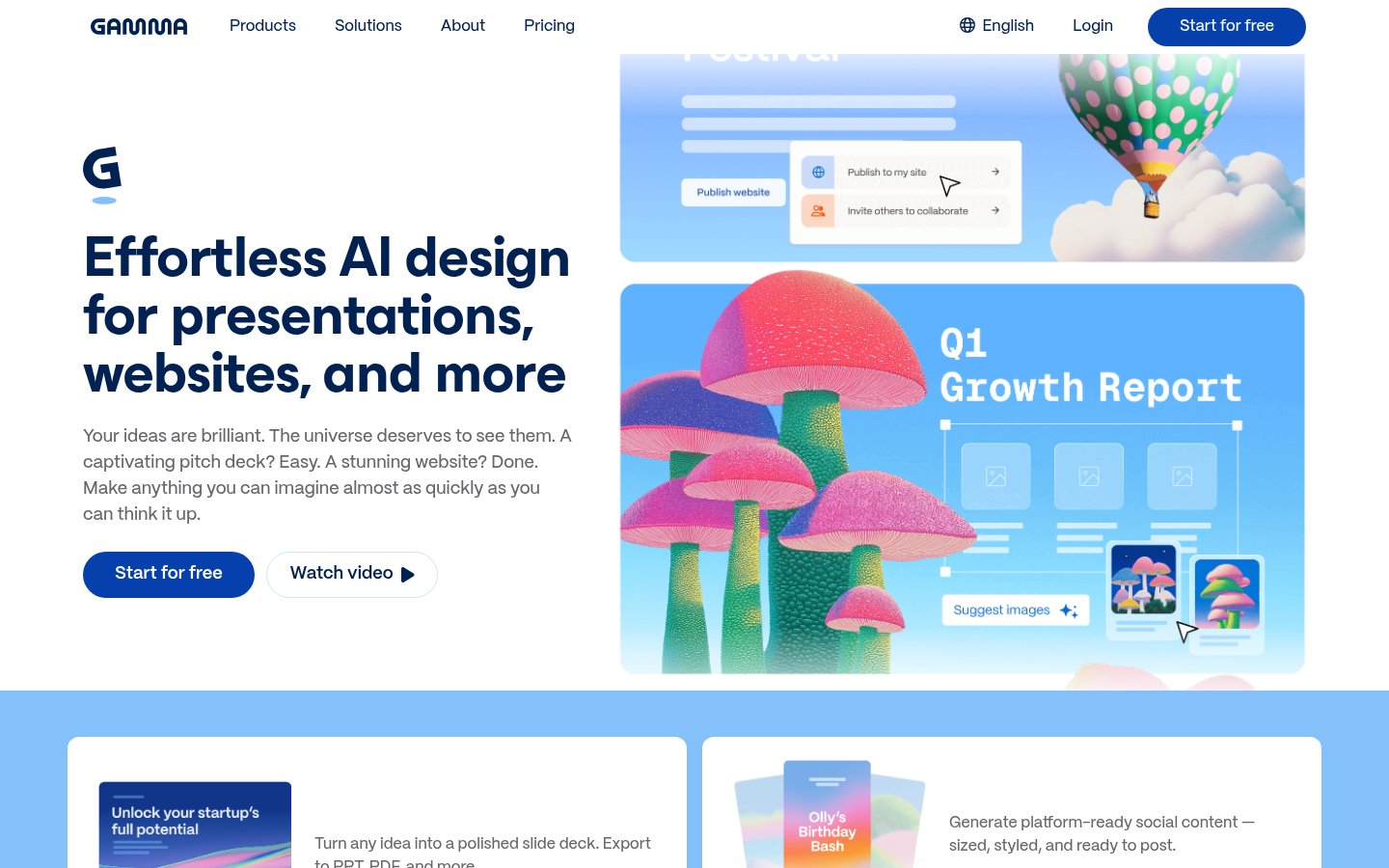
Gamma is the best AI presentation tool for marketing teams, and it's not particularly close. Where competitors give you slide templates and call it AI, Gamma actually builds a coherent narrative structure from a brief. You type what you want to communicate, and it produces a full deck with layout, imagery, and flow.
For marketers, this matters in two specific scenarios: internal strategy presentations and client-facing pitch decks. Gamma handles both better than anything else at its price point. The output is web-first, which means you get interactive cards, embedded media, and clean analytics on who's viewed what, useful for sales enablement decks.
The AI rewrite tools let you adjust tone and depth section by section without rebuilding from scratch. That's genuinely useful when a slide deck gets handed between a strategist and a copywriter before it goes to a client.
Pricing: Free tier (400 AI credits), Plus at $10/month, Pro at $20/month. Team plans available.
Best for: Marketing teams that regularly produce presentations, pitch decks, or campaign briefs and want professional-looking results in under 30 minutes.
Pros: Fastest deck-to-done workflow in the category, web-native format with analytics, strong narrative structure, generous free tier, great for client-facing work
Cons: Less control over pixel-perfect design than PowerPoint, export to PPTX loses some fidelity, not ideal for highly data-dense slides
Try Gamma →3. Synthesia
Official website: synthesia.io
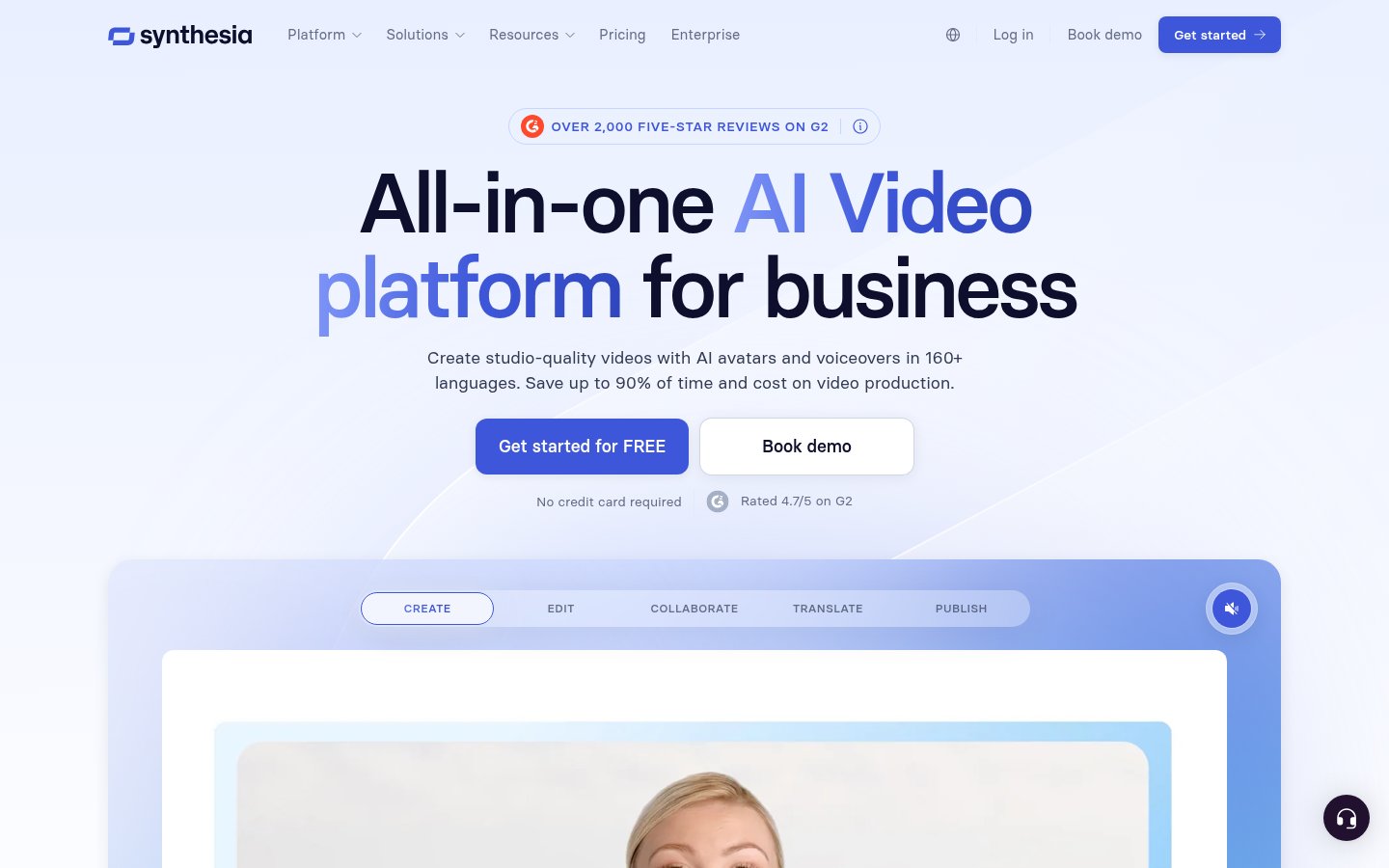
Video is the most expensive content type marketing teams produce. Synthesia cuts that cost dramatically. You write a script, pick an AI avatar (or create a custom one from your own face), and it renders a professional talking-head video. No camera, no studio, no editing suite.
The 2025-2026 product has improved avatar lip-sync and expression quality to the point where most viewers won't immediately clock it as AI. The avatar library covers multiple languages, accents, and presentation styles. For explainer videos, product demos, onboarding content, and internal training, it's genuinely competitive with produced video at a fraction of the cost.
What matters for marketing teams specifically is scale. You can localize the same video into 15 languages by swapping the script and re-rendering. That used to require 15 separate shoots or expensive dubbing. Now it's an afternoon.
Pricing: Starter at $29/month (10 minutes/month), Creator at $89/month (30 minutes), Enterprise on request. Free trial with 3 free videos.
Best for: Marketing teams that need to produce explainer videos, product demos, or training content at scale without video production resources.
Pros: Best avatar quality in the category, 130+ languages, custom avatar creation, fast render times, solid template library
Cons: Per-minute limits get expensive fast, custom avatars require a paid plan, output can still look slightly uncanny in close-ups
Try Synthesia →4. Bardeen
Official website: bardeen.ai
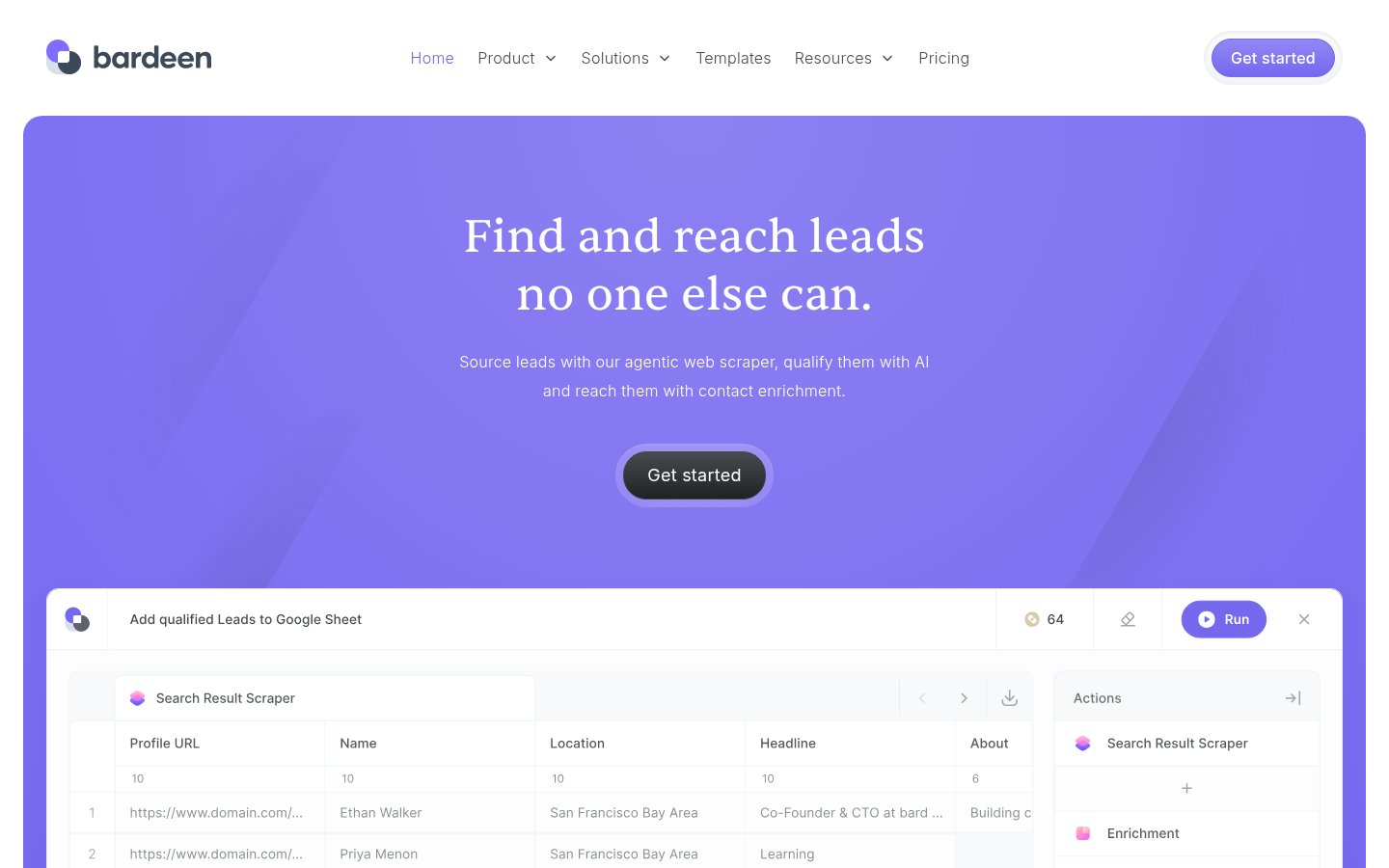
Marketing teams waste enormous amounts of time on tasks that are clearly automatable: pulling lead data from LinkedIn, moving contacts between CRMs, scraping competitor pricing, enriching contact lists. Bardeen automates all of that from a browser extension, with no-code workflows called "playbooks."
The AI layer added in 2025 made it significantly more useful. You can now describe what you want to automate in plain English, and Bardeen builds the workflow. It's not perfect, but it's fast enough that the iteration cycle is short. The lead enrichment and prospecting features are strong, connecting LinkedIn scraping to CRM enrichment to email sequences in one workflow is genuinely impressive for a no-code tool.
For growth marketers in particular, the time savings are real. Repetitive research tasks that used to take hours get compressed to minutes. That's not hype, it's just arithmetic.
The AI collaboration angle is real too. Teams using tools like this often hit coordination problems as automation grows. The AI Collaboration Problem piece covers exactly what to watch for.
Pricing: Free plan (limited automations), Professional at $20/month, Business at $40/month/user. Usage-based AI credits on top.
Best for: Growth marketers and demand gen teams who spend time on manual research, lead enrichment, or repetitive data tasks across web tools.
Pros: Genuinely useful no-code automation for marketers, strong LinkedIn and CRM integrations, AI-described workflow building, browser-native and fast
Cons: AI credits add up on heavy usage, some integrations are fragile, not built for complex multi-team enterprise workflows
Try Bardeen →5. Visme
Official website: visme.co
Visme is the design tool for marketers who can't design. It covers the full visual content spectrum, infographics, social graphics, presentations, reports, short-form video, and branded documents, from a single platform. The AI layer generates full designs from prompts, resizes for different platforms, and writes copy for individual design elements.
What keeps Visme higher than its competitors in this space is the brand kit system. You upload your logo, set your colors and fonts, and every template auto-applies them. For teams producing high volumes of on-brand visual content without a dedicated designer, this is the closest thing to a design system that doesn't require a design system.
The AI image generation is decent but not class-leading. Where Visme wins is workflow, everything from brief to final export happens in one place, and the templates are genuinely good-looking.
Pricing: Free plan (limited), Starter at $29/month, Pro at $59/month, Team plans from $199/month. Pricing is per user.
Best for: Marketing teams producing regular visual content, social media, reports, proposals, without dedicated design staff.
Pros: All-in-one visual platform, strong brand kit system, wide format coverage, good template quality, built-in analytics for published content
Cons: Can feel slow on complex projects, AI image generation lags behind dedicated tools, pricing climbs fast for larger teams
Try Visme →6. Buffer
Official website: buffer.com
Buffer doesn't try to be everything. It schedules social posts, suggests the best times to publish, and now generates post copy from a brief or repurposes existing content for different platforms. That focus is a feature.
The AI assistant added in 2025 handles the most annoying part of social media management: adapting the same message for Twitter/X, LinkedIn, Instagram, and Facebook. Each platform has different norms for length, tone, and hashtag usage, and Buffer's AI actually respects those differences rather than just trimming character counts.
For marketing teams running lean, Buffer's analytics are good enough to make real decisions, engagement rates, best-performing post types, optimal timing by audience. It's not as deep as a dedicated analytics tool, but it covers 80% of what most social teams actually need.
Pricing: Free plan (3 channels), Essentials at $6/month/channel, Team at $12/month/channel, Agency at $120/month (10 channels).
Best for: Marketing teams managing multi-platform social presence who want scheduling, AI-assisted copy, and basic analytics in one clean tool.
Pros: Clean interface, strong platform-specific AI adaptation, good value at entry tiers, reliable scheduling, decent analytics
Cons: AI copy generation is basic compared to dedicated tools, limited reporting depth for enterprise needs, no native video editing
Try Buffer →7. Descript
Official website: descript.com
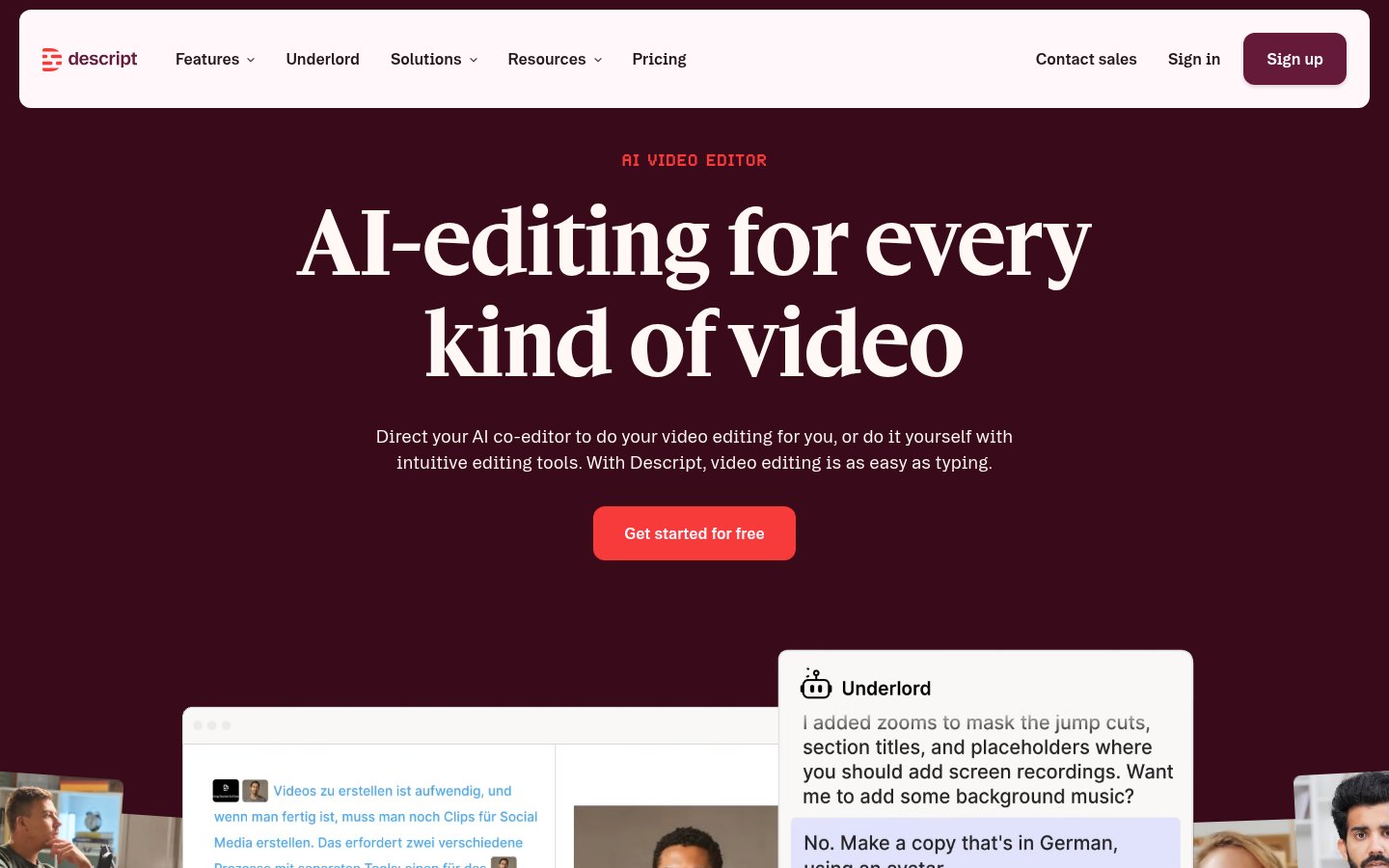
Descript is the right tool for marketing teams producing video content who don't have a dedicated video editor. The core idea, edit video by editing the transcript, is still the most intuitive thing in video production. Cut the word from the text, the clip disappears. It sounds simple because it is.
The AI features that matter for marketing teams are the filler word removal (instant, works well), the AI script-to-video generator for repurposing written content, and the Overdub voice cloning for fixing audio mistakes without a re-shoot. That last one alone has saved countless marketing managers from rescheduling interview sessions.
For podcast production, social clips, and YouTube content, Descript is faster than any traditional video editor. The learning curve is genuinely low, most marketers are productive in under a day.
Pricing: Free plan (limited hours), Hobbyist at $19/month, Creator at $35/month, Business at $50/month/user.
Best for: Marketing teams creating video content, explainers, interviews, social clips, who need editing speed without video production expertise.
Pros: Transcript-based editing is a genuine time-saver, strong filler word removal, good voice cloning, works well for team review workflows
Cons: Complex multi-camera editing is awkward, export quality at lower tiers is limited, Overdub quality varies by voice
Try Descript →8. Simplified
Official website: simplified.com
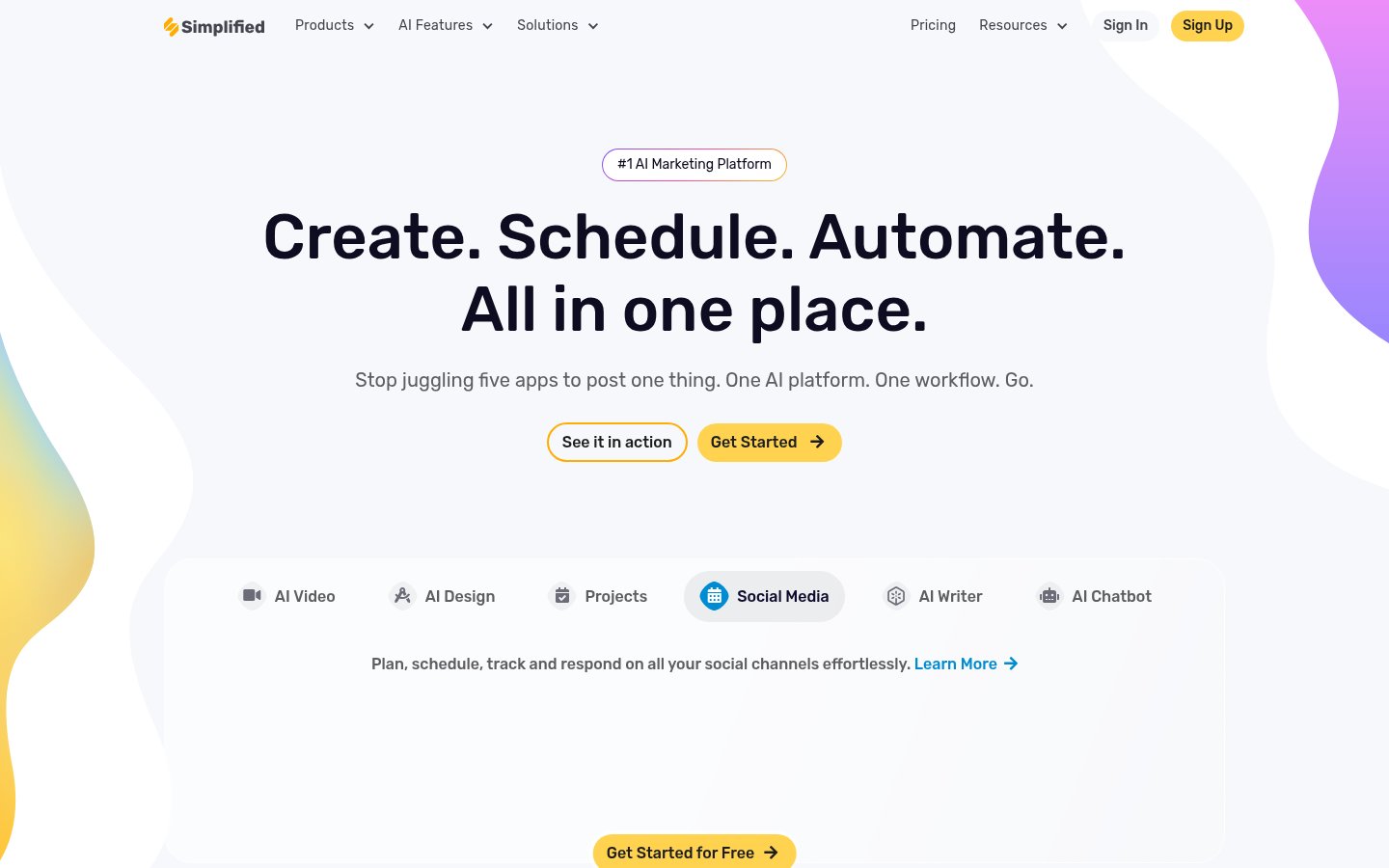
Simplified bundles AI copywriting, graphic design, video editing, and social scheduling into one platform. That bundle is its main selling point and also its main weakness: none of the individual tools are best-in-class, but the combination is useful for small marketing teams that can't afford five separate subscriptions.
The AI writer handles marketing formats well, ad copy, product descriptions, email subject lines, social captions. The design tool covers Instagram posts, stories, banners, and more with templates that are good enough for most purposes. The social scheduler is basic but functional.
Where Simplified earns its place on this list is the "do-everything-in-one-tab" workflow. If you're a one-person marketing operation or a small team without specialists, the context-switching savings are real. The quality ceiling is lower than dedicated tools, but the floor is high enough to publish.
Pricing: Free plan (limited credits), Pro at $30/month, Business at $50/month. Team plans available.
Best for: Small marketing teams or solo marketers who need to produce copy, visuals, and social content without the budget for multiple specialized tools.
Pros: Genuine all-in-one coverage, decent AI copy quality, good template library, reasonable free tier, fast for simple content tasks
Cons: No individual tool is best-in-class, AI image quality is average, video editing is basic, can feel cluttered
Try Simplified →9. Opus Clip
Official website: opus.pro
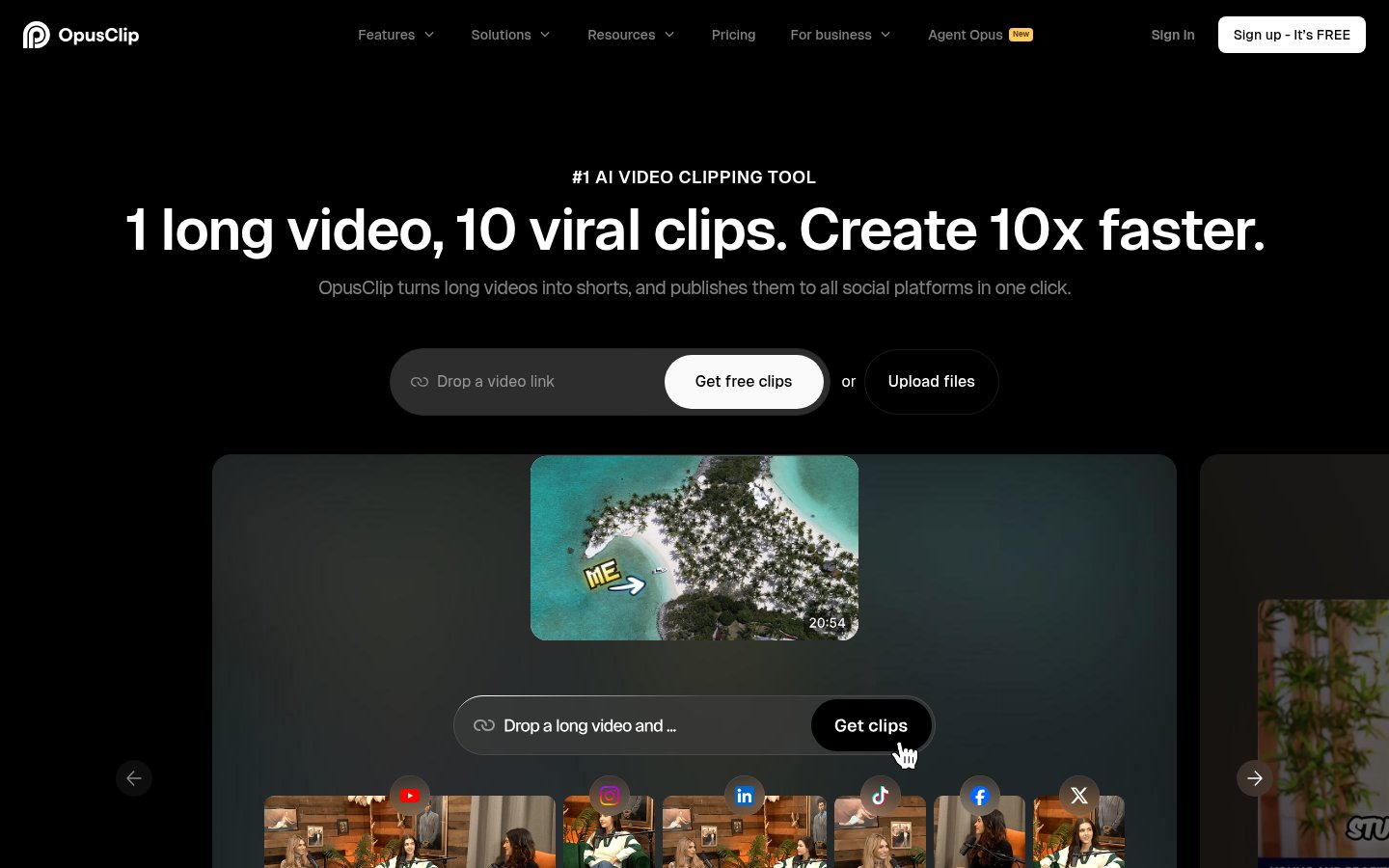
Opus Clip does one thing: it takes a long video and turns it into short clips optimized for TikTok, Reels, and YouTube Shorts. That single function is worth a spot on any marketing tool list in 2026, because short-form video repurposing is one of the highest-ROI content tasks most marketing teams still do manually.
The AI identifies the highest-engagement moments in a video using a "virality score," crops to vertical automatically, adds captions, and exports clips ready to post. The virality score is imperfect, it sometimes misses context-dependent humor or niche appeal, but it's right enough often enough to be useful.
For marketing teams already producing webinars, interviews, or long-form product demos, Opus Clip adds a short-form content pipeline without adding headcount. That's a real ROI argument. Fans of this topic should also check out the broader discussion on how AI is changing creator content in YouTube Is Now Auto-Labeling AI Videos. Creators Didn't Ask for This.
Pricing: Free plan (60 clip minutes/month), Starter at $15/month, Pro at $29/month. Usage scales with minutes clipped.
Best for: Marketing teams repurposing long-form video content, webinars, interviews, demos, into short-form clips for social distribution.
Pros: Fast and mostly accurate clip selection, good auto-captioning, clean vertical crop, reasonable free tier, no video editing skill needed
Cons: Virality score is hit-or-miss for niche content, limited customization on captions, audio quality of source video matters a lot
Try Opus Clip →How These 9 Stack Up: Comparison Table
| Tool | Best For | Starting Price | AI Quality | Learning Curve |
|---|---|---|---|---|
| Jasper AI | Long-form copy, campaigns | $49/mo | High | Low-Medium |
| Gamma | Presentations, pitch decks | Free / $10/mo | High | Low |
| Synthesia | AI video production | $29/mo | High | Low |
| Bardeen | Lead research, automation | Free / $20/mo | Medium-High | Medium |
| Visme | Visual content, infographics | Free / $29/mo | Medium | Low-Medium |
| Buffer | Social scheduling + copy | Free / $6/mo/ch | Medium | Very Low |
| Descript | Video editing, podcasts | Free / $19/mo | High | Low |
| Simplified | All-in-one for small teams | Free / $30/mo | Medium | Low |
| Opus Clip | Short-form video repurposing | Free / $15/mo | Medium-High | Very Low |
How I Ranked These
The order reflects one question: how much real, publishable marketing output does this tool help you ship, per dollar and per hour spent?
Jasper leads because it's the only tool built specifically around marketing content workflows with genuine brand voice learning. Everything else is adapted from a general-purpose AI or a general-purpose design tool. That specificity shows in the output quality.
Gamma comes second because presentations are a genuinely high-stakes output for marketing teams, and Gamma is faster and better at them than anything else in this price range. Synthesia is third because video production cost reduction at scale is one of the most measurable ROI stories in marketing AI right now.
Bardeen slots in at four because automation multiplies output without adding headcount, and growth marketing teams that haven't adopted it yet are leaving hours on the table every week.
Visme, Buffer, and Descript are all strong in their specific categories. They rank where they do because their categories are slightly narrower or their AI differentiation is less significant. Simplified and Opus Clip round out the list as genuine specialists that earn their keep for specific team profiles.
One thing worth keeping in mind: the tools that take the longest to pay off are usually the ones with the steepest onboarding curves. If your team hits resistance with a new tool, the AI Onboarding Problem piece has specific advice for cutting that ramp time. And if you find yourself over-relying on a single tool's outputs without questioning them, The AI Feedback Loop Problem is worth a read before those habits calcify.
The honest take: a three-tool stack of Jasper, Gamma, and one automation tool (Bardeen or Buffer depending on your focus) covers most marketing teams' needs in 2026. Everything else is additive.
Frequently Asked Questions

infobro.ai Editorial Team
We research every tool from its documentation, pricing pages, product screenshots and public developer discussion, and say plainly what the evidence does and does not show. Drafts are AI-assisted and reviewed by our editors before publication. We revisit each article every 6 months to reflect platform changes. Learn more about our process.