A24 Just Signed a $75 Million AI Deal With Google DeepMind. Its Fans Are Not Taking It Well.
A24 partnered with Google DeepMind in a $75 million AI research deal. The indie studio's fanbase is furious. Here's what actually happened and what it signals.
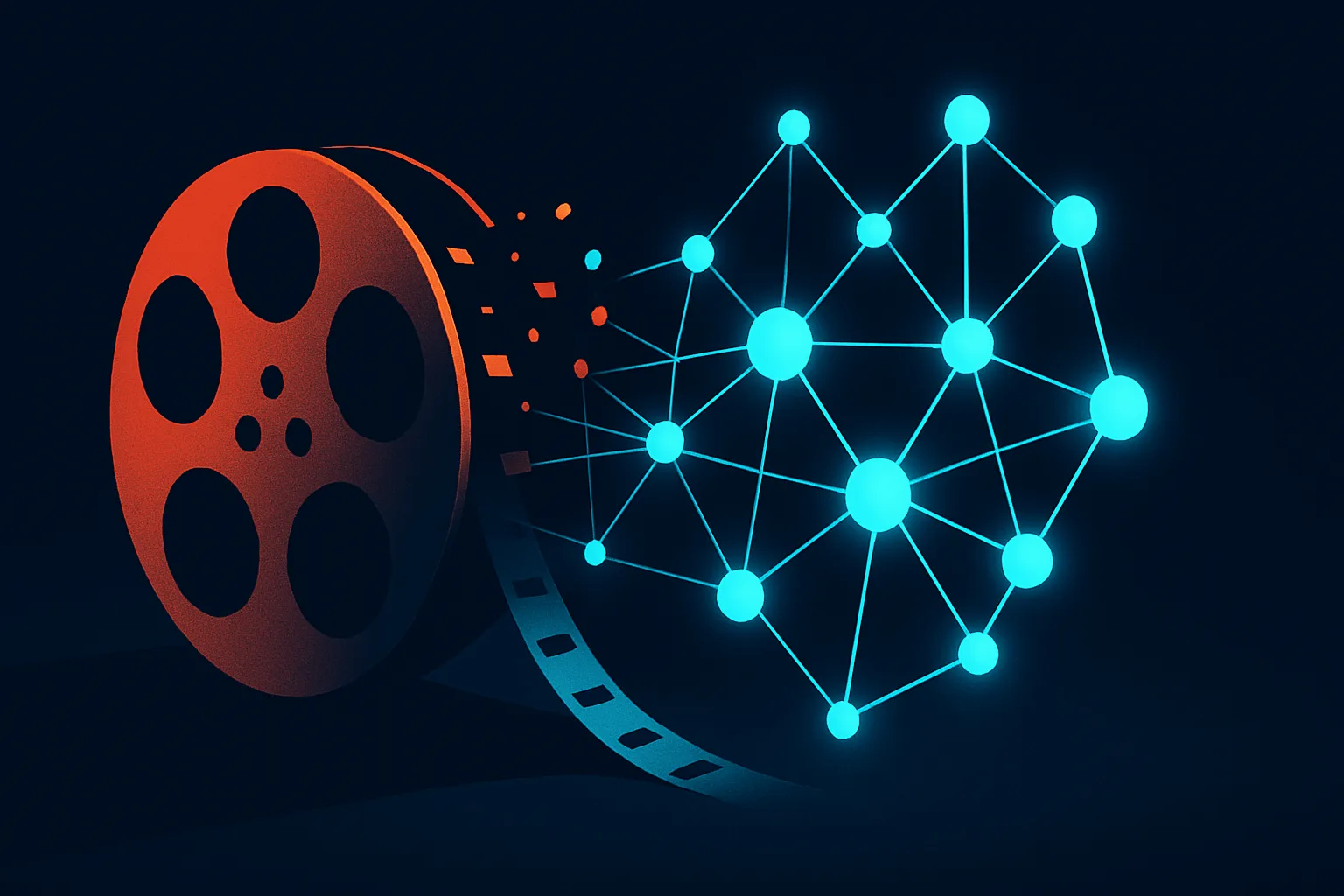
A24 built its entire identity on being the anti-studio. Weird films. Unconventional bets. The kind of horror and arthouse cinema that the major houses wouldn't touch. That reputation is now doing a lot of heavy lifting after the company announced a $75 million "artificial intelligence research partnership" with Google DeepMind.
The reaction online was immediate and ugly. Fans cancelled memberships. "A24 is dead" trended across social platforms. The backlash wasn't quiet.
So what actually happened, and does the outrage match the reality?
What the Deal Actually Is
A24 has entered into a formal research partnership with Google DeepMind, structured around developing AI tools for the filmmaking process. The $75 million figure represents Google's investment in the collaboration. The stated framing is "research," not production, which gives A24 some rhetorical cover. The company hasn't said it will generate films using AI or replace human writers and directors.
That framing is doing a lot of work. Because "AI research partnership with the studio" lands very differently than "we're making AI movies now." A24 knows this. The careful language is deliberate.
What the deal almost certainly involves: AI tools for pre-production workflows, possibly visual effects, post-production enhancement, maybe even script analysis. These are the areas where studios have been quietly absorbing AI tooling for the past two years. The difference here is that A24 made it public, attached a dollar figure, and called it a partnership with one of the most prominent AI labs on the planet.
Why the Fanbase Reacted So Hard
A24's audience isn't a general movie-going crowd. It's a specific, self-identified community that chose A24 precisely because the studio seemed to stand for something different. When you build your brand on auteur filmmaking and creative risk-taking, any association with AI becomes a values question, not just a business one.
The concern isn't irrational. The creative industries have watched AI eat into design work, music licensing, and stock photography over the past few years. Writers and actors went on strike over AI protections in 2023. The scars are still fresh. When a beloved studio signs a nine-figure deal with an AI lab, the assumption is that the jobs conversation is coming next, whether management says so or not.
There's also a trust problem. Studios have consistently undersold how much AI is already inside their workflows. Fans have learned to read between the lines on these announcements. "Research partnership" today can mean "production pipeline" in 18 months. The skepticism is earned.
What Google DeepMind Gets Out of This
This is the more interesting side of the transaction. DeepMind is not writing a $75 million check because it needs A24's distribution network. It's buying access to a specific kind of content and credibility.
Film production generates exactly the kind of rich, temporally coherent visual and narrative data that's genuinely hard to acquire at scale. A24's catalog, and more importantly its production process, represents a dataset with creative coherence that generic web scraping can't replicate. DeepMind gets real-world production workflows to study, high-quality creative output to learn from, and a partner that lends cultural legitimacy to what is otherwise a deeply contested space.
The pattern is familiar. We've seen compute deals define the AI infrastructure race this year, from Reflection AI's $150 million monthly commitment to SpaceX to Google's own $920 million monthly arrangement for GPU capacity. Data and creative IP are the next contested resource, and studios sit on top of enormous quantities of both.
The Broader Pattern Nobody Should Miss
A24 is not the first creative institution to make this move, and it won't be the last. The more relevant question is whether a partnership like this can stay in "research" mode or whether commercial pressure inevitably pulls it toward replacing the human labor that defines A24's output.
That tension isn't hypothetical. AI tools are already measurably degrading professional skills in adjacent fields. Studies across medicine and software engineering show that heavy AI reliance erodes the underlying capabilities practitioners spent years building. The creative industries are next in line for that conversation, and this deal accelerates it.
What's notable about the A24 situation is how clearly it illustrates the difficulty of maintaining an identity-driven brand while also capturing the efficiency gains AI promises. The studio wants both things. Its fans have decided, maybe correctly, that you can't have both.
Workers are already spending as much time supervising AI outputs as doing the actual work. Adding AI into a creative production pipeline doesn't automatically mean less human involvement. But it does mean different human involvement, and for a studio whose brand is entirely built on specific kinds of human creative judgment, that difference matters.
What the Research-Versus-Production Distinction Actually Means
Here's the honest version: the line between "AI research" and "AI production integration" in a studio context is thin and gets thinner over time. Research partnerships produce tools. Tools get evaluated. Tools that work get integrated. Integration becomes standard practice.
The question isn't whether A24 will use AI in production. It already does, as does every major studio. The question is whether the DeepMind partnership accelerates AI's role in decisions that have historically required human creative judgment. Casting instincts. Narrative risk. The choice to greenlight something weird and uncommercial because someone believed in it.
If AI moves into those decisions, the A24 brand collapses not because of a press release but because the output changes. Fans can tell. They're not wrong to watch closely.
For teams thinking about how AI adoption inside creative organizations actually plays out, the AI scope problem is worth sitting with. Applying AI broadly without clear constraints on where human judgment must stay intact is exactly how studios end up somewhere they didn't intend to go.
What Should Readers Do With This
If you work in a creative field, pay attention to how this partnership develops over the next 12 months. The A24-DeepMind collaboration will function as a visible case study for how AI enters creative production pipelines at a studio with a strong identity. Watch what changes. Watch what doesn't.
If you're an A24 fan deciding whether to cancel your subscription, that's a personal values call. The studio hasn't made AI films yet. The deal is real, the money is real, and the research framing may or may not hold. Staying informed is more useful than reacting to the press release alone.
If you're a creative professional thinking about how AI fits into your own workflow, the AI switching cost problem is a useful frame. The studios integrating AI right now are locking in processes and dependencies that will be hard to reverse. That's true at the individual level too.
The A24 story isn't over. It's just starting to get interesting.