Apple Is Suing OpenAI for Trade Secret Theft. Here's What's Actually at Stake.
Apple has filed a lawsuit against OpenAI alleging trade secret theft directed by senior leadership. Here's what the case means for the AI industry's biggest partnership era.
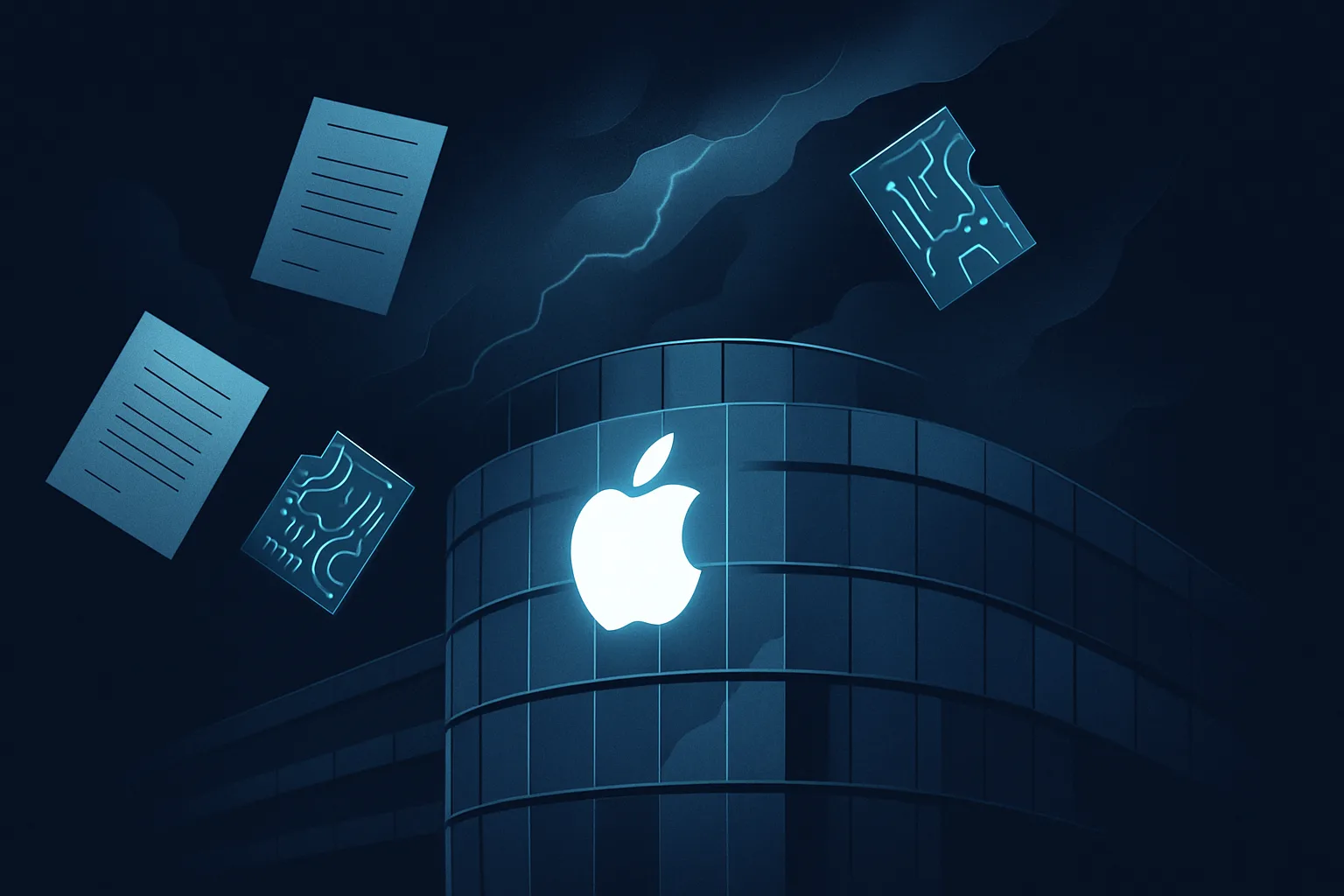
Apple filed a lawsuit against OpenAI this week, alleging the company stole trade secrets. The complaint names senior OpenAI leadership as directing the alleged misconduct, and specifically implicates a longtime former employee as a key figure in how proprietary Apple information moved out of the company.
This is not a routine IP dispute. Apple and OpenAI have been publicly intertwined since Apple announced a ChatGPT integration in iOS at WWDC 2024. That deal put OpenAI's technology directly inside Siri workflows for hundreds of millions of users. A lawsuit of this nature, filed while that partnership technically still exists, signals something has broken badly between two of the most powerful companies in tech.
What Apple Is Alleging
The core of the complaint is trade secret misappropriation. Apple claims that confidential technical information, presumably related to its on-device AI systems, model architecture decisions, or hardware integration specifics, left Apple through a former employee and ended up at OpenAI with the knowledge of senior people inside the company.
The phrase "directed by senior leadership" is the legally significant part. That framing, if it holds up, would make this a corporate-level offense rather than a rogue employee situation. It would also expose OpenAI to significantly larger damages and make any quick settlement more complicated.
Apple has historically been among the most aggressive companies in the world when it comes to protecting internal research. Its machine learning and silicon teams operate with considerable secrecy. The fact that a former employee allegedly bridged that gap into OpenAI's orbit is the kind of thing Apple's legal team would pursue regardless of commercial relationships.
The Timing Is Uncomfortable for Both Companies
OpenAI is in the middle of one of the most turbulent stretches in its short history. The departure of Fidji Simo from the No. 2 role left a leadership gap at exactly the moment the company is navigating its corporate restructuring, a wave of new model launches, and now this lawsuit. GPT-5.6 just shipped. The company just killed its Atlas browser. A lawsuit filed by one of its most visible consumer partners is genuinely bad timing.
For Apple, the timing is also uncomfortable. Its iOS 27 is shaping up to be the company's most AI-forward software release, and the ChatGPT integration has been a visible part of that story. Suing your AI partner while shipping software that features that partner's product creates a strange public narrative. Apple will need to manage that message carefully.
The lawsuit also arrives while OpenAI is dealing with separate legal pressure from publishers over training data practices. Adding Apple, a company with vastly more litigation resources than any media organization, to the list of active adversaries is a different class of legal problem entirely.
What This Reveals About How AI Companies Actually Acquire Knowledge
The broader issue this case surfaces is one the industry has avoided examining closely: how much proprietary information has moved between companies as AI talent has migrated at high velocity over the past four years?
Researchers, engineers, and product leads have moved between Apple, Google, OpenAI, Anthropic, Meta, and Microsoft in extraordinary numbers. Each of them carries institutional knowledge. Most of them sign NDAs and non-competes that are variably enforceable depending on jurisdiction. California, where most of these companies are headquartered, largely prohibits non-compete enforcement, which makes trade secret law the primary tool for protecting IP in tech employment cases.
Apple's case leans into exactly that tool. If the company can establish that specific, identifiable confidential information was taken and used, it doesn't need a non-compete to win. It needs evidence that the information was proprietary, that the employee knew it was, and that it ended up at OpenAI in a way that benefited the company.
That's a harder case to make than it sounds, but it's not impossible. And Apple has the resources to pursue it at whatever length is required.
This kind of dispute is increasingly relevant for organizations building internal AI programs too. If you're thinking through how your team governs AI tool usage and data handling, the question of what proprietary information is flowing through which tools deserves real attention, not just a policy document that nobody reads.
The Partnership Question Nobody Is Answering
The most obvious thing missing from the public record right now is whether the ChatGPT-Siri integration survives this lawsuit. Neither company has addressed that directly. That silence is itself informative.
Partnerships between companies in active litigation don't always collapse immediately. Commercial contracts have their own terms, and unwinding a deep technical integration mid-product-cycle is expensive and disruptive. But the trust required to build on that integration, to deepen it, to make it a multi-year platform relationship, is effectively gone now.
Apple has been investing heavily in its own on-device model infrastructure. The lawsuit may accelerate a timeline that was already moving toward Apple eventually replacing third-party AI integrations with its own models. That's been the long-term speculation among people who watch Apple's ML hiring and silicon roadmap closely.
OpenAI, for its part, has been expanding its model family aggressively and pushing into more consumer contexts. Losing Apple as a willing distribution partner, even gradually, would hurt the consumer reach that ChatGPT has been building since the iOS deal was announced.
What the AI Industry Should Take From This
Trade secret litigation between large AI companies isn't novel. But a case of this profile, involving two companies of this scale with an active commercial relationship, will get scrutiny that smaller disputes don't.
A few things worth watching as this develops:
Discovery will be the real story. If this goes to deposition and document production, the internal communications that surface could reveal a great deal about how AI companies handle incoming employees and the information they bring. That's been an opaque area and it won't stay that way if Apple's legal team gets what it's asking for.
Settlement pressure will build quickly. OpenAI cannot afford prolonged litigation with Apple while simultaneously dealing with publisher copyright cases, its restructuring, and the leadership instability that's defined the past several months. A settlement is the likely outcome, but the terms will shape how the industry thinks about talent and IP for years.
Other companies are watching their own exposure. Every major AI lab has hired heavily from competitors. Google, Meta, and Microsoft all have similar dynamics in their hiring histories. A successful Apple case would set precedent that makes trade secret claims easier to pursue across the board. That changes the calculus on aggressive recruiting.
For teams thinking about where they sit in this ecosystem, the question of how AI tool sprawl creates organizational risk is becoming less abstract. When the companies building these tools are fighting over who owns what knowledge, the downstream implications for enterprise customers are real.
What to Do Right Now
If you're an enterprise customer who has the ChatGPT integration deployed in your organization, you don't need to panic. This lawsuit is between the companies, not a product recall. The integration keeps working.
But if your organization has been planning deeper investments in Apple's AI platform or OpenAI's enterprise products under an assumption that the two are aligned partners, that assumption needs revisiting. The strategic direction of both companies may shift depending on how this plays out.
Watch the next 90 days. If the integration gets quietly downgraded in iOS 27's release build, that's your signal. If both companies say nothing publicly, that's also a signal.
The AI collaboration dynamics inside companies are already complicated enough without having to factor in whether your primary vendors are suing each other. But here we are.