Figma Just Shipped an AI Assistant. Google IO Showed Everyone Else What's Coming Next.
Figma's AI assistant hits collaborative canvas as Google IO 2026 turns design, search, and email into agentic AI territory. Here's what actually changed and why it matters.
Figma shipped an AI assistant this week. That's the headline, but it's almost the least interesting thing that happened in AI product development over the past 48 hours. The real story is the shape of where everything is heading, and Google IO 2026 made that shape unusually clear.
These aren't incremental updates. They're a set of moves that, taken together, tell you something concrete about what AI tools will look like by the end of 2026 and which workflows are about to get significantly harder to do the old way.
Figma Gets an AI Assistant on Its Collaborative Canvas
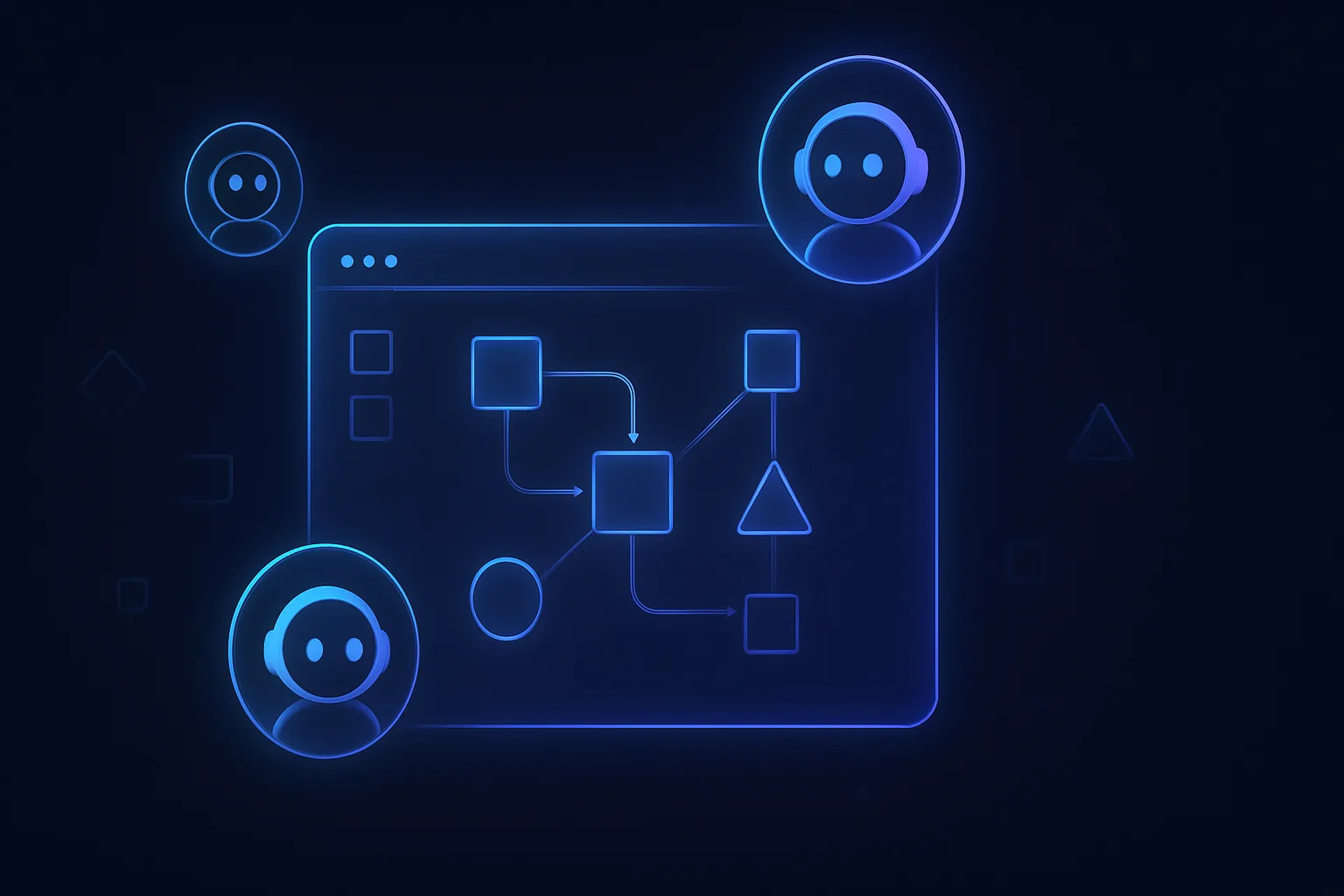
Figma's AI assistant launches first on Figma Design, the core product that millions of designers, product managers, and developers already use for collaborative work. The assistant sits inside the canvas itself, not as a separate panel or chat sidebar you have to context-switch into.
That placement matters more than it might seem. AI assistants bolted onto the side of creative tools tend to get ignored. When the assistant is embedded in the actual work surface, the friction of using it drops to near zero. You're already in the canvas. The help is already there.
The specific capabilities haven't been fully detailed yet, but the framing is clear: Figma wants AI to assist with design decisions inside collaborative sessions, not just automate export tasks or generate placeholder assets. For teams doing iterative product design, that's a meaningful shift.
The timing isn't coincidental. Figma has watched the AI design space heat up sharply in 2026, with Google making an explicit push into AI-assisted creation at IO this week. Figma's move is partly product evolution and partly competitive positioning. Both motivations are legitimate.
Google IO 2026: Search Is Gone. Something Else Is Here.
The more consequential announcements came out of Google IO. The summary version: Google is replacing the mental model of "search" with something closer to "agent infrastructure."
Google Search is moving from a list of blue links toward a conversational, AI-powered experience with autonomous agents capable of executing multi-step tasks. Information agents can now monitor topics in the background and proactively alert users when relevant things happen. You don't search; you subscribe to a topic and the agent does the watching.
For professionals who rely on staying current in fast-moving fields, and if you're reading this, that probably includes you, this is a real behavioral change on the horizon. The question isn't whether to use AI-assisted information gathering. It's how to set those agents up usefully without creating a new kind of noise problem.
The AI tool overload problem is already real for many teams. Proactive agents that surface updates constantly have the potential to make it worse rather than better.
Gemini 3.5 Flash: Google Bets on Agents, Not Chatbots
Google launched Gemini 3.5 Flash at IO, describing it as their most capable model for coding and agentic tasks to date. The explicit framing is worth noting: Google is positioning this model around autonomous execution of complex tasks, not around better conversation.
That's a deliberate product philosophy. Chatbots answer questions. Agents do things. Google is telling developers, clearly, which one it thinks the market is moving toward.
Gemini 3.5 Flash also has the ability to build software autonomously, which puts it in direct competition with tools like Replit and the coding agent space more broadly. Given that Cursor just launched Composer 2.5 on Moonshot's Kimi K2.5 checkpoint this week as well, the coding agent segment is having a genuinely competitive moment.
Gmail Gets Voice Search. This Is More Significant Than It Sounds.
Google expanded Gmail's AI Inbox with conversational voice search, letting users ask Gemini to find specific email details by speaking rather than typing or filtering. You can ask "what did the vendor quote me for the May 14th proposal" and get the answer back in natural language.
Email search has been broken for years. Not technically broken, but practically broken. The combination of volume, inconsistent subject lines, and poor threading means most professionals either use very specific filters they've spent time building or they just scroll and hope. Voice-driven conversational search doesn't just make it faster. It changes the skill required. You no longer need to remember the right keyword. You need to describe what you're looking for.
For context on how quickly AI is embedding itself into financial and communications infrastructure, the OpenAI-banking integration story from earlier this month showed the same pattern: the AI layer is moving from standalone tool to embedded feature inside the apps people already live in.
Google's SynthID Has Now Watermarked 100 Billion Pieces of AI Content
Google expanded its AI content transparency tools across Search, Gemini, Chrome, Pixel, and Cloud. The number worth stopping on: SynthID has watermarked over 100 billion images and videos and 60,000 years of audio. SynthID verification inside the Gemini app has been used 50 million times globally and is now expanding to Search and Chrome.
Google is also launching an AI Content Detection API on Google Cloud. Partners including OpenAI and ElevenLabs are adopting SynthID for their own generated content.
This matters for a few reasons. Provenance verification at this scale is something courts, publishers, and academic institutions have been demanding for two years. The arXiv paper authenticity crackdown is one example of the pressure from the institutional side. Google's infrastructure answer is the technical side of the same problem. Whether the detection API is robust enough to matter in practice is still an open question, but the scale of deployment is genuine.
What OpenAI Did This Week (That Didn't Get Enough Attention)
Separate from the Figma and Google news: OpenAI launched Guaranteed Capacity, a new enterprise offering that gives organizations reserved access to OpenAI compute on one- to three-year commitments with volume-based discounts. Capacity draws across the full product portfolio and supported cloud providers.
The target is businesses building production systems and AI agents that can't afford compute uncertainty. This is a direct response to a real problem. As companies move from experimenting with AI to running critical workflows on it, infrastructure reliability becomes non-negotiable. An AI agent that can't get compute when it needs it isn't a product; it's a liability.
The AI workflow integration problem for enterprise teams has been primarily a tooling and API problem. Guaranteed Capacity turns it partly into a procurement and contract problem, which some enterprises will actually find easier to manage. Finance teams understand three-year commitments. They don't always understand token rate limits.
What to Do With All of This
A few concrete things worth acting on:
If you use Figma professionally, the AI assistant is worth testing early. Embedded tools that feel native to the canvas tend to get used; sidebar tools don't. Build the habit now rather than retrofitting it later.
If you rely on Google Search for professional research, start thinking about how you'd configure topic-monitoring agents. The shift from pull to push information is real and it's happening fast. Passive search behavior is going to become an increasingly expensive habit.
If you're building AI-dependent workflows at any significant scale, OpenAI's Guaranteed Capacity program deserves a serious look. Compute uncertainty is a risk that's easy to underestimate until it causes a production failure at the worst possible time.
On AI content detection: if your work involves content provenance, authenticity checks, or compliance in media or publishing, Google's new Content Detection API on Cloud is worth evaluating. It won't catch everything, but 100 billion watermarked assets suggests it's real infrastructure rather than a research demo.
The broader pattern here is one worth watching. AI is stopping being a feature that products bolt on and becoming the architecture that products are built around. Figma, Google, and OpenAI all made moves this week that reflect the same underlying belief: the interface layer is changing, and the companies that don't rebuild around that change are going to feel it. That applies to software products and to the professionals using them.
If you're still using AI as an optional add-on to your existing workflow rather than rethinking the workflow itself, the AI specialization question is worth revisiting. The gap between teams doing this intentionally and teams doing it reactively is getting wider, not narrower.