OpenAI Just Plugged ChatGPT Into Your Bank Account. Here's Why That Should Give You Pause.
OpenAI launched a personal finance feature letting users connect bank accounts to ChatGPT. The product is real, the privacy questions are urgent, and the timing is loaded.
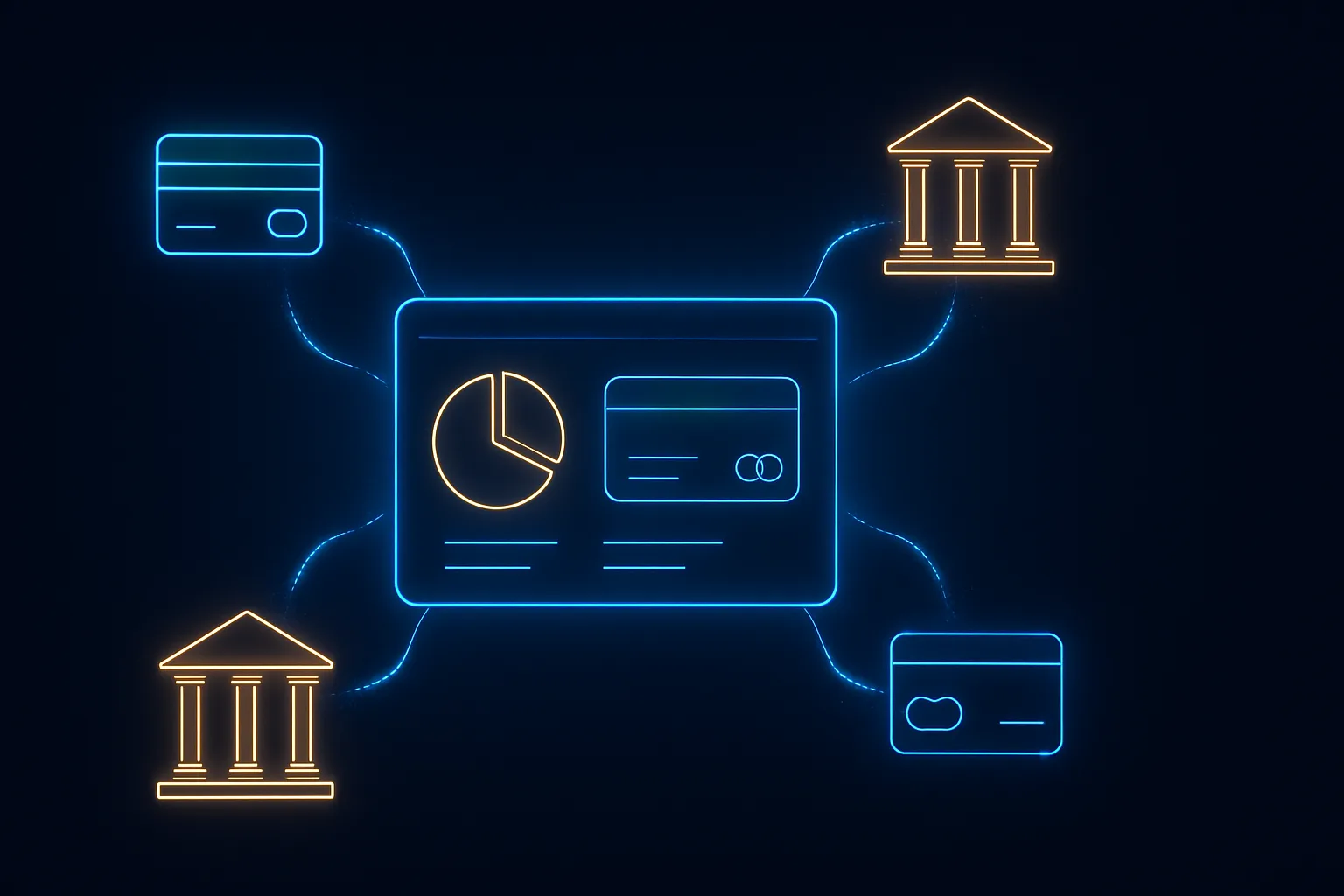
OpenAI launched ChatGPT for personal finance on May 15, 2026, and the feature does exactly what it sounds like: users can connect their bank accounts, brokerage accounts, and credit cards directly to ChatGPT, which then surfaces a dashboard showing portfolio performance, spending patterns, active subscriptions, and upcoming payments.
The story broke Friday afternoon, and the basic mechanics are clear enough. The integration uses open banking APIs similar to what Plaid pioneered, pulling read access to financial accounts and letting ChatGPT analyze the data in context. Ask it why your savings rate dropped, and it can actually look at the numbers. Ask it to flag subscriptions you haven't used in 90 days, and it will.
That's genuinely useful. It's also a significant escalation of how much personal data OpenAI now holds about its users.
What the Product Actually Does
The ChatGPT finance dashboard, rolling out to Plus and Pro subscribers first, is structured around four views: portfolio performance, monthly spending by category, recurring subscriptions, and an upcoming payments calendar.
The AI layer on top isn't just display. You can ask natural language questions about your own financial history, request comparisons between months, or have ChatGPT flag anomalies in your spending. OpenAI is billing this as a financial "co-pilot" rather than a financial advisor, which is doing a lot of legal heavy lifting in that sentence.
There's no trading functionality at launch. ChatGPT can't execute transactions, move money, or make investment decisions on your behalf. The current feature is read-only. OpenAI has been careful to draw that line clearly, probably because crossing it would trigger SEC and FINRA scrutiny immediately.
Why This Is a Bigger Deal Than a New Feature
OpenAI already knows what you write, what you ask about, and in some cases what documents you upload. Add financial account data to that profile, and the company now has a more complete picture of your life than almost any other single service you use.
This is where the comparison to AI privacy concerns more broadly gets uncomfortably concrete. Most AI tool privacy debates are theoretical. "What if the company uses your prompts for training?" is abstract. "The company can see your salary deposit, your mortgage payment, your Netflix subscription, and your therapist's billing cycle" is not abstract. It's specific, it's sensitive, and it's the kind of data that people are genuinely protective of.
OpenAI has said user financial data won't be used to train models without explicit consent. That's the right answer, but it's also the answer every company gives before a terms-of-service update makes it less true. The company has had a complicated year legally, including the dispute covered in OpenAI Is Preparing to Sue Apple Over a ChatGPT Deal Gone Wrong, which signals the organization is increasingly willing to treat its partnerships as commercial leverage plays. Users connecting bank accounts are entering a relationship that has those dynamics underneath it.
The Competitive Context
This move doesn't happen in isolation. Intuit has had AI-assisted financial insights in Mint's successor products for over a year. Apple's Wallet has been adding spending categorization features. Google is reportedly testing financial account connections in its own AI assistant products.
OpenAI is positioning ChatGPT as a general-purpose AI that can replace vertical-specific tools. The same ambition that drove it into coding (Codex), health (ChatGPT for Clinicians, launched in April 2026), and productivity is now pointed squarely at personal finance. The pattern is consistent: find a category where people use dedicated software, build a good-enough version inside ChatGPT, and benefit from the distribution advantage of having 600 million registered users.
For dedicated fintech apps, this is the same challenge that Cloudflare Cut 1,100 Jobs Because of AI. Its Revenue Hit a Record High the Same Quarter. illustrates from a different angle: AI is restructuring which companies own which surfaces, and the companies that own the AI interface often end up owning the customer relationship.
The finance vertical is also interesting because it's one where AI hallucinations carry actual consequences. If ChatGPT misreads a transaction category or gets a subscription end date wrong, the stakes are higher than a badly worded email. OpenAI's HealthBench Professional benchmark, released alongside ChatGPT for Clinicians in April, showed the company is thinking about evaluation rigor in high-stakes domains. No equivalent benchmark has been announced for financial accuracy.
The Regulatory Question Nobody Has Answered Yet
Personal finance dashboards aren't new, and the regulatory framework around them is settled enough. But ChatGPT isn't just a dashboard. It's a conversational AI that can generate recommendations, frame decisions, and influence behavior through the way it presents information.
If ChatGPT tells you "based on your spending, you'd save $340 a month by canceling these subscriptions and moving this amount to a high-yield account," that starts to sound like financial advice. The "co-pilot, not advisor" framing is a product decision, not a regulatory shield. The SEC and CFPB haven't publicly weighed in yet, but this feature is the kind of thing that gets attention when a user makes a bad financial decision based on AI output and looks for someone to blame.
The pattern of AI tools moving into regulated industries without waiting for regulatory clarity is consistent. We've seen it in healthcare with Medicare's New AI Payment Model Is the Biggest Health Tech Story Nobody Is Covering, and we're watching it happen in real time in legal, with courts already sanctioning attorneys who relied on AI outputs without verification. Finance is next in line.
What You Should Actually Do
If you're a ChatGPT Plus or Pro subscriber curious about this feature, a few practical points:
Read the data permissions carefully before connecting anything. The authorization screen will specify what read access the integration requests. "Read access" on a brokerage account can include account numbers, holdings, and transaction history going back years. Know what you're sharing.
Use a dedicated account connection if you test this. Some users have a secondary checking account or a dedicated budgeting account. Starting there limits exposure while you evaluate whether the feature is actually useful in practice.
Don't treat ChatGPT's financial summaries as ground truth. Cross-reference what it shows against your actual statements, especially in the first weeks. AI categorization of financial data has known error modes, and OpenAI hasn't published accuracy benchmarks for this feature.
Watch the terms of service. OpenAI's data policies have evolved before. Set a reminder to re-read the relevant section in six months, particularly the clause about model training and financial data.
The feature itself is genuinely interesting. A conversational interface over your own financial data, with no spreadsheet required, is something people have wanted for years. The question is whether OpenAI is the right company to hold that data, and whether the current privacy commitments will hold as the product matures. Those aren't reasons to refuse to use it. They're reasons to use it with your eyes open.
The broader trend here is worth watching carefully. As AI systems become more capable, they're absorbing more of the functions that used to require separate specialized tools. That consolidation can be convenient. It also means the integration problem increasingly runs in reverse: instead of your tools not talking to each other, one tool is talking to all your data at once, and the risk profile looks very different.