Best AI Voice Generators for Podcast Intros Under 45 Seconds
ElevenLabs leads our ranking for short podcast intros. Compare eight tools on sourced prices, free-tier caps and rights, then follow a 30-second production workflow.
A 30-second podcast intro is only 60 to 90 words, so a small free tier can cover more of the job than you might expect. Podigee puts the ElevenLabs free tier at about 10 minutes a month, enough for about 20 full takes. Whether you can publish those takes on a monetized show is a separate question, and it should shape your choice as much as the voice does.
ElevenLabs is our first pick for most shows. Independent guides name it most often for realism, and it offers voice cloning for hosts who want their own voice on the intro.
Prices and limits below come from third-party guides named inline, published in 2026. We could not confirm them against live vendor pricing pages on 1 November 2026, and none of this reflects our own use. "Not confirmed" means our sources did not settle the point, so read the vendor's plan page before you pay or publish.
One pick per scenario
| Your situation | Pick | Reason |
|---|---|---|
| Free, no budget | ElevenLabs free tier for auditions, TTSMaker as a placeholder | About 10 minutes a month on ElevenLabs (Podigee). TTSMaker's cap and licence are not confirmed |
| Best realism | ElevenLabs | Hedra says most independent reviewers name it for realism |
| Brand-consistent cloned voice | Descript | Its cloning patches a recording in your own voice, according to moonb.io |
| All-in-one with music | No confirmed winner. Start with Murf | Podcast AI Tools ranks it best for intros and promos, but confirm music on your plan |
| Team use | WellSaid | TheRankMasters and Hedra both place it as the enterprise and team option |
How the best AI voice generators for podcast intros compare
| Tool | Best for intros | Starting paid price | Free-tier cap | Commercial rights | Cloning | Music built in |
|---|---|---|---|---|---|---|
| ElevenLabs | Natural narration-style reads | Not confirmed | About 10 min/month (Podigee) | Not confirmed by plan | Yes, plan not confirmed | Not confirmed |
| Murf | Repeatable intro and promo reads | Not confirmed | Downloads gated behind paid levels (moonb.io) | Paid levels (moonb.io) | Not confirmed | Not confirmed |
| Descript | Hosts who edit their own show | $16/month, billed annually (moonb.io) | Free tier, cap not confirmed | Not confirmed | Yes, Overdub now sits in Regenerate (moonb.io) | Not confirmed |
| Fish Audio | Adjustable emotion and speaking rate | Not confirmed | 7 min/month (TheRankMasters) | S2 open-weights model needs a paid licence (TheRankMasters) | Yes | Not confirmed |
| Hume Octave | Auditioning a second realistic voice | Not confirmed | Not confirmed | Not confirmed | Not confirmed | Not confirmed |
| Speechify Studio | Creators also making video voiceovers | Premium $29/month, Studio up to $49/month (Hedra) | Basic voices, downloads gated (Hedra, moonb.io) | Paid levels (moonb.io) | Not confirmed | Not confirmed |
| WellSaid | Teams that need controls | Enterprise-oriented, price not confirmed | Not confirmed | Not confirmed | Not confirmed | Not confirmed |
| TTSMaker | Placeholder intros | Not confirmed | Not confirmed | Not confirmed | Not confirmed | Not confirmed |
Our sources give no per-tool export formats or sample rates. Before paying, check that the plan exports WAV as well as MP3, because you want a lossless master if one is available. Also check whether the tool can mix voice over music, and budget for a separate editor if it can't.
AI podcast generators are a different product. NotebookLM produces audio overviews from your sources, and Podcastify, whose guide puts itself first, turns URLs and documents into two-host episodes. An intro tool reads your exact script, so neither belongs in this ranking.
We also left Play.ht unranked. Moonb.io reports that PlayHT has shut down, although AI TextSpeak's vendor-written guide still recommends it for cloning. Confirm that it is open to customers before you consider it.
How we ranked them
We weighted four things for a short published clip: voice fit and direction, music handling, commercial clarity, and how much of the job one account covers. Latency and API pricing didn't count. Where sources were thin, a tool ranks lower because you have less to go on, which says little about how it sounds.
Two placements are open to argument. WellSaid sits seventh despite its team credentials, since most people searching this topic are independent podcasters. Descript sits below Murf even though it may be the better overall podcast tool, because moonb.io calls it overkill if all you need is text-to-speech.
Audition your script before paying, because voice preference is personal. Some outbound links may earn us a commission, but that didn't move a tool above a clearly better option.
1. ElevenLabs
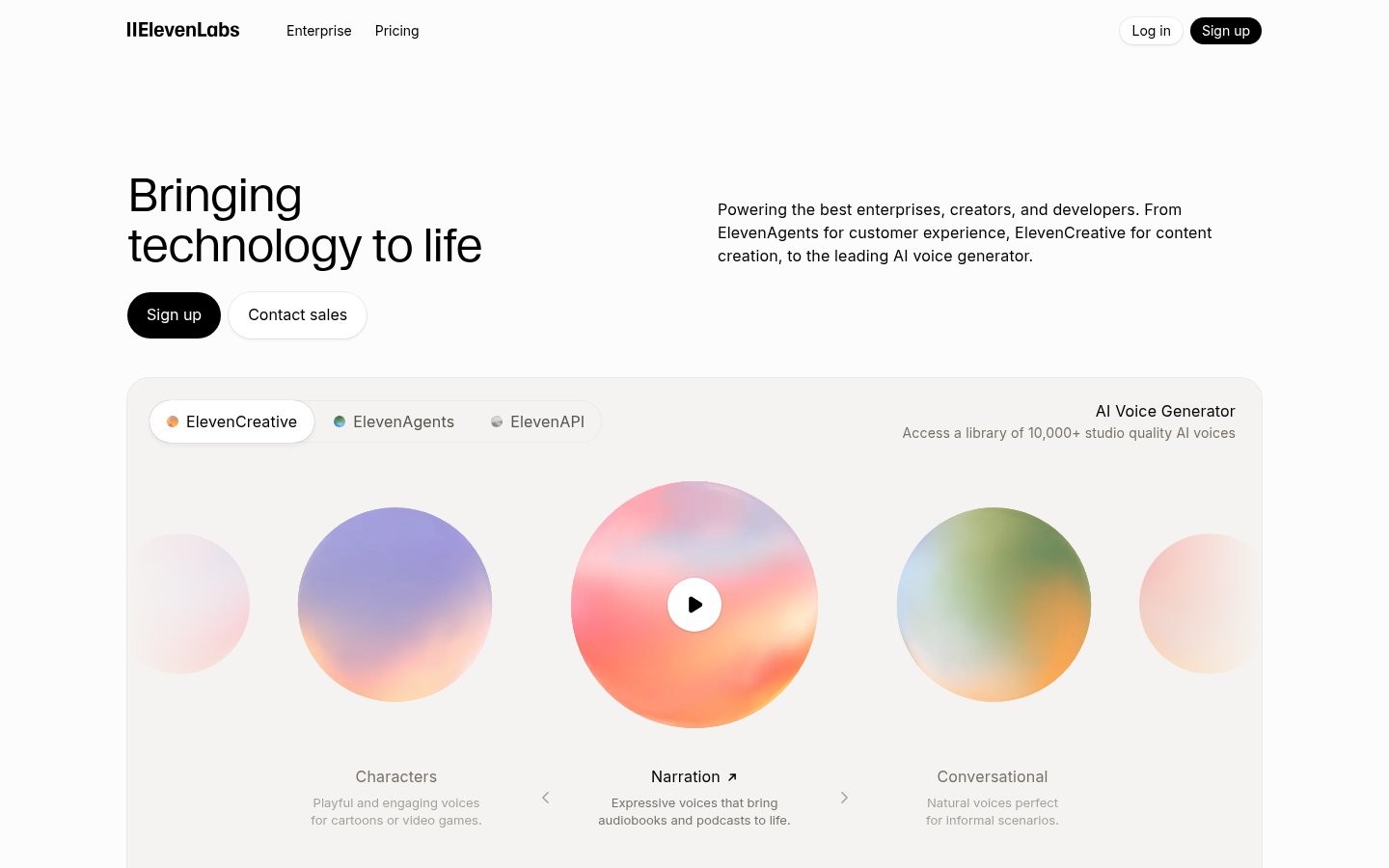
Official website: elevenlabs.io
ElevenLabs takes first place on the strength of outside agreement. Hedra says most independent reviewers name it for realism, TheRankMasters calls it the strongest single pick for podcast-quality narration, and Plain English recommends it "for the voice itself." Hedra also reports that its Eleven v3 model added inline emotional control in early 2026, which helps when one line of an intro needs more lift than the rest.
For a host's own voice, cloning builds a custom voice from a sample of your speech, and Podcastify describes ElevenLabs as the deepest toolkit for large voice libraries and cloning. Our sources give no current library size, and they don't describe its prompt-based voice design in detail, so check both on the product pages.
Best for: independent shows that care most about a natural read.
Price and limits: about 10 minutes a month free, per Podigee. Paid pricing and the plan that unlocks commercial rights are not confirmed, so check both, along with any attribution requirement on the free tier.
Skip it if you need a documented commercial licence today and can't verify the plan terms before publishing.
Try ElevenLabs →2. Murf
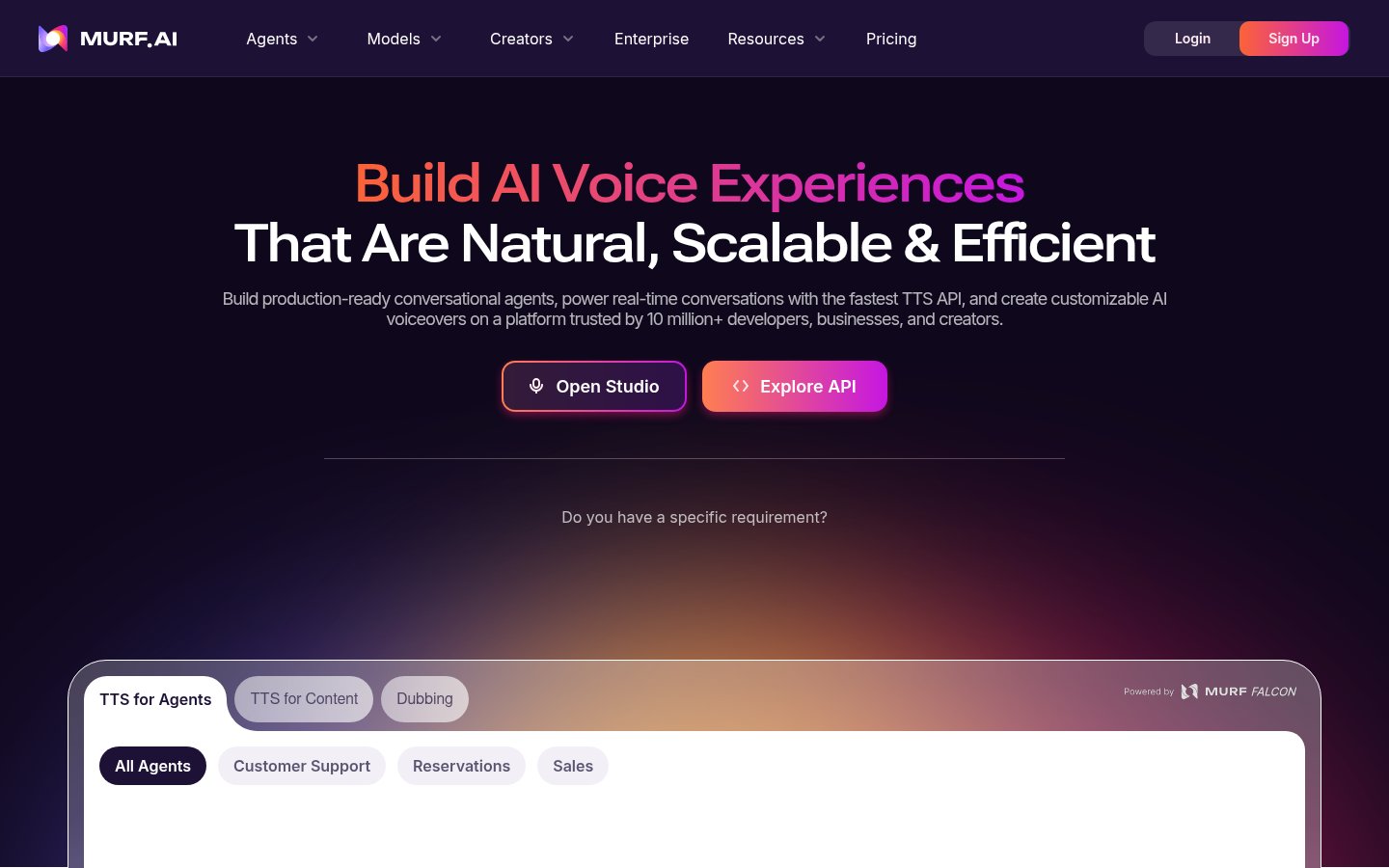
Official website: murf.ai
Murf is the tool most directly tied to this job. Podcast AI Tools ranks it best for podcast intros and promos, and Plain English recommends it for repeatable structure, which is what a show needs when the same intro format returns each season. Hedra places it with marketing and e-learning teams, so expect a polished presenter sound more than a character voice.
The free tier needs care. Moonb.io says Murf gates downloads and commercial use behind paid levels, so you may be able to audition a voice without being able to publish the file.
Best for: solo podcasters who want a clean, repeatable announcer-style read.
Price and limits: starting price not confirmed. Plan on paying before you publish.
Skip it if you need to publish from a free plan.
Try Murf →3. Descript
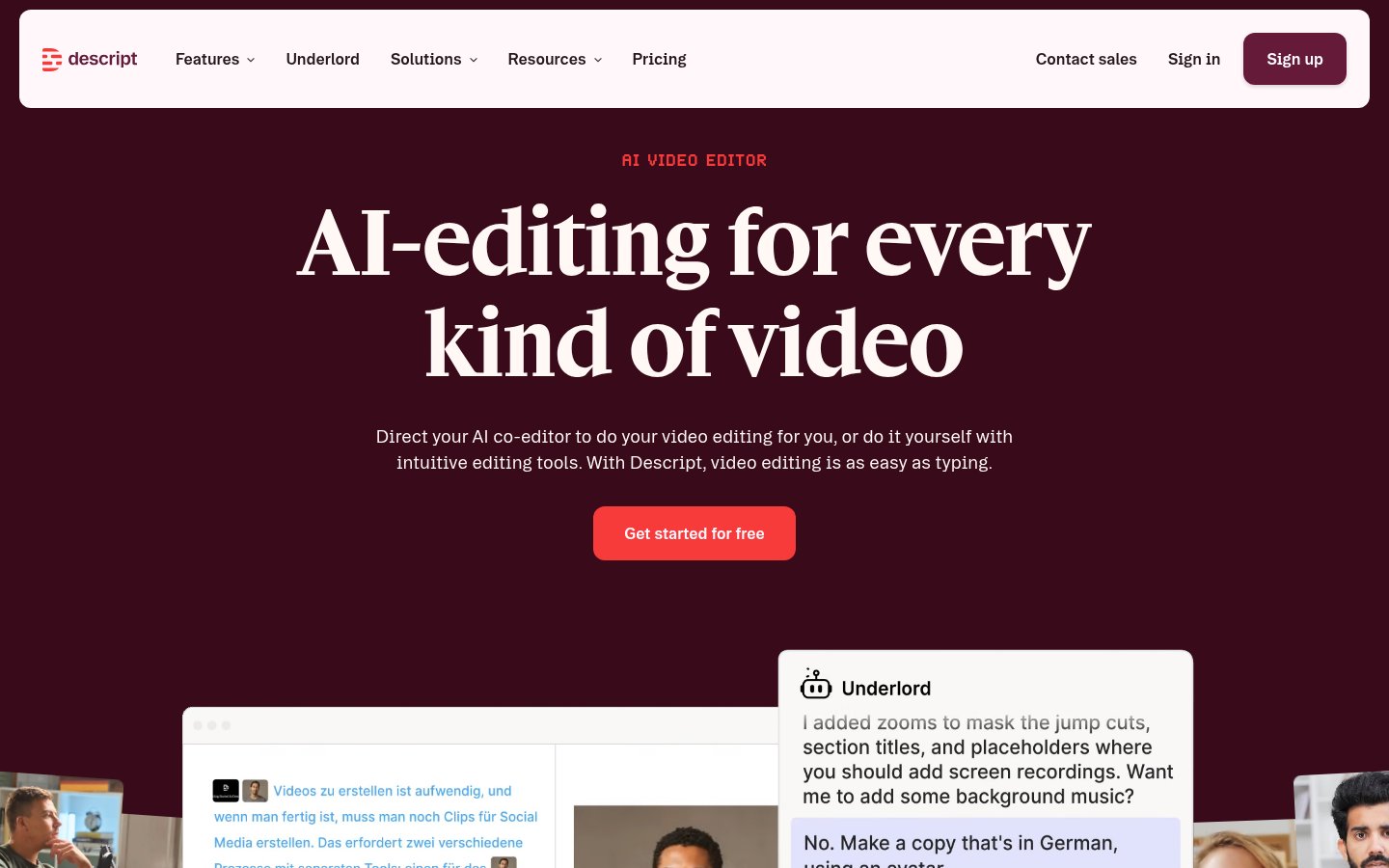
Official website: descript.com
Descript makes the most sense if you're the host and already edit there. You edit audio by editing the transcript, and moonb.io says its cloning, formerly Overdub and now folded into Regenerate, patches a recording in your own voice so the fix matches the original take. When a sponsor line or season number changes, that can save a new recording session.
It is an editor first and a voice generator second. Podcastify, a competitor, says Overdub's voice quality trails ElevenLabs, so weigh that claim accordingly and compare the two with your own script.
Best for: host-led shows that want the intro in the host's own voice.
Price and limits: free tier, with paid plans from $16 a month billed annually, per moonb.io. The free cap and commercial terms are not confirmed.
Skip it if you only need a stock voice once.
Try Descript →4. Fish Audio
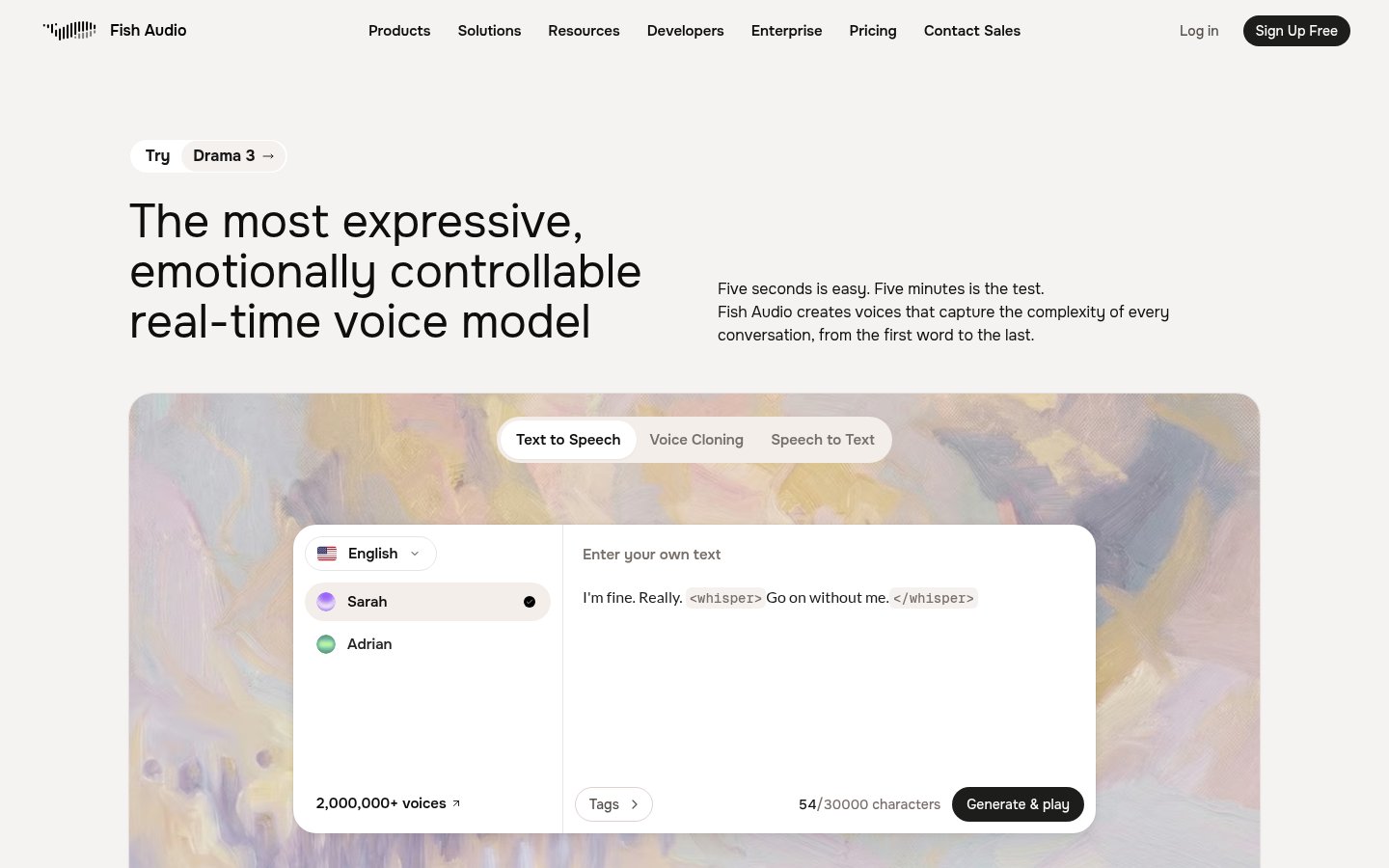
Official website: fish.audio
Fish Audio has the most documented delivery controls in our research. TheRankMasters describes fine-grained emotion tags and an adjustable speaking rate, covering calm narration through to high-energy sponsor reads, along with voice cloning in more than 80 languages. That site also ranks it first for naturalness on ELO benchmarks, but it sells listings, so treat that as a lead to test.
Its licensing needs attention if you plan to use the open-weights model, since TheRankMasters says commercial use of S2 requires a paid licence. Confirm how that applies to the hosted plan you choose.
Best for: shows that want to direct emotion and pace line by line.
Price and limits: 7 minutes a month free, per TheRankMasters. Paid plan pricing is not confirmed.
Skip it if you want a finished intro from one tool and can't confirm that it handles music.
Try Fish Audio →5. Hume Octave
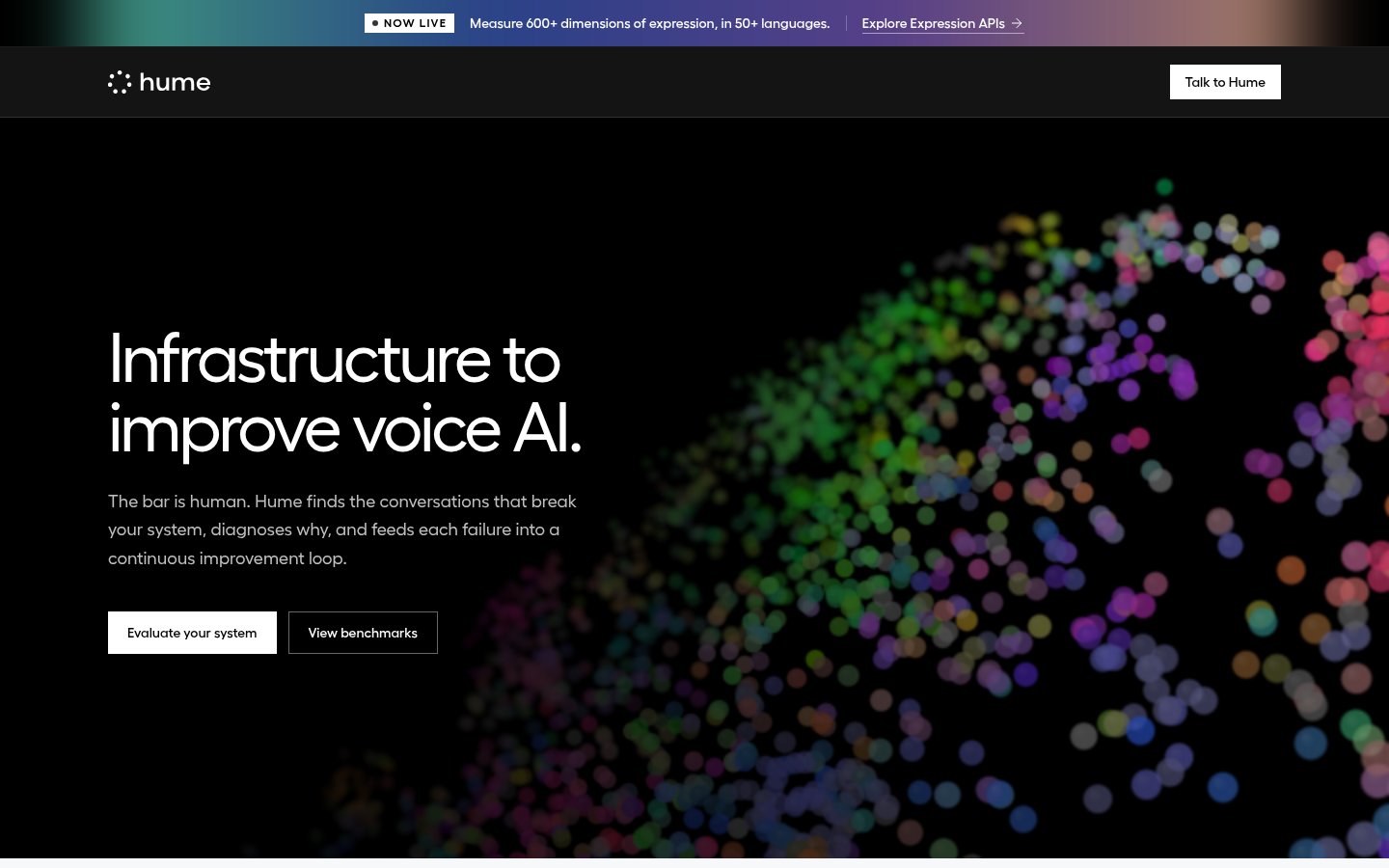
Official website: hume.ai
Hume earns a place as a realism candidate. Moonb.io names it with ElevenLabs and Cartesia among the top tools whose narration most viewers won't clock as AI, while warning that all of them can still slip on heavy emotion and unusual names. Both risks apply to an intro, so test your show name and the most energetic line first.
Best for: a second audition if ElevenLabs doesn't suit your show.
Price and limits: price, free limits, cloning and commercial terms are not confirmed in our sources.
Skip it if you don't have time to read its plan page yourself.
Try Hume Octave →6. Speechify Studio
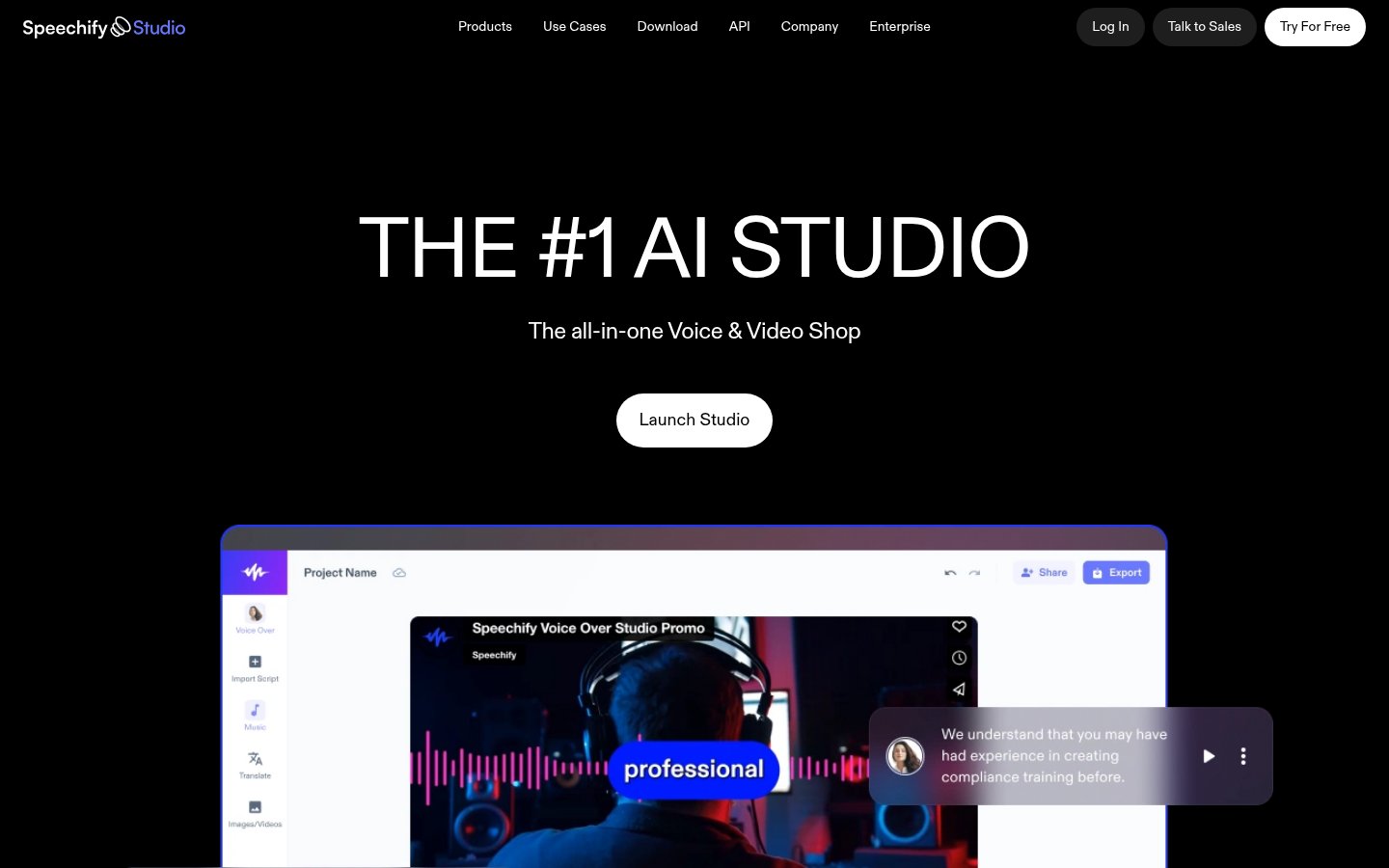
Official website: speechify.com
Speechify Studio is the production side of a product that began as a text-to-speech reader. The Cyber Lab YouTube channel describes more than 200 premium voices across 60-plus languages, a beginner-friendly script editor, and uses that include podcasts, ads and dubbing. That breadth suits a creator who also makes video.
For intros alone, we see no clear edge over the tools above. Hedra notes that its strongest features still serve reading aloud more than studio production, so make sure you're buying the Studio plan and not just the reading app.
Best for: creators who need voiceover across podcast and video.
Price and limits: Hedra lists Premium at $29 a month and Studio plans up to $49. The free tier uses basic voices and a limited library, and moonb.io says downloads and commercial use sit behind paid levels.
Skip it if the intro is your only job.
Try Speechify Studio →7. WellSaid
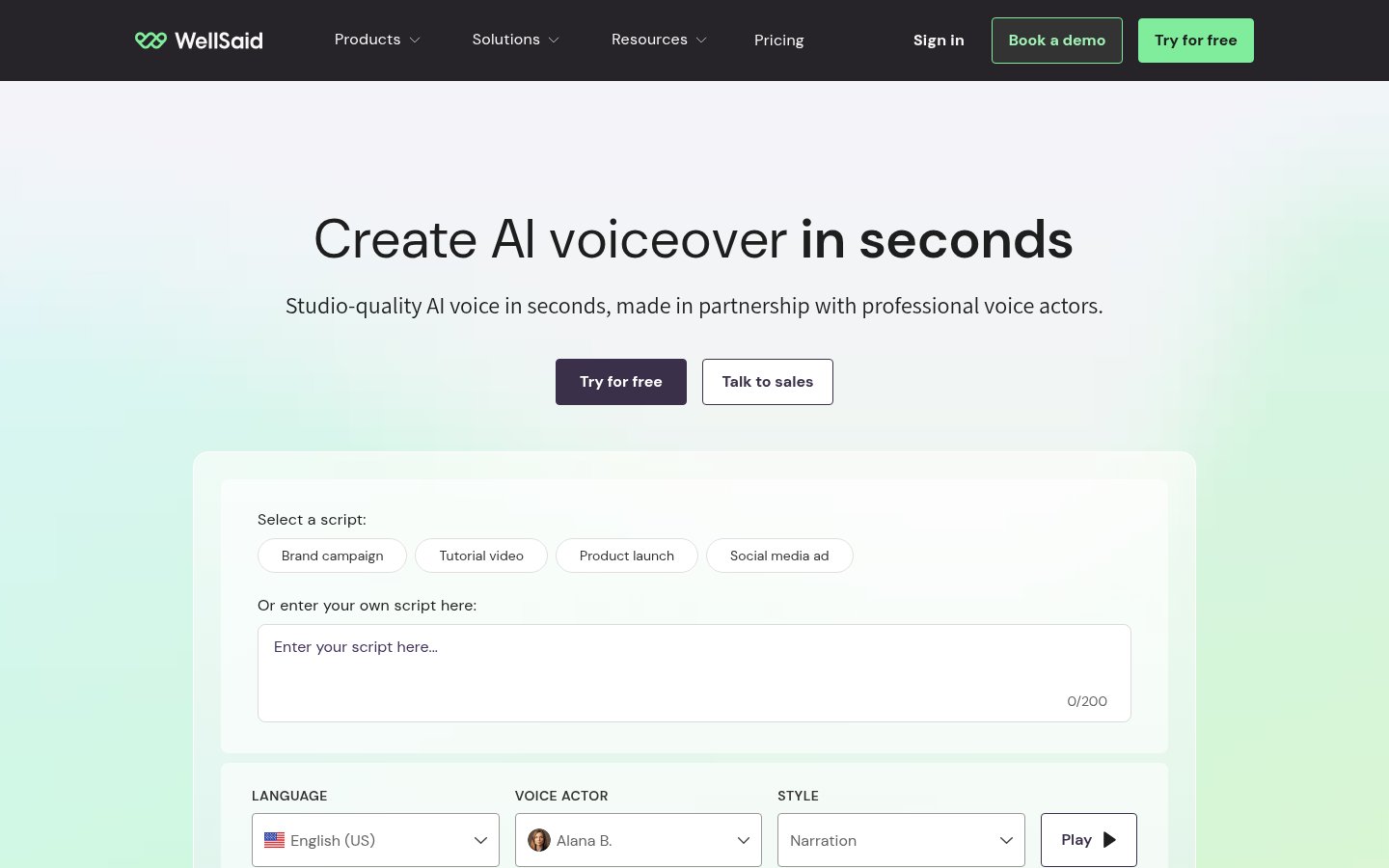
Official website: wellsaidlabs.com
WellSaid's low rank reflects fit for this audience, and it says little about quality. TheRankMasters calls it the top "enterprise posture" option, with premium studio-style voices and team controls, and Hedra picks it for enterprise compliance. A company podcast or multi-show network may value that during procurement. A hobbyist making one 30-second clip gets little from it.
Best for: corporate podcasts and multi-show teams.
Price and limits: enterprise-oriented. Price, trial terms and any free access are not confirmed.
Skip it if you're a hobbyist or a solo host.
Try WellSaid →8. TTSMaker
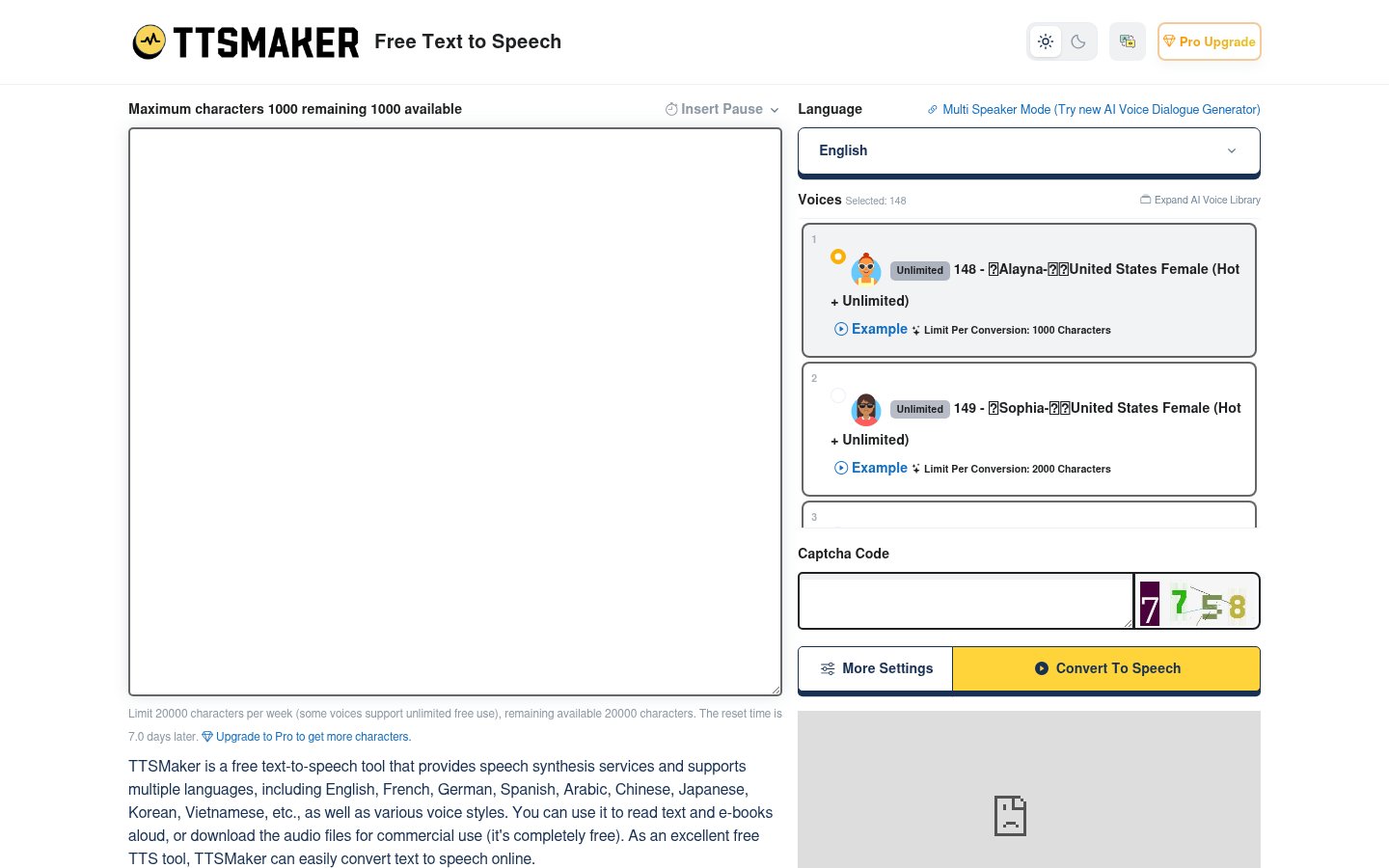
Official website: ttsmaker.com
TTSMaker takes the last slot as a no-budget fallback for a new show testing an idea. None of the guides we drew on documents its character cap, export formats or licence, so check all three on its site and save a copy of the licence page. Plan to replace the intro once the show has sponsors or a brand to protect.
Best for: placeholder intros on new shows.
Price and limits: free option, with caps and paid pricing not confirmed.
Skip it if you need a professional brand sound.
Try TTSMaker →What free tiers cover
Count free tiers in takes. If all of it goes on 30-second reads, the ElevenLabs allowance of about 10 minutes (Podigee) gives you about 20 takes, and Fish Audio's 7 minutes (TheRankMasters) gives you 14. AI TextSpeak's own guide lists 2,500 free characters a month. A 90-word script runs to roughly 500 characters by our estimate, so that's about five takes.
Generating audio is only half of it. Moonb.io says Speechify and Murf gate downloads and commercial use behind paid levels, so check that a free plan lets you export and publish before you settle on a voice.
Make a 30-second intro
- Write to the clock. A 15-second intro runs 30 to 45 words, a 30-second intro runs 60 to 90, and a 45-second intro runs 90 to 135. Aim for the lower end if music needs room.
- Choose the style. A measured voice suits narration and interviews. A brighter, faster read suits comedy, sports and news.
- Fix the show name first. Moonb.io lists unusual names among the places top voices still slip. Generate only that line and respell the name phonetically until it sounds right. Add it to a pronunciation dictionary if your tool has one, or use SSML phoneme tags where supported.
- Generate several takes. Vary pauses and emphasis, then assemble the best parts. Punctuation is often the quickest pacing control.
- Add music. Use a tool's library if your plan includes one, or generate a track in Suno, checking your plan's commercial rights. Start the bed before the first word, duck it under speech, and bring it back at the end.
- Level and export. Normalize to around -16 LUFS for stereo or -19 LUFS for mono, the common podcast targets. Audacity is one free editor to try. Export a WAV master, then an MP3 for your host.
If you recorded a host line rather than generating it, Adobe Podcast can clean it up before the mix.
Licensing, cloning and disclosure
Moonb.io's summary is a useful default: commercial use is usually allowed, but only on paid tiers, and the terms vary by tool. We can't confirm the plan-by-plan answer for most of this list. Before publishing to a monetized feed, save the invoice, the terms page and the voice name in your show folder. Check music rights separately from voice rights.
You can clone your own voice for an intro with tools such as ElevenLabs, Descript and Fish Audio. Hedra says some tools work from a short sample, but our sources don't give each tool's required length or the plan that unlocks it, so follow the recording prompt in the tool you choose. Moonb.io's rule covers consent: never clone a real person's voice without their written permission.
We did not review Apple Podcasts' or Spotify's current policies on AI voices for this article, so we can't say what either platform permits. Read both before launch. A short line in your show notes saying the intro uses an AI voice is a cheap way to be open with listeners.
FAQ
Does the ElevenLabs free plan allow commercial use? We could not confirm this. Treat free-tier output as non-commercial until the ElevenLabs terms say otherwise, and check whether attribution is required.
Which AI voice sounds most natural for narration, and which suits a punchy announcer style? For narration, ElevenLabs has the broadest backing among the guides we read. For an announcer read, shortlist Murf, which Podcast AI Tools ranks best for intros and promos, and Fish Audio, whose emotion tags TheRankMasters says cover high-energy reads. Moonb.io warns that a model that nails a calm read can crack on an excited one, so test the energetic version.
Can an AI voice tool add music and sound effects? Our sources don't confirm built-in music or sound effects for any tool on this list. Plan on a separate music source and a multitrack editor unless your chosen plan's page says otherwise.
Related reading
Frequently Asked Questions
Tools & Services Mentioned

Founder and editor of infobro.ai
We research every tool from its documentation, pricing pages, product screenshots and public developer discussion, and say plainly what the evidence does and does not show. Drafts are written with AI assistance under our editorial rules, and we revisit articles to reflect platform changes. Learn more about our process.