Google Ties School Search to AI Use, Drawing Monopoly Charges
Google faces backlash over a plan that would turn off Search for schools that restrict its AI. DuckDuckGo is pitching districts. What to ask Google, and what switching leaves untouched.
 Stanislav VovchykNov 5, 20266 min read
On this page · 4 sections
In short
- Under a plan reported by TechCrunch on 4 November, Google would turn off Search for K-12 schools that restrict its AI features, prompting monopoly accusations from Zohran Mamdani and Lina Khan.
- Before planning around the cutoff, get written answers from your Google rep on which settings count as restricting AI, whether staff accounts are covered, and the effective date.
- Switching managed browsers to DuckDuckGo, which is free and does not train on customer content, fixes search but leaves Gemini in Classroom and Gemini Notebook to set in Google's admin controls.
- Get a board-approved written AI policy listing your Gemini, Gemini Notebook, Classroom, Search AI and default search settings before the plan takes effect, to strengthen your position with Google and regulators.
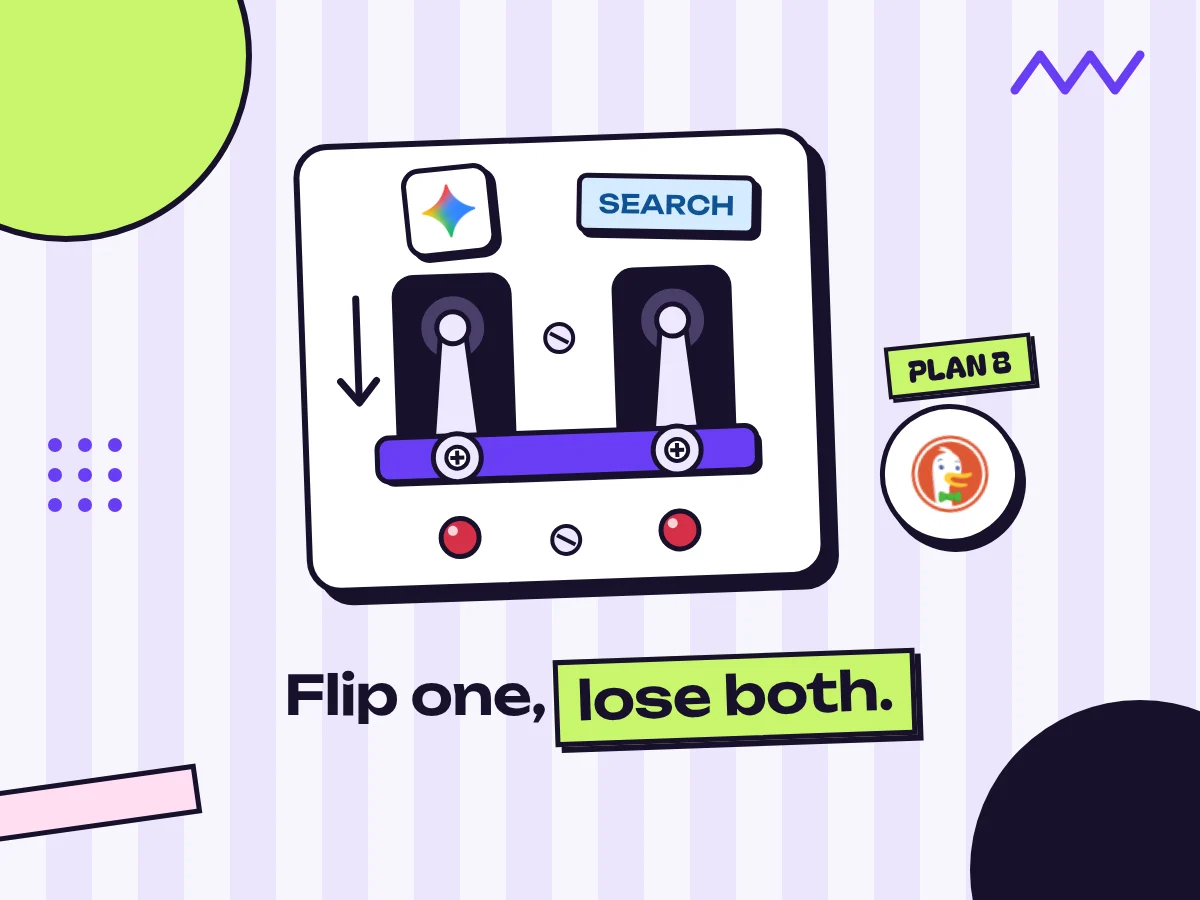
On 4 November, TechCrunch reported a political backlash against a Google plan that would turn off Google Search for schools that restrict its AI features. Critics on the left, among them New York City mayor Zohran Mamdani and former FTC chair Lina Khan, accused Google of acting as an unregulated monopoly. The same day, TechCrunch reported that DuckDuckGo had started courting frustrated schools, pointing educators to its search engine and to settings that switch AI features off. For districts, the threat is simple: restrict Gemini and lose the search box every lesson depends on.
What Google changed for K-12 accounts the day before
On 3 November, Google announced on its blog that it had rolled Guided Learning out globally into Google Classroom and was bringing the same features to Search. In the same announcement it updated controls for Gemini, Gemini Notebook, Gemini in Classroom and Google Search on K-12 student accounts.
Taken together, those moves make AI-assisted learning the default inside Google's education stack, and the reported plan makes Search the price of opting out. A district that decides students shouldn't use Gemini during class would, under the plan as TechCrunch described it, lose ordinary search as well. That is the point Mamdani and Khan seized on, and I think they have the stronger argument. Most complaints about Google's dominance concern ad markets that parents and teachers never see. This one shows up on an admin settings page, and it ties a contested new product to a utility no teacher can work without. That is a classic bundling complaint. Unlike the enterprise buyers in our Copilot Credits Default On Dec 1 for CSP Buyers, So Set Caps Now story, most districts have no procurement team to push back on a take-it-or-leave-it condition.
Before planning around the cutoff, get three answers from your Google rep in writing. First, which admin settings count as "restricting AI": turning off Gemini in Classroom, Gemini Notebook, the AI features in Search, or any one of them. Second, whether the plan applies only to K-12 student accounts or to staff accounts too. Third, the date it takes effect.
DuckDuckGo fixes the search box, not the Classroom problem
DuckDuckGo's pitch holds up as far as it goes. DuckDuckGo is free, and our catalogue records that it does not train on customer content. If your main worry is student queries feeding a model, that settles it, and switching the default search engine on managed browsers is an admin setting, not a migration.
Search is the easy part, though. Districts on Google Workspace for Education keep assignments in Classroom, files in Drive and mail in Gmail. Swapping the search engine does nothing about Gemini in Classroom or Gemini Notebook, which is where Google's 3 November changes landed. A district could move every student to DuckDuckGo tomorrow and still have to set its AI policy inside Google's admin controls. I'd use DuckDuckGo as a fallback and as leverage in talks with Google, and plan on staying inside Workspace for everything else.
Those controls matter beyond the classroom. Gemini inside Workspace can search across Gmail, Drive and Docs, according to a Swiss Cyber Institute guide, so the settings a district picks decide what an assistant can read in shared school drives. Our explainer on what MCP is and what can go wrong walks through the permission risks that appear once an assistant can read a shared drive, and the same questions apply to Gemini.
If a district does allow AI, the next question is whose. Training terms differ between the assistants students already use, and I'd check that first.
| Tool | Entry price | Trains on customer content | Notes for schools |
|---|---|---|---|
| DuckDuckGo | Free | No | Search plus Duck.ai chat, AI features can be switched off |
| ChatGPT | Free, Go $8/mo (US), Plus $20/mo | Yes | Training on content makes it a hard sell for student accounts |
| Mistral | Free, Pro $14.99/mo | Yes, opt-out available | Open-weight models a district can run on its own infrastructure; opt out before student use |
| Ollama | Free locally, Pro $20/mo | No | Running models on your own hardware is unlimited |
For a district that wants AI in the classroom without a cloud vendor setting the terms, Ollama is the row I'd look at. It runs open models on the school's own machines, local use is unlimited, and it doesn't train on customer content. Someone has to manage the hardware, so it suits a district with an IT team more than a single school with a part-time admin. Mistral's open-weight models can also run on district hardware, but its hosted chat trains on content by default, so the opt-out has to happen before any student logs in.
Which districts should move now
If your district restricts AI over student data, the training column above matters more than which search engine sits in the browser. ChatGPT trains on customer content, so ask OpenAI directly what its education terms change before approving it for student accounts.
If you restrict AI for academic integrity reasons, the reported Google plan hurts you most, because you would lose search to protect assignments. Those districts have the clearest reason to set DuckDuckGo as the managed default and to tell their Google rep in writing why. For research help that cites sources, Perplexity AI Alternatives for Research, Matched to Your Sources covers the options. NotebookLM, which answers questions only from sources the user uploads, sits closer to what a teacher would accept. It is a Google product, though, and its paid tiers are sold as Google AI Plus, Pro and Ultra plans. Google's 3 November controls name Gemini Notebook, so ask your rep whether those K-12 controls also govern NotebookLM before treating it as a way around them.
Whichever way you lean, get a written AI policy approved by your board before the plan takes effect, and attach the admin settings it relies on: the on or off state of Gemini, Gemini Notebook, Gemini in Classroom and the AI features in Search for K-12 student accounts, whether staff accounts differ, and the default search engine on managed browsers. If Google enforces the cutoff, that record shows exactly what you restricted and why. That gives you a stronger hand with your rep, and with any regulator who picks up the complaint Mamdani and Khan have started.
Sources
Tools in this article 6




Written by
Stanislav Vovchyk
Founder and editor of infobro.ai
I run infobro.ai: I decide what it covers and how tools are evaluated.
I research every tool from its documentation, pricing pages, product screenshots and public developer discussion, and say plainly what the evidence does and does not show.
More news