How AI Medical Scribes Actually Work in 2026 (And How to Pick the Right One)
Physicians still spend 2 hours on paperwork for every 1 hour of patient care. AI medical scribes are changing that. Here's what actually works in 2026.

Physicians spend roughly two hours on paperwork for every one hour of direct patient care. That ratio has barely moved in a decade. The promise of AI clinical documentation tools is simple: listen to the patient encounter, generate a structured note, push it to the EHR. The reality in 2026 is that the tools have matured enough to actually deliver on that promise, but the market is crowded, the pricing is all over the place, and picking the wrong platform costs you more time than you save.
This is a practical breakdown of how AI medical scribes work, what separates the good ones from the mediocre ones, and how to match a tool to your specific practice context.
What AI Medical Scribes Actually Do
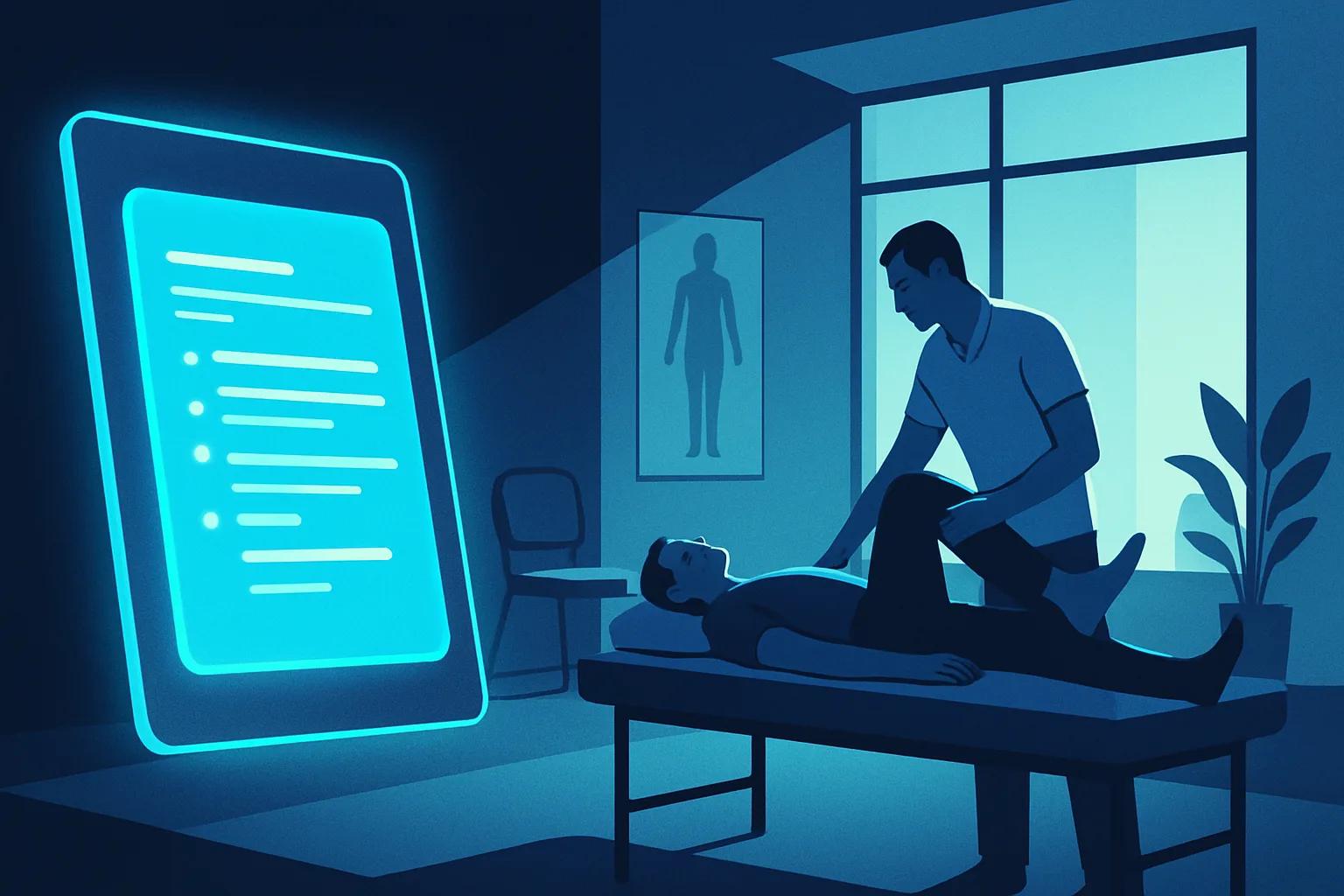
The category name is a bit misleading. "Scribe" implies a person typing in the corner. These tools are more accurately described as ambient AI documentation systems. They use natural language processing to listen to the conversation between provider and patient, identify clinical structure in that conversation (chief complaint, history, assessment, plan), and generate a formatted note, usually SOAP or H&P format, that's ready to drop into your EHR.
The key distinction from older dictation software is passivity. You don't speak to the tool. You speak to your patient, and the tool figures out the rest. That shift matters enormously in practice. Dictation workflows break the clinical encounter. Ambient scribing doesn't.
Most platforms now offer a core workflow like this:
- You start a session on a phone, tablet, or desktop app before or at the start of the visit
- The tool listens and transcribes the encounter in real time
- After the visit, it generates a structured draft note, usually within seconds to a few minutes
- You review, edit, and attest the note
- The note goes into the EHR, either through direct integration or copy-paste
The variation across tools is in steps 3 and 4. Some tools produce near-chart-ready notes. Others produce rough drafts that need substantial editing. The difference isn't always obvious from a product page.
The Market in 2026: What's Actually Changed
As of mid-2026, over 40% of US physicians use some form of AI documentation tool. That's not a niche anymore. The market has also bifurcated clearly into two segments: enterprise tools built for health systems with Epic or Cerner deployments, and independent practice tools designed for solo clinicians and small groups who need fast setup and predictable pricing.
Three structural shifts define where things stand right now:
EHR-native integration is becoming the baseline for enterprise. Major EHR vendors now offer AI documentation as native features rather than third-party add-ons. Epic, Cerner, and athenahealth have all moved in this direction. Athenahealth announced that athenaAmbient would be included free with EHR subscriptions starting February 2026, which removes cost barriers for a significant number of providers.
Regulatory acceptance has caught up. CMS and major insurance payers now accept AI-generated notes for billing purposes as of mid-2026, provided the provider attests to the note. That was a legitimate concern two years ago. It's no longer a blocker.
Pricing has gotten more transparent for SMB tools, less so for enterprise. Independent practice tools like Freed and Heidi Health publish clear pricing tiers. Enterprise platforms like Abridge and Microsoft Dragon Copilot (formerly Nuance DAX) still operate on custom contracts, which makes apples-to-apples comparison difficult.
What to Actually Evaluate Before Choosing
Before looking at specific tools, get clear on your practice context. The right answer for a solo family medicine provider is completely different from the right answer for a 200-physician health system on Epic.
EHR integration depth
Copy-paste workflows are fine for independent practices that want flexibility without lock-in. If you're in a large system, direct EHR integration matters enormously because note creation happens inside the existing workflow, and copy-paste at scale is an administrative nightmare.
Specialty fit
Generic note templates work for primary care. For specialties with highly specific documentation patterns, specialty-trained models with custom templates are worth the extra cost. Psychiatry, orthopedics, and cardiology have documentation requirements that generic tools handle poorly.
Real-time vs. post-visit
Some tools generate notes during the visit. Others process after. Real-time generation is useful if you want to review and finalize the note while the patient is still in the room. Post-visit processing is fine for providers who prefer to batch note review. Neither is objectively better, but your workflow preference matters.
Privacy and HIPAA compliance
Every serious tool in this category is HIPAA-compliant and offers a Business Associate Agreement (BAA). Verify this before signing anything. Some tools offer additional privacy architecture, particularly for telehealth and international settings.
Language support
If you run a multilingual practice or work outside the US, language support becomes a primary criterion rather than a nice-to-have.
The Main Tools Worth Knowing About in 2026
Here's a practical breakdown of the tools that consistently appear in clinician discussions and independent evaluations as of mid-2026.
SOAPNoteAI
Positioned as the value option for independent practices. It works with any EHR through a copy-paste workflow, which means no integration fees and no lock-in. Plans start at $29/month, which makes it the most accessible entry point in the category. The trade-off is that you don't get the deep EHR integration that enterprise tools offer, and copy-paste adds friction at scale. Best for solo providers and small clinics that want to start documenting without a long procurement cycle.
Freed
Freed has become the go-to recommendation for independent primary care providers who want minimal setup. Pricing runs from $39 to $119 per month depending on plan. The interface is designed to be operable within minutes of signing up, which matters for small practices that don't have IT support. It handles SOAP, H&P, and custom note formats. The limitation is that it's built for simplicity, which means it's not the right choice for complex specialty documentation or enterprise deployments.
Heidi Health
Heidi stands out for two things: multilingual support (over 100 languages) and genuine international availability across the US, Canada, Australia, and the UK. The free tier exists but has restrictive usage caps. The pro plan runs around $99 per year per user based on published pricing, which is notably affordable. For multilingual or international practices, Heidi is the clearest choice in the category.
Abridge
Abridge targets large health systems rather than individual practices. Pricing starts around $208 per seat per month and typically runs on custom contracts. Its standout feature is Linked Evidence, which connects AI outputs back to specific statements made during the visit, which gives the provider an audit trail for documentation decisions. Enterprise-grade security, Epic integration, and a focus on clinical note accuracy make it a serious option for health system procurement.
Suki AI
Suki differentiates itself by going beyond passive transcription. Providers can issue voice commands during a visit to pull up patient history, stage orders, and trigger documentation steps without touching a screen. It also connects to UpToDate via a Wolters Kluwer partnership and includes ICD-10 and HCC coding alignment built into the documentation workflow. Pricing runs roughly $299 to $399 per provider per month and isn't publicly listed, so expect a sales conversation. Best for providers who want an AI assistant that does more than just generate notes.
Microsoft Dragon Copilot (formerly Nuance DAX)
The enterprise standard for Epic-based health systems. Deep integration, enterprise-scale support, and the institutional trust that comes with a Microsoft product. Pricing is in the $400 to $600+ per month range on custom contracts. If you're a large health system running Epic, this is the tool your procurement team is already evaluating. For independent practices, the cost and complexity make it overkill.
DeepScribe
DeepScribe is the specialty-focused option. It uses specialty-trained models with custom templates and includes a human quality review layer on top of AI transcription. That extra review step adds cost but improves accuracy for specialties where generic models produce clinically unreliable output. Worth evaluating if you're in a specialty with highly specific documentation requirements and you've found generic tools produce notes that need too much editing.
Nabla Copilot
Nabla positions itself around privacy, particularly for telehealth and multilingual international settings. It performs consistently across in-person and telehealth visits. Less discussed in US enterprise procurement circles, but worth knowing about for providers with cross-border or privacy-first requirements.
A Practical Comparison
| Tool | Best For | Pricing (2026) | EHR Integration | Language Support |
|---|---|---|---|---|
| SOAPNoteAI | Solo/small independent practices | From $29/mo | Copy-paste (any EHR) | English-primary |
| Freed | Independent primary care | $39, $119/mo | Copy-paste | English-primary |
| Heidi Health | Multilingual/international practices | Free tier + ~$99/yr pro | Copy-paste/limited | 100+ languages |
| Abridge | Large health systems | From ~$208/seat/mo (custom) | Native (Epic) | English |
| Suki AI | Providers wanting voice commands + coding | ~$299, $399/mo | EHR integration | English |
| Dragon Copilot | Epic-based health systems | $400, $600+/mo (custom) | Native (Epic/Cerner) | English |
| DeepScribe | Specialty-heavy documentation | Custom | Direct EHR | English |
| Nabla Copilot | Telehealth/privacy-first international | Not publicly listed | Multiple | Multilingual |
The Accuracy Question Nobody Answers Directly
Every vendor in this category claims high accuracy. Almost none publish the methodology behind those claims. What actually determines note quality in practice:
Model training on clinical data. Generic language models don't handle clinical vocabulary well. Tools trained specifically on physician-patient conversations produce better output. The difference shows up immediately in specialty documentation.
Specialty adaptation. A model trained primarily on primary care visits will produce mediocre output for a psychiatry session. Specialty-specific templates and models matter.
Human review layers. Some tools, like IKS Health's Scribble Live, add a human review step before notes enter the chart. Notes take 30 to 60 minutes to be ready rather than seconds, but the accuracy is higher than fully automated tools can guarantee in every clinical situation. Scribble Live scored 91.9 out of 100 (Best in KLAS 2026, Virtual Scribing Services), which represents the upper bound of what this category achieves.
Your editing behavior. The tools that improve over time are the ones that learn from your corrections. If you attest notes without editing them, you lose that feedback signal. This is the same dynamic that shows up in The AI Output Quality Problem: Why Your Results Are Inconsistent: the tool's output quality is partly a function of what you put back into it.
What to Watch for in Security and Compliance
HIPAA compliance is table stakes. Every tool listed above offers it and includes a BAA. But compliance isn't uniform in what it means for your specific setup.
Key questions to ask any vendor before signing:
- Is the BAA included in all plans, or only paid tiers?
- Where is audio data processed and stored?
- Is audio retained after note generation, and for how long?
- Does the tool use your patient data for model training? If so, how?
- What is the breach notification process?
The fact that a tool is HIPAA-compliant doesn't mean you've done your due diligence. It means you've cleared the minimum bar.
For telehealth-heavy practices, ask specifically about cross-device consistency and what happens to audio data on the patient's end of the connection.
The Burnout Angle Is Real
The clinical documentation burden is a genuine crisis, not a talking point. The two-hours-of-paperwork-per-one-hour-of-care ratio has been consistent across multiple studies. It's a primary driver of physician burnout, which has direct consequences for patient care access and quality.
The promise AI scribes make is legitimate. The tools in 2026 are mature enough to actually deliver on it for most practice settings. The risk is adoption friction. Physicians who try a tool that doesn't fit their workflow and abandon it within a week write off the entire category. Matching tool to context is the real work.
If you're a solo provider, start with Freed or SOAPNoteAI. Both let you start documenting within minutes and have pricing that doesn't require approval from a finance committee. If you're evaluating for a health system, Abridge and Dragon Copilot are the two tools your Epic team should be piloting simultaneously.
This kind of careful tool selection mirrors the thinking behind how finance teams are approaching AI agents: the failures aren't happening because the technology doesn't work. They're happening because the wrong tool got selected for the context, or the rollout skipped the workflow-matching step entirely.
Specialty Considerations That Vendors Understate
Mental health and behavioral health. Documentation requirements differ significantly from medical specialties. Note structure, language, and billing codes are different. Generic tools often produce notes that need substantial editing for mental health providers. Freed and Twofold Health specifically advertise mental health fit.
Pediatrics. Patient age affects what information needs to be captured and how it's structured. Verify that any tool you evaluate handles pediatric documentation templates.
Surgical specialties. Ambient scribing during procedures isn't the primary use case. These specialties need documentation tools for pre-op and post-op notes, which have different requirements than visit notes.
Veterinary medicine. Worth mentioning because a few tools in this category serve veterinary practices. The documentation structures are different enough that you should look for vet-specific tools rather than adapting a human medicine tool.
The Cost Math
The business case for AI scribing is straightforward. If a tool saves a physician 90 minutes of documentation per day, and that physician sees 20 patients, that's 4.5 minutes saved per patient encounter. Depending on specialty and payer mix, that time savings translates to additional patient capacity or recovered personal time.
At $39/month (Freed's entry pricing), the break-even is trivially easy to reach. At $400/month (Dragon Copilot territory), you need to be more systematic about measuring the return.
The subtler cost consideration is note accuracy. A tool that saves 90 minutes but introduces documentation errors that generate billing denials or compliance issues is a cost center, not a savings. Enterprise deployments justify higher price tags partly because they include quality assurance layers that reduce that risk.
This cost logic matters even more when you consider that AI infrastructure costs are climbing. KV cache is now one of the biggest cost drivers in production AI systems, and that eventually flows downstream into the pricing structure of every tool in this category.
Three Decisions That Actually Matter
Before you start a trial, answer these three questions:
1. Do you need EHR integration or is copy-paste acceptable? If you're in a large system, copy-paste is a non-starter. For independent practice, it's fine and gives you flexibility.
2. What specialty are you in? If your specialty has highly specific documentation patterns (psychiatry, orthopedics, cardiology), don't start with a generic tool. Start with DeepScribe or a tool that lists your specialty explicitly.
3. What's your budget authority? If you need to stay under $100/month without approval, Freed and Heidi are your options. If you're procuring for a system and can run a formal vendor evaluation, expand the list.
The market in 2026 is good enough that there's a workable option for every practice type. The mistake isn't picking the wrong tool. The mistake is defaulting to whatever a peer recommended without checking whether their practice context matches yours.
The same trap shows up across professional AI adoption, not just healthcare. When you're evaluating AI tools for different workflows, context-matching is always the step that gets skipped, whether you're looking at AI tools for B2B sales teams or ambient scribes for a clinical practice. The tool that works brilliantly for someone else may not fit your workflow at all, and that's not a reflection of the tool's quality.
Pick the tool that fits your context. Run a real trial. Measure note editing time before and after. If the editing time drops, you've got your answer.
Frequently Asked Questions
Tools & Services Mentioned
infobro.ai Editorial Team
We research every tool from its documentation, pricing pages, product screenshots and public developer discussion, and say plainly what the evidence does and does not show. Drafts are AI-assisted and reviewed by our editors before publication. We revisit each article every 6 months to reflect platform changes. Learn more about our process.