N
 N
Per-run pricing or 3,500+ apps
The short answer
I'd pick Activepieces if your flows have many steps, you need to self-host, or you want unlimited flows for up to 5 users for free. It charges per run, so each extra step adds nothing. Make charges one credit per module action. I'd pick Make if you need its 3,500+ integrations or its SOC 2, SOC 3 and ISO 27001 certifications, or if you want a $9/mo starting plan.
 Stanislav Vovchyk · updated Nov 5, 2026 · prices checked Oct 26, 2026

Choose Activepieces if…

Choose Make if…
Typical jobs costed on each tool's cheapest plan that covers them, from the plan limits each vendor publishes.
| Job | Activepieces | Make |
|---|---|---|
| A 5-step workflow running 1,500 times a month, no AI | $20/moPlus1,500 runs = 1,500 credits; includes 10,000 | $9/moCore5 actions x 1,500 = 7,500 credits; includes 10,000 (annual billing) |
| Three flows of 3 steps, 3,000 total runs a month | $20/moPlus3,000 credits of 10,000; Free allows unlimited flows but only 1,000 credits | $9/moCore3 x 3,000 = 9,000 credits; Free allows only 2 active scenarios |
| 10 teammates sharing flows with roles, 3,000 runs of 3 steps | $200/moTeamPlus caps at 5 users; Team includes 25 users and 50,000 credits | $29/moTeamsTeam roles included; 9,000 credits fits 10,000 (annual billing) |
A Activepieces
M Make
What each vendor shows first: the pitch, the plans and the sign-up.
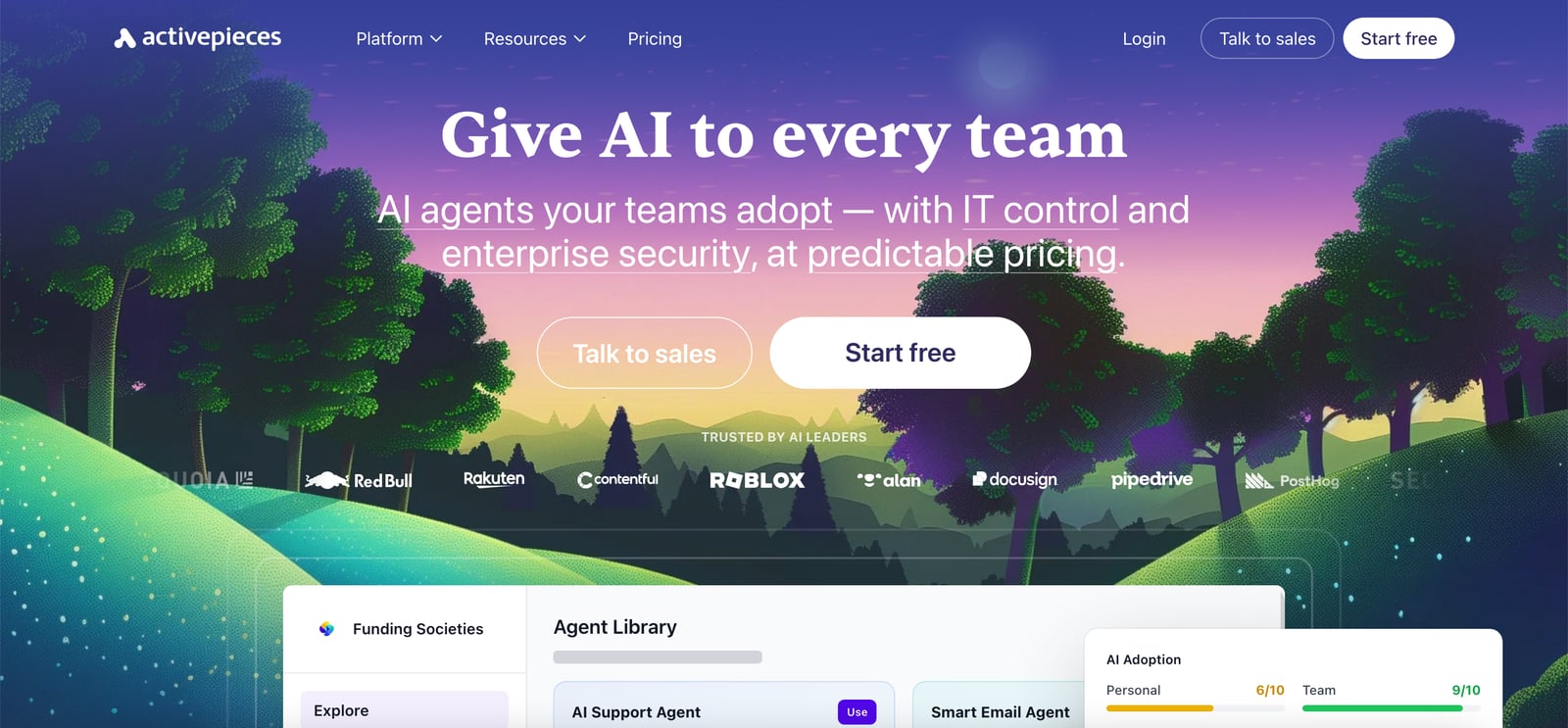 Activepieces · activepieces.com
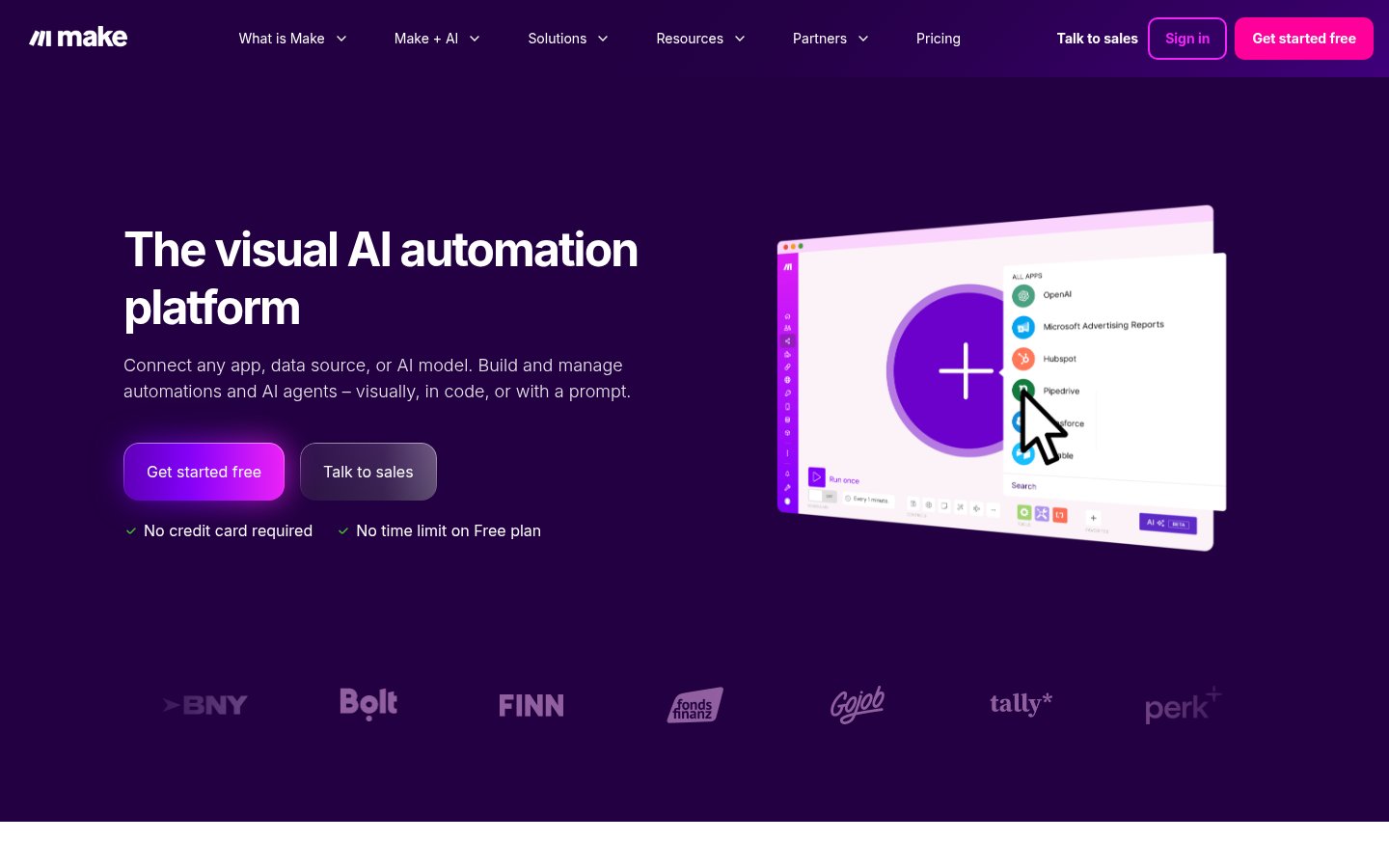 Make · make.com
The cheapest plan that fits, per month, billed yearly where the plan offers it.
| Team size | Activepieces | Make |
|---|---|---|
| 1 person | $20 Plus | $9 Core |
| 5 people | $20 Plus | $29 Teams |
| 20 people | $200 Team | $29 Teams |
Work it out for your team
Prices are per month on yearly billing; these vendors publish no monthly rate. The cheapest paid plan with a published price that fits. Custom and sales-quoted plans aren't included.
What the free plans include
Activepieces
Make
Activepieces
Make
Yes. The core and every integration piece are MIT-licensed. You can self-host on Docker, Kubernetes or air-gapped servers, or use the hosted cloud, which runs in Frankfurt by default. Other regions are available on request.
Activepieces states it does not train on your data, and retention is a window you configure. Make's facts give no statement on training. Its log data is stored for 30 days by default, longer on Enterprise.
Both offer an MCP server. Activepieces' server works with Claude and Cursor. Make's server lets you build and run scenarios from Claude, ChatGPT or Gemini.
Make was founded in 2015 and has been acquired by Celonis, its parent company. Activepieces is listed as an independent, active company based in the United States.
NVisual workflow automation and AI agent builder for technical teams

 Z
No-code workflow automation and AI agents across 9,000+ apps for businesses
No-code workflow automation and AI agents across 9,000+ apps for businesses

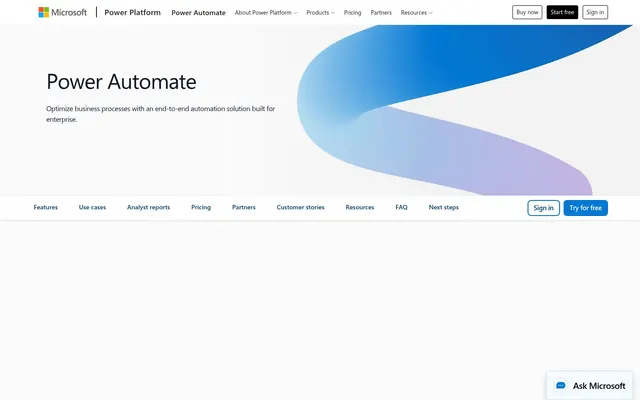 M
Low-code cloud, desktop RPA and process mining automation for enterprises
Low-code cloud, desktop RPA and process mining automation for enterprises

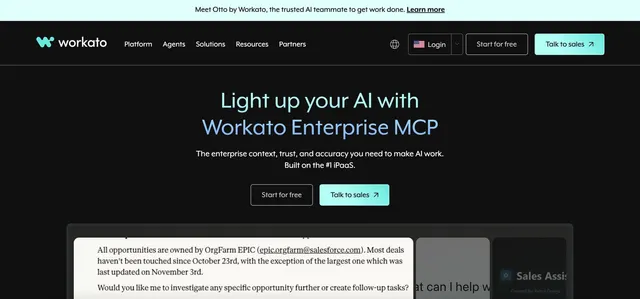 W
Enterprise platform to connect apps and data and govern AI agents and workflows
Enterprise platform to connect apps and data and govern AI agents and workflows

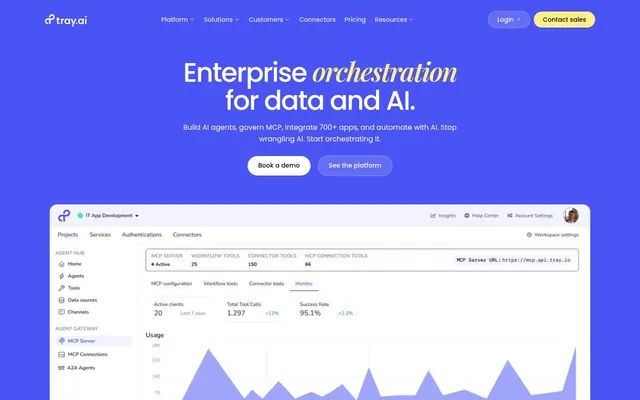 T
Enterprise iPaaS for integrations, automations, AI agents and governed MCP
 P
Managed auth and 10,000+ API tools for developers building AI agents
Facts from each vendor's public pages, prices checked Oct 26, 2026. Editorial policy